🦁 Spring Peeper
🧾 Quick Facts
The Spring Peeper, known for its distinctive "peeping" call that marks the arrival of warmer seasons, is a small North American tree frog often associated with the beginning of spring. This amphibian plays a crucial role in wetland ecosystems and is a beloved harbinger of springtime.
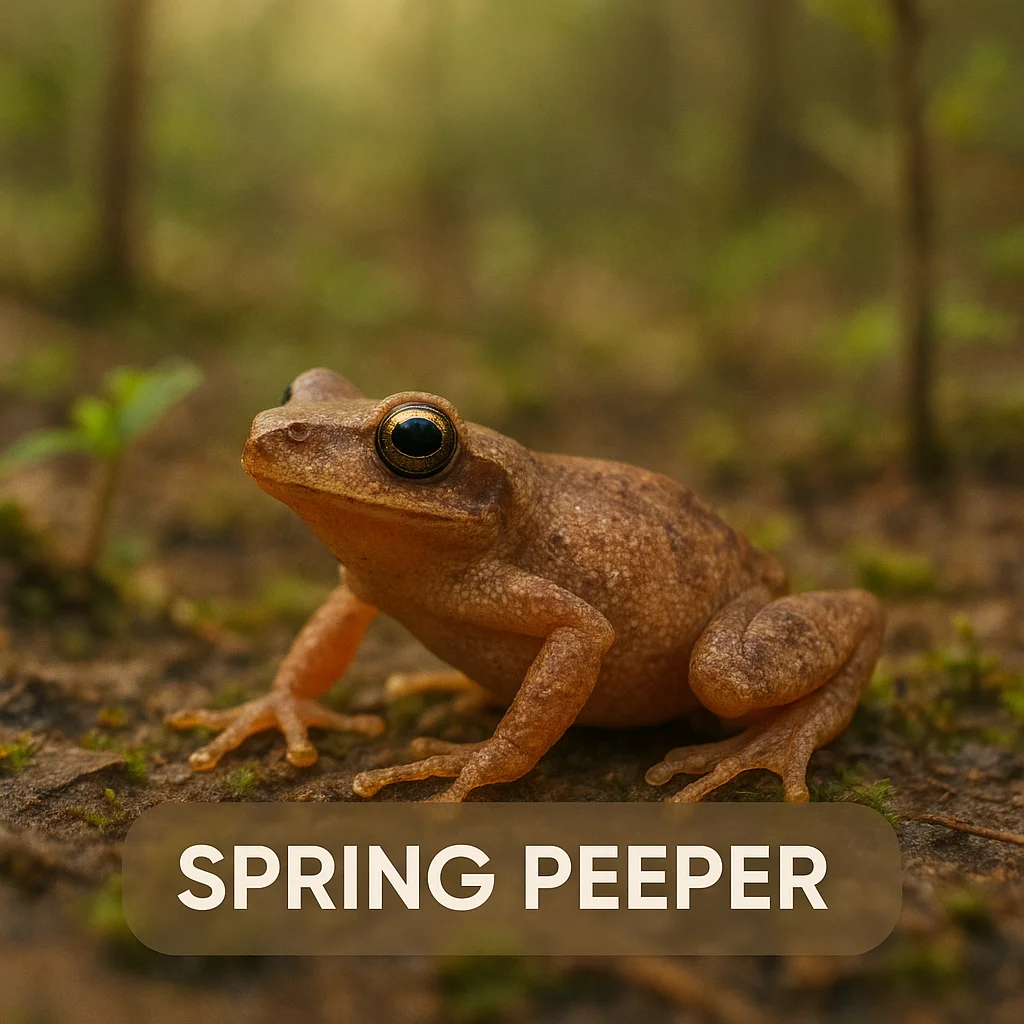
- Common name(s): Spring Peeper
- Scientific name: Pseudacris crucifer
- Animal type: Amphibian
- Typical adult size: 0.75 to 1.25 inches (1.9 to 3.2 cm) in length
- Typical lifespan: 3 to 4 years in the wild
- Diet type: Carnivore; primarily feeds on small insects such as ants and beetles
- Activity pattern: Nocturnal
- Social structure: Solitary except during breeding season
- Speed / movement highlights: Capable jumpers with strong hind legs
- Intelligence/learning: Basic learning and memory capacity typical of amphibians
- Primary habitats: Woodlands, grassy lowlands, and wetlands
- Geographic range: Eastern United States and Canada
- Predators/threats: Birds, snakes, small mammals, habitat loss due to human activity
- Conservation status: Least Concern, but varies by region
🔍 Identification & Appearance
The Spring Peeper is a small, slender frog with a characteristic "X" shaped mark on its back, which helps in identification. Despite its small size, its loud, high-pitched call is a distinctive marker in its environment, often difficult to spot among foliage.
- Body shape and silhouette: Small and slender with a rounded body and pointed snout
- Key colors/patterns: Tan to light brown with a dark "X" mark on the back
- Distinctive features: Sticky toe pads for climbing, large vocal sacs in males for calling
- Tracks, scat, or other field signs: Rarely leave visible tracks; identifiable by distinctive call
- Common look-alikes: Chorus frogs; distinguishable by size and vocal patterns
- Small size making them hard to spot
- Distinguishing dark "X" on the back
- Vocal sac visible when calling
- Colors blend well with leaf litter
- Sticky toe pads
- Nocturnal calling
🧱 Body Structure & Physical Adaptations
The Spring Peeper's physical adaptations are tailored to its arboreal lifestyle and its amphibious heritage. Its limbs and sensory organs are finely tuned to its needs.
- Build and proportions: Slender body with long hind legs optimized for jumping
- Teeth/beak/jaw adaptations: Small teeth on upper jaw for gripping prey
- Claws/hooves/wings/fins: Sticky toe pads for climbing
- Sensory strengths: Acute hearing for mating calls, night vision suitable for nocturnal activity
- Long hind legs for jumping
- Sticky pads on toes for climbing
- Vocal sacs for amplifying calls
- Adapted for aquatic and terrestrial life
- Eyes adapted for night vision
- Small size aids in camouflage
- Slim body shape for easy movement through vegetation
- Teeth suitable for insect capture
🌍 Range & Distribution
The Spring Peeper is predominantly found in the Eastern United States and Canada, inhabiting a range of climates where its calling serves as a sign of environmental vitality.
- Continents/regions: North America; primarily Eastern U.S. and Canada
- Elevation range: Sea level to high elevation forests
- Seasonal movements: Largely resident with localized movement for breeding and hibernation
- Eastern U.S. forests
- Canadian woodlands
- Seasonal wetlands and marshes
- Deciduous forests
- Grassy lowlands
- Temporary ponds during breeding season
- Migrates short distances for hibernation
🏞️ Habitat & Shelter
Spring Peepers are versatile in their habitat preferences, primarily favoring moist, wooded areas where they can find ample shelter and breeding grounds.
- Preferred habitats: Moist forests, wetlands, marshes
- Microhabitats and shelter: Use leaf litter, tree holes, and pond edges for shelter
- How weather/season changes behavior: Active in spring/summer; hibernate underground or in logs during winter
Understanding habitat is crucial for their conservation as wetland destruction poses a significant threat to their populations.
🧭 Behavior & Ecology
Spring Peepers are primarily known for their vocalizations, which play a key role in their reproductive behavior. They are solitary outside the breeding season and are important components of their ecosystems.
- Daily routine: Nocturnal diet and activity patterns
- Communication: High-pitched peeping calls for mating
- Typical interactions: Prey for predators, help control insect populations
- Role in the ecosystem: Important prey species and insect predator
- Nocturnal calling
- Males call during mating season
- Solitary except in breeding aggregations
- Help control mosquito populations
- Sensitive to environmental changes
- Hibernate in cold months
- Rarely interact with humans
- Vocal interactions can indicate population health
👥 Social Life & Group Dynamics
Spring Peepers lead solitary lives, except during the breeding season when they congregate at breeding sites. Their social interactions are primarily reproductive.
- Solitary vs social tendencies: Solitary except during breeding
- Group types: Temporary breeding aggregations
- Male chorus creates large groups
- Breeding congregation size varies by habitat
- No long-term social bonds outside breeding
- Hierarchical structure during breeding is call-based
- Vocalization strength affects mating success
- Mostly solitary in general behavior
🍽️ Diet, Prey & Predators
Predominantly insectivorous, Spring Peepers rely on a diet of small invertebrates that they hunt using their quick reflexes, while facing predation from a variety of animals.
- What they eat: Insects such as ants, beetles, and spiders
- Main natural predators: Birds, snakes, larger amphibians, small mammals
- Anti-predator defenses: Camouflage and agility
- Eat various small insects
- Capture prey with sticky tongue
- Camouflage aids in avoiding predators
- Commonly feed at night
- Engage in opportunistic foraging
- Sensitive to habitat changes affecting food supply
- Predators include larger frogs and fish
🦌 Hunting, Foraging & Movement
Traits such as leaping and a diet rich in insects define the foraging strategy of the Spring Peeper, which moves with agility in its environment.
- Locomotion style: Leaper with powerful hind legs
- Speed and endurance: Agile jumps but limited distance movement
- Typical hunting/foraging times: Primarily nocturnal feeders
- Agile leaper
- Forages during nighttime
- Prefers still water margins for hunting
- Navigates dense vegetation adeptly
- Rapid reflexes aid in capturing prey
- Navigates familiar territory effectively
- Vocal territory marking during breeding
🧠 Intelligence & Senses
Like many amphibians, Spring Peepers rely on a keen sense of hearing and vision rather than complex problem-solving abilities to survive in their wetland habitats.
- Problem-solving: Limited in problem-solving and tool use
- Senses: Acute hearing and vision for mating and predation
- Good night vision
- Vocalizations crucial for mate attraction
- Responds to environmental cues
- Limited cognitive behavior studies
- Excellent hearing aids in predator detection
- Varying responses to habitat changes
🪺 Reproduction, Pregnancy & Parenting
The reproductive cycle of the Spring Peeper is tightly linked to its habitat, with reproduction occurring in wet environments crucial for egg and tadpole development.
- Breeding seasonality: Spring, associated with warming temperatures
- Mating system: Promiscuous; males call to attract females
- Gestation/incubation period: Eggs hatch within a few days to weeks, depending on temperature
- Litter/clutch size: Females lay 800–1000 eggs
- Parenting roles: No parental care post-egg laying
- No parental care post-hatching
- Prefer shallow ponds for breeding
- Females select mates based on call
- Breed with multiple partners
- Eggs laid in aquatic vegetation
- Tadpoles develop in ponds, undergo metamorphosis
- Laying site fidelity demonstrated by some populations
♀️♂️ Male vs Female Differences
Although similar in size and color, male and female Spring Peepers exhibit certain differences related to their reproductive roles.
- Size differences: Males are slightly smaller and slimmer
- Behavioral role differences: Males call during mating season, females select mates
- Males have larger vocal sacs
- Females select mates based on call quality
- Males are more vocal during breeding
- Larger females lay more eggs
- No visible coloration differences
- Both genders show similar behavior outside breeding season
- Males more often seen at breeding sites
🧬 Subspecies & Variation
While the Spring Peeper does not have officially recognized subspecies, there can be noticeable variations depending on the region, influences being mainly environmental adaptations.
- Local adaptations: Coloration may vary slightly with environmental conditions
- Color variations linked to habitat
- Breeding call variations by region
- Some populations show adaptation to colder climates
- No formally recognized subspecies
- Diverse habitat types influence phenotype
- No significant morphological subspecies differences
⚠️ Threats, Conservation & Human Interaction
Spring Peepers, while not currently endangered, face significant risk from habitat loss and environmental changes. Conservation efforts focus on preserving wetland habitats while promoting ecosystem balance, helping ensure their lively calls continue heralding each spring.
- Natural challenges: Predation by birds and snakes
- Human-related pressures: Habitat loss from urbanization, pollution
- Conservation dependent on habitat protection
- Facing pressures from agricultural expansion
- Pesticide exposure affects population health
- Climate change alters breeding cycles
- Human infrastructure impacts migration and dispersal
- Education on ecosystem services crucial
- Amphibian monitoring programs beneficial
✨ Fun Facts & Unique Traits
- Their peeping call can be heard up to a mile away.
- Spring Peepers are one of the first frogs to start calling in the spring.
- They can survive freezing temperatures by slowing their metabolism.
- Despite their name, they peep not just in the spring but also in mild fall weather.
- Their vocal sac is as large as their body when inflated.
- Pseudacris crucifer means "cross bearer," referring to the "X" on their back.
- They adjust the frequency of their calls based on temperature changes.
- Spring Peepers play a role in controlling insect populations naturally.
📌 Summary
- Identify by dark "X" on back and small size.
- Favors wetland habitats in Eastern North America.
- Diet consists mainly of small insects.
- Faces predation from snakes, birds, and mammals.
- Solitary, except during breeding congregations.
- Reproduces in shallow aquatic environments, laying numerous eggs.
- Acute night vision and hearing guide survival.
- Distinctive peeping call signals early spring arrival.