🦁 Bird-of-paradise
🧾 Quick Facts
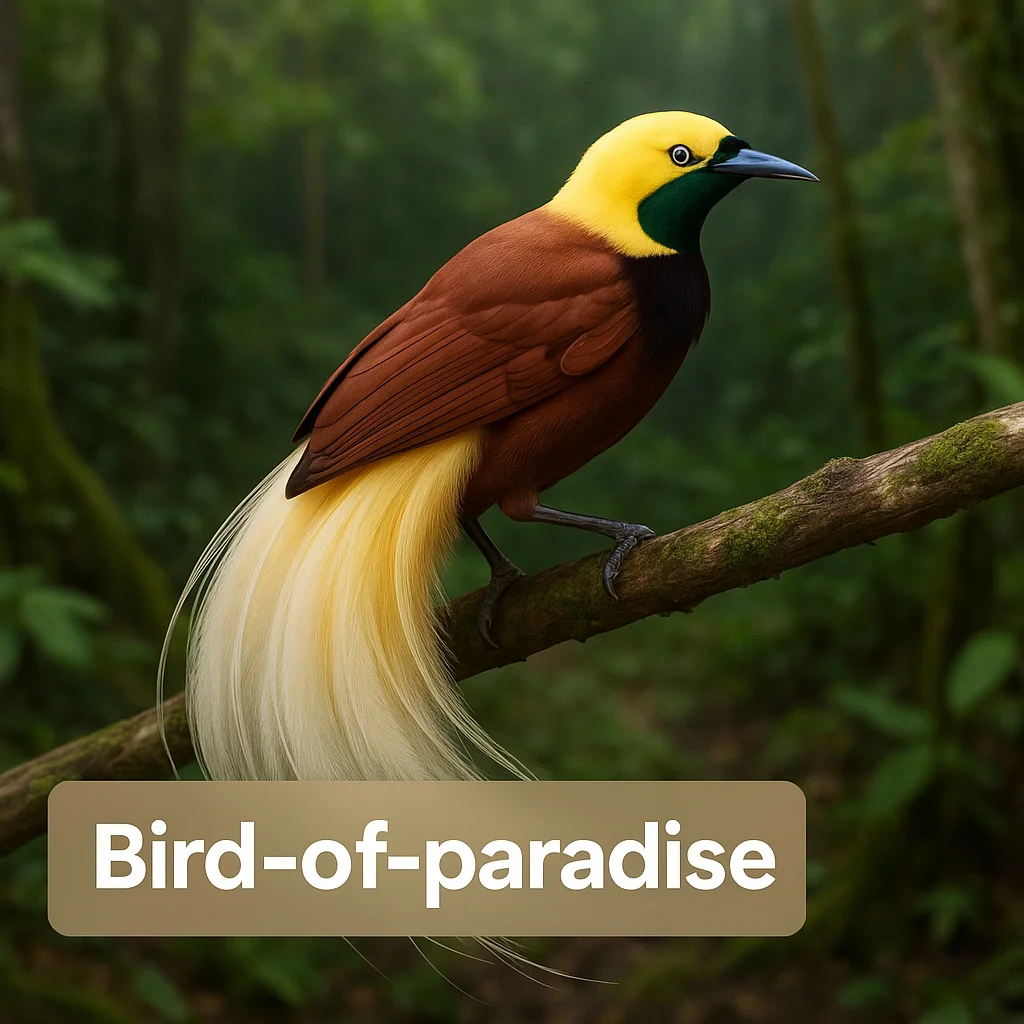
The bird-of-paradise represents one of the most mesmerizing and diverse groups of birds, known for their extraordinary plumage and elaborate courtship displays. Found primarily in New Guinea and parts of Australia, these birds embody the wonders of avian evolution.
- Common name(s): Bird-of-paradise
- Scientific name: Varies by species (e.g., Paradisaea apoda)
- Animal type: Bird
- Typical adult size: 15–44 cm in length, depending on species
- Typical lifespan: 5–8 years in the wild
- Diet type: Omnivore; fruits, insects, small vertebrates
- Activity pattern: Diurnal
- Social structure: Solitary or in pairs
- Speed / movement highlights: Skilled flyers; rapid short bursts
- Intelligence/learning: Complex mating displays suggest high learning ability
- Primary habitats: Tropical forests
- Geographic range: New Guinea, parts of Eastern Australia
- Predators/threats: Birds of prey, snakes, human habitat destruction
- Conservation status: Varies by species; some endangered
🔍 Identification & Appearance
Birds-of-paradise are easily recognizable by their vibrant colors and elaborate plumage. Males are especially known for their ornate feathers which they use during courtship displays, often exhibiting iridescent blues, greens, and yellows. Females are generally less colorful for camouflage.
- Body shape and silhouette: Medium size with elongated tail feathers in some species
- Key colors/patterns: Bright plumage; iridescent and metallic in light
- Distinctive features: Plume extensions, ornate head feathers, vibrant chest plumage
- Tracks, scat, or other field signs: Rarely leave noticeable signs due to arboreal habits
- Common look-alikes: Certain parrots; distinguishable by behavior and plumage
- Top ID Tips
- Look for extravagant plumage in males during breeding
- Note highly localized habitat preferences
- Behavior in trees offers better identification clues
- Check for long tail extensions
- Observe courtship displays for confident ID
- Bright colors often seen during movements
🧱 Body Structure & Physical Adaptations
Birds-of-paradise have evolved a number of physical adaptations throughout different species that are tailored for survival in dense forest environments and for exquisite mating displays.
- Build and proportions: Lightweight bodies for agile flight; elongated and decorative feathers in males
- Beak adaptations: Short and strong for fruit consumption; some species with curved beaks for flowers
- Claw structure: Adapted for gripping branches securely
- Sensory strengths: Acute eyesight for spotting potential mates and detecting predators
- Key Adaptations
- Plumage adapted for spectacular visual displays
- Muscular build allows for energetic dances
- Beak versatility for a varied diet
- Strong flight muscles for maneuverability
- Sensitive vision aiding in courtship rituals
- Feet designed for gripping complex perches
🌍 Range & Distribution
Predominantly found in the lush eco-regions of New Guinea and eastern parts of Australia, birds-of-paradise inhabit regions with abundant forest cover and a complex canopy structure.
- Continents/regions: Australasia
- Typical countries/biomes: New Guinea, Australia; lowland rainforests
- Elevation range: Sea-level to montane forests
- Seasonal movements: Mainly sedentary with limited local movements
- Where You Might Find It
- Lowland rainforests of New Guinea
- Montane forest regions
- Dense tropical canopies
- Australia's eastern rainforests
- Isolated forest patches with ample fruiting plants
🏞️ Habitat & Shelter
These birds prefer dense, humid forest environments where the tree canopy provides both abundant food resources and protection. The complex structure of these forests is critical for their survival and courtship behavior.
- Residences in rainforests with ample foliage
- Adapted to the canopy for foraging and mating
- Seasonal changes minimal due to tropical stability
- Forest preservation essential for their propagation
- Deciduous seasonal shifts affect foraging patterns
🧭 Behavior & Ecology
Renowned for their courtship displays, birds-of-paradise exhibit fascinating behavioral patterns. Males often clear a display area and perform elaborate dances accompanied by vocalizations designed to attract females.
- Daily routine: Foraging by day; displays during breeding season
- Communication: Complex calls and visual displays
- Interactions with other species: Limited; primarily engage in competitive displays rival males
- Role in the ecosystem: Important seed dispersers
- Behavior Highlights
- Aggressive courtship dances
- Song patterns varied by species
- Many isolated displays during breeding period
- Males' visual displays attract females
- Displays often conducted at dawn or dusk
👥 Social Life & Group Dynamics
Birds-of-paradise generally lead solitary lives, with interactions between individuals limited to mating seasons. Territories are often established by males who use them as staging grounds for courtship displays.
- Social tendencies: Solitary with occasional pairs
- Group types: Mating pairs; some species form loose groups during non-breeding
- Cooperation: Limited to mating rituals
- Dominance hierarchies: Male dominant in courtship areas
- Social Structure Notes
- More competitive than cooperative
- Mating rituals often minimal direct contact
- Strict territories in display season
- Hierarchies driven by courtship success
- Interactions driven by display and mating
🍽️ Diet, Prey & Predators
The diet of the bird-of-paradise is mainly omnivorous, consisting of a variety of fruits, berries, insects, and other small creatures. This diet supports their active lifestyle and elaborate displays.
- Primary diet: Fruits and small invertebrates
- Predation risks: Raptors, large snakes; primarily arboreal threats
- Defenses: Elusive movement among trees
- Feeding Notes
- Prefers fruit from native plants
- Uses keen vision to spot insects
- Males may forage less during displays
- Seasonal variation in fruit availability affects diet
- Insect diet supports high protein needs
🦌 Hunting, Foraging & Movement
Displaying remarkable agility, the bird-of-paradise flies short distances through the forest canopy to search for food or showcase its impressive plumage. Males frequently ground themselves on favored display platforms, showcasing stamina in their dances.
- Locomotion style: Flier with acrobatics in display behavior
- Typical foraging tactics: Short flights among trees in search of fruit or prey
- Navigation: Utilizes specific pathways in familiar territories
- Movement & Strategy
- Skilled in short bursts of flight
- Prefers dense canopy environment
- Displays involve high-energy movement
- Foraging primarily aerial
- Acute spatial awareness during dances
🧠 Intelligence & Senses
The cognitive abilities of birds-of-paradise are reflected in their complex social interactions and courtship displays. Their acute vision and learning capacity are crucial for survival and reproduction.
- Learning and memory: Complex courtship suggests advanced learning
- Sensory usage: Rely heavily on sight and sound for mating
- Notable Abilities
- Adept at learning courtship patterns
- Advanced memory of display sequences
- Utilizes sight for mate selection and predators
- High adaptability to environmental cues
- Significant variation among species in behavior
🪺 Reproduction, Pregnancy & Parenting
The breeding season is marked by extravagant courtship rituals, where males perform elaborate dances to attract females. Pair bonds may be brief, and female birds are often solely responsible for incubation and raising the young.
- Breeding seasonality: Tied to resource abundance; varies by region
- Mating system: Generally polygynous
- Incubation period: Typically 14–25 days
- Litter/clutch size: 1–3 eggs; altricial young
- Parenting roles: Females primarily responsible post-hatching
- Reproduction Snapshot
- Complex multi-day courtship displays
- Brief pair bonds
- Females solely incubate c
- Chicks are entirely dependent at birth
- Timing linked to food source availability
♀️♂️ Male vs Female Differences
Distinctive sexual dimorphism is evident in many species within this group, with males sporting more vibrant colors and ornamental feathers compared to the more subdued females.
- Coloration and plumage: Males more colorful with elaborate furnishings
- Behavioral roles: Males more active in courtship
- Size differences: Substantial variation by species; often males larger
- Sex Differences at a Glance
- Males boast ornate display feathers
- Females prioritize camouflage for nesting
- Size variation exists; context is species-specific
- Males often more visible during active mating
- Visual differences aid species recognition
🧬 Subspecies & Variation
The bird-of-paradise family showcases a dazzling variety of subspecies, with each exhibiting unique adaptations to local habitats. Despite these variations, taxonomy remains a topic of debate among ornithologists.
- Extensive species diversity with unique adaptations
- Varied plumage and song characteristics
- Habitat-specific adaptations significant among isolated populations
- Variation Notes
- Diversity in plumage patterns
- Behavioral differences between subspecies
- Adaptations influenced by environmental needs
- Island species show unique evolutionary paths
- Taxonomic classification fluid and evolving
⚠️ Threats, Conservation & Human Interaction
Many birds-of-paradise face threats from habitat destruction and climate change. Conservation efforts are essential to protect these remarkable birds and their forest ecosystems. Wildlife reserves play a crucial role in preserving their populations.
- Natural challenges: Habitat destruction due to deforestation
- Human pressures: Logging, agriculture, poaching for feathers
- Conservation efforts: Legal protection in reserves; community-based conservation initiatives
- Responsible Notes
- Encourage sustainable forest use practices
- Promote habitat preservation initiatives
- Discourage illegal trade of bird feathers
- Support ecotourism promoting conservation
- Improve awareness through educational programs
✨ Fun Facts & Unique Traits
- Some species spend weeks perfecting mating dances.
- Feathers from bird-of-paradise were once popular in fashion.
- Named "paradise" birds due to their celestial beauty and plumage.
- First Europeans seeing them presumed they floated continuously in the air.
- Unique gesture-based communication in courtship displays.
- Diverse calls can mimic environmental sounds and other birds.
📌 Summary
- Found broadly in New Guinea and parts of Australia.
- Known for dramatic courtship displays and vivid plumage.
- Omnivorous diet consisting mainly of fruits and small animals.
- Faces threats from habitat degradation and climate change.
- Significant in seed dispersal due to diet.
- Males exhibit high variance in plumage among species.
- Subspecies differentiation remains actively studied.
- Efforts to conserve habitats are critical for species' longevity.