🦁 Golden Oriole
🧾 Quick Facts
The term "Golden Oriole" refers to bird species often recognized for their vibrant plumage and melodic calls. Frequently classified within the genus Oriolus, these birds exemplify the beauty of avian diversity. Here is a succinct overview of their primary attributes.
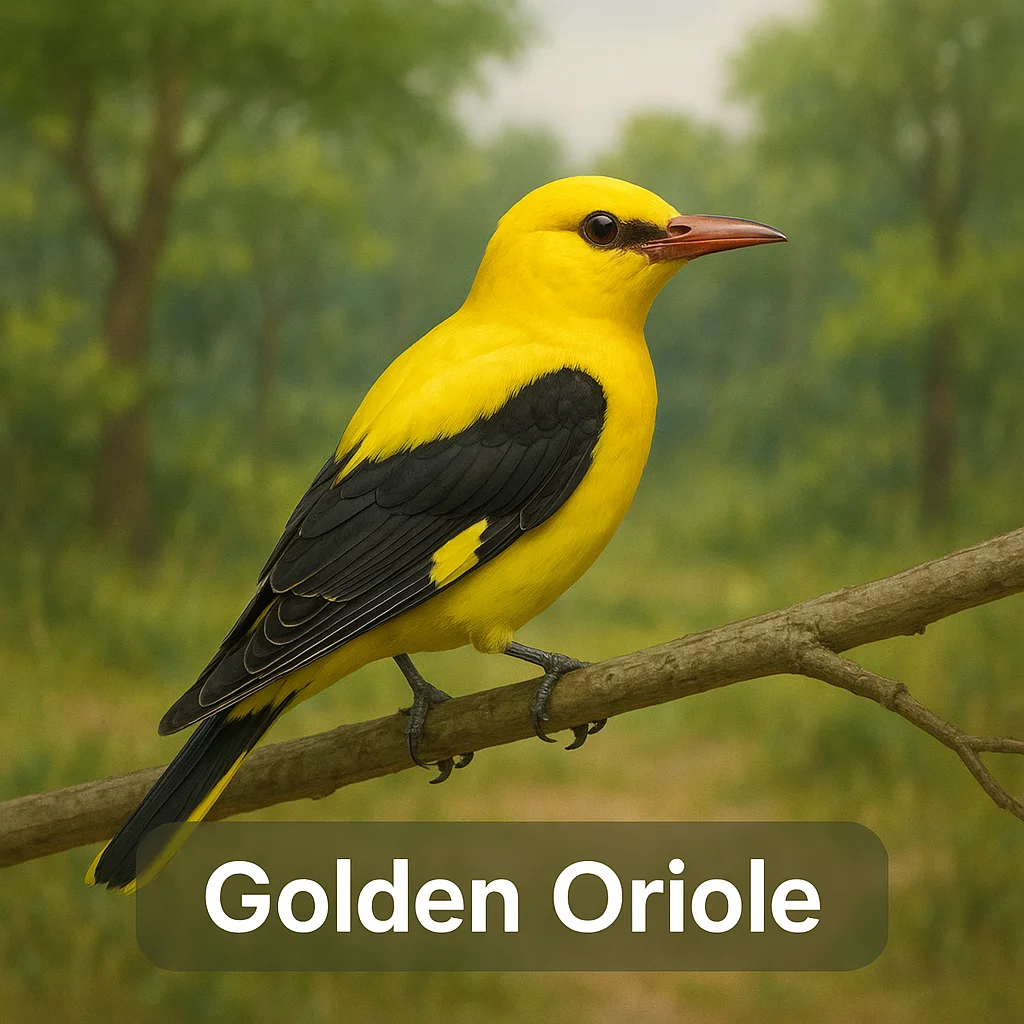
- Common name(s): Golden Oriole, Eurasian Golden Oriole
- Scientific name: Oriolus oriolus
- Animal type: Bird
- Typical adult size: 20-24 cm (about 8-9.5 inches) in length
- Typical lifespan: Generally 6-10 years in the wild
- Diet type: Omnivore; primarily fruits and insects
- Activity pattern: Diurnal
- Social structure: Generally solitary or found in pairs
- Speed / movement highlights: Capable fliers, with agile and swift flight
- Intelligence/learning: Geared towards problem-solving and adaptation in changing environments
- Primary habitats: Woodlands, deciduous forests, and riverine areas
- Geographic range: Europe, Western Asia, and parts of North Africa
- Predators/threats: Raptors, habitat destruction, and climate change
- Conservation status: Least Concern, although local threats exist
🔍 Identification & Appearance
The Golden Oriole is a striking bird, admired for its bright and contrasting colors. Adult males are particularly vibrant, with golden-yellow plumage contrasted by black wings and tail. Females and young orioles are more subdued, often sporting greenish-yellow and brownish hues that provide camouflage in their woodland habitats.
- Body shape: Slender with a streamlined profile ideal for agile flight
- Key colors/patterns: Adult males are vivid yellow with black markings; females are more muted in color
- Distinctive features: Long, pointed beak and distinctive eye stripe that frames the eye
- Common look-alikes: Can be mistaken for other orioles or brightly colored birds; distinguishable by their unique call
- Top ID Tips:
- Listen for their fluty, melodious song
- Note the conspicuous yellow body and black wings
- Females and juveniles have more subdued coloring
- Tends to remain high in tree canopies
- Spot them during migration periods
🧱 Body Structure & Physical Adaptations
The Golden Oriole is adapted for life in the trees, showcasing features that improve its arboreal prowess. Their slender build and proportionately long wings aid in quick and sustained flight.
- Build and proportions: Streamlined and lightweight body
- Beak adaptations: Sharp, pointed beak designed for picking insects and nibbling on fruits
- Wings: Long and narrow for fast and agile flight through the canopy
- Sensory strengths: Excellent eyesight and acute hearing
- Key Adaptations:
- Smooth flight in dense foliage
- Bright plumage aids in identifying conspecifics
- Sharp beak for varied diet
- Tendency to remain camouflaged in foliage
- Adapted to both temperate and subtropical climates
🌍 Range & Distribution
The Golden Oriole has a wide but patchy distribution, with habitats spanning across various regions. Known for their significant migratory habits, these birds make long seasonal journeys between breeding and wintering grounds.
- Continents/regions: Predominantly Europe, Western Asia, and parts of North Africa
- Countries/biomes: Found in countries with suitable woodland environments
- Seasonal movements: Migrates to sub-Saharan Africa during the winter months
- Where You Might Find It:
- Mixed deciduous forests in Europe
- Oriental and Mediterranean woodlands
- Riverine regions in Western Asia
- Forest edges and clearings
- Leafy canopies during warmer months
🏞️ Habitat & Shelter
Golden Orioles thrive in diverse habitats, primarily those that provide ample tree cover. They frequent woodlands, especially those with a mix of mature deciduous trees and dense undergrowth. Habitat selection is crucial for breeding success, offering protection against predators and elements.
- Prefers open woodlands and edge habitats
- Constructs cup-shaped nests high in trees
- Seasonal behavior changes dictated by available resources
- Adapted to variations in climate and vegetation
- Microhabitat choice can influence foraging success
🧭 Behavior & Ecology
The Golden Oriole is recognized for its solitary yet conspicuous nature, especially during breeding season. Known for their distinctive songs, these birds communicate widely within their territories to establish presence and attract mates.
- Daily routine: Active during the day, frequently seen flitting among tree tops
- Communication: Uses a melodious series of whistles and calls
- Ecological role: Acts as both insect predator and seed disperser
- Interactions with other species: Competes with other frugivorous and insectivorous birds
- Behavior Highlights:
- Bright plumage visible during display flights
- Camouflaged rest periods in dense foliage
- Vocalizations peak during breeding season
- Engages in territorial disputes
- Migration follows well-established routes
👥 Social Life & Group Dynamics
Golden Orioles are generally solitary outside of the breeding season but can be observed in pairs or small family groups when nesting. The nature of their social interactions is influenced by habitat, availability of food resources, and migratory behaviors.
- Solitary tendencies: Often alone or in pairs
- Breeding behavior: Form temporary pair bonds
- Cooperation: Primarily limited to mating and rearing young
- Conflict resolution: Displays and vocalizations to settle disputes
- Social Structure Notes:
- Adult pairs seen during breeding season
- Juveniles remain with parents shortly post-fledging
- Vocal communication plays a key role
- Avoids large, complex social structures
- Territory defended actively during critical life stages
🍽️ Diet, Prey & Predators
With an omnivorous diet, Golden Orioles consume a variety of foods, adapting to seasonal changes in food availability. Predominantly feeding on fruits and insects, they contribute significantly to natural pest control and seed dispersal.
- Diet variation: Fruits during spring and summer; insects year-round
- Feeding strategies: Forages at various levels in the forest canopy
- Main predators: Birds of prey, like hawks and falcons
- Anti-predator defenses: Camouflage and evasive flight
- Feeding Notes:
- Prefers berries and other juicy fruits
- Insects are a major protein source
- Noted for targeting pest insects
- Scavenging occurs infrequently
- Dietary shift observed during migration
🦌 Hunting, Foraging & Movement
Golden Orioles excel in aerial foraging, leveraging their keen eyesight and agility. Their flight patterns adapt to both their need for migration and their daily foraging activities in pursuit of fruit and insects.
- Locomotion style: Flier; uses wings for fast and darting movements
- Typical foraging tactics: Prowess in tree canopies and near water sources
- Migration: Long-distance migrator between Europe and Africa
- Navigation: Follows photoperiod and climatic cues
- Movement & Strategy:
- Consistent migration routes
- Mixes flight speeds based on environmental conditions
- Exploits high vantage points for spotting food
- Apt at avoiding tree cover obstacles
- Adapts activity depending on daylight durations
🧠 Intelligence & Senses
Adept at adapting to environmental challenges, the Golden Oriole is equipped with keen sensory perceptions. Although not known for extraordinary intelligence, they display a competent capability to exploit new opportunities and environments.
- Sensory strengths: Acute vision facilitates foraging and predator detection
- Learning and adaptation: Quickly adapts to new environments and situations
- Problem-solving: Notable for food acquisition strategies
- Notable Abilities:
- Oriented by daylight stimuli
- Can quickly adapt to altered environments
- Strong spatial memory aids in migration
- Responsive to visual changes in habitat
- Modulates song for communication efficiency
🪺 Reproduction, Pregnancy & Parenting
The breeding season for Golden Orioles is marked by vibrant courtship displays and singing. These birds build intricate nests and exhibit parental care characterized by both sexes contributing to chick-rearing.
- Breeding seasonality: Primarily during late spring and early summer
- Mating system: Often monogamous for the season
- Incubation period: Approximately 14-16 days
- Clutch size: Generally consists of 3-5 eggs
- Parenting roles: Both males and females participate in feeding the young
- Reproduction Snapshot:
- Elaborate nest construction high among branches
- Post-fledging care for a few weeks
- Nestlings are altricial, requiring considerable care
- Energetic courtship displays
- Fledglings remain with parents until migration begins
♀️♂️ Male vs Female Differences
Sexual dimorphism in Golden Orioles is most pronounced in coloration. While males are bright and easily recognizable, females present more understated tones that assist in nesting camouflage. Behavioral roles in parenting are shared, though males might be more actively vocal to ward off intruders.
- Size: Generally similar in physical dimensions
- Coloration differences: Males are vibrantly colored; females have more subdued plumage
- Behavioral roles: Both parents participate in feeding and defense of young
- Sex Differences at a Glance:
- Males sport brighter coloration for territorial displays
- Females’ coloration aids in nesting concealment
- No significant size disparity between sexes
- Both contribute to nest building and chick rearing
- Vocal roles slightly vary according to sex
🧬 Subspecies & Variation
While the Golden Oriole does not have widely recognized subspecies, notable geographic variations exist within populations. These differences are often subtle and may involve slight changes in plumage intensity or seasonal molt patterns.
- Variation in plumage: Populations can exhibit slight regional hue differences
- Regional adaptations: This varies with ecological niches
- Subtle differences: Generally not readily distinguishable
- Variation Notes:
- Some debates on morphological distinctions
- Color variations linked to diet and habitat
- Local acoustic variations in calls
- Adaptive plumage tones within ranges
- No formally recognized subspecies
⚠️ Threats, Conservation & Human Interaction
Golden Orioles face a mix of natural and anthropogenic threats that necessitate conservation attention. Habitat loss and climate change are pivotal challenges, though the species is currently not considered endangered. Promoting tree conservation and responsible land use can aid in supporting population resilience.
- Habitat loss: Degradation of forested areas affects breeding grounds
- Climate effects: Altered migratory patterns due to climatic shifts
- Human impacts: Urbanization, agriculture expansion
- Coexistence tips: Preservation of wooded habitats are crucial
- Responsible Notes:
- Support forest conservation initiatives
- Avoid disruption during breeding season
- Encouragement of biodiversity-friendly practices
- Participate in citizen science projects
- Remain educated about local species and their needs
✨ Fun Facts & Unique Traits
- Golden Orioles are known for their distinctive, fluting song which can be heard over considerable distances.
- The male's striking yellow and black plumage is used as a display during the breeding season.
- These birds migrate over considerable distances, often traveling from Europe to Africa.
- Orioles play a crucial role in pest control through their insectivorous diet.
- Their nests are carefully woven, cup-shaped and occasionally suspended from branches.
- The Golden Oriole is the only member of the Oriole family commonly found in Europe.
- Their melodious calls are often misattributed to more common birds in shared habitats.
📌 Summary
- The Golden Oriole is recognized by its vibrant yellow and black plumage.
- Prefers woodlands, especially with abundant deciduous trees.
- Migratory species with a wide but patchy distribution across Europe, Asia, and Africa.
- Diet primarily consists of fruits and insects, contributing to ecosystem balance.
- Faces threats from habitat loss and climate change, though not currently endangered.
- Known for its complex vocalizations and adaptive foraging strategies.
- Exhibits monogamous tendencies during the breeding season with both sexes involved in parenting.
- Plays a beneficial role in pest control and seed dispersion.
- The female's more subdued coloring offers better camouflage for nesting.
- Unique among European birds for its combination of striking appearance and melodic song.