🦁 Northern Cardinal
🧾 Quick Facts
The Northern Cardinal, renowned for its vivid plumage, is a favorite among bird enthusiasts across its extensive range. Its song adds a musical layer to the regions it inhabits, making it an iconic presence in American backyards and forests.
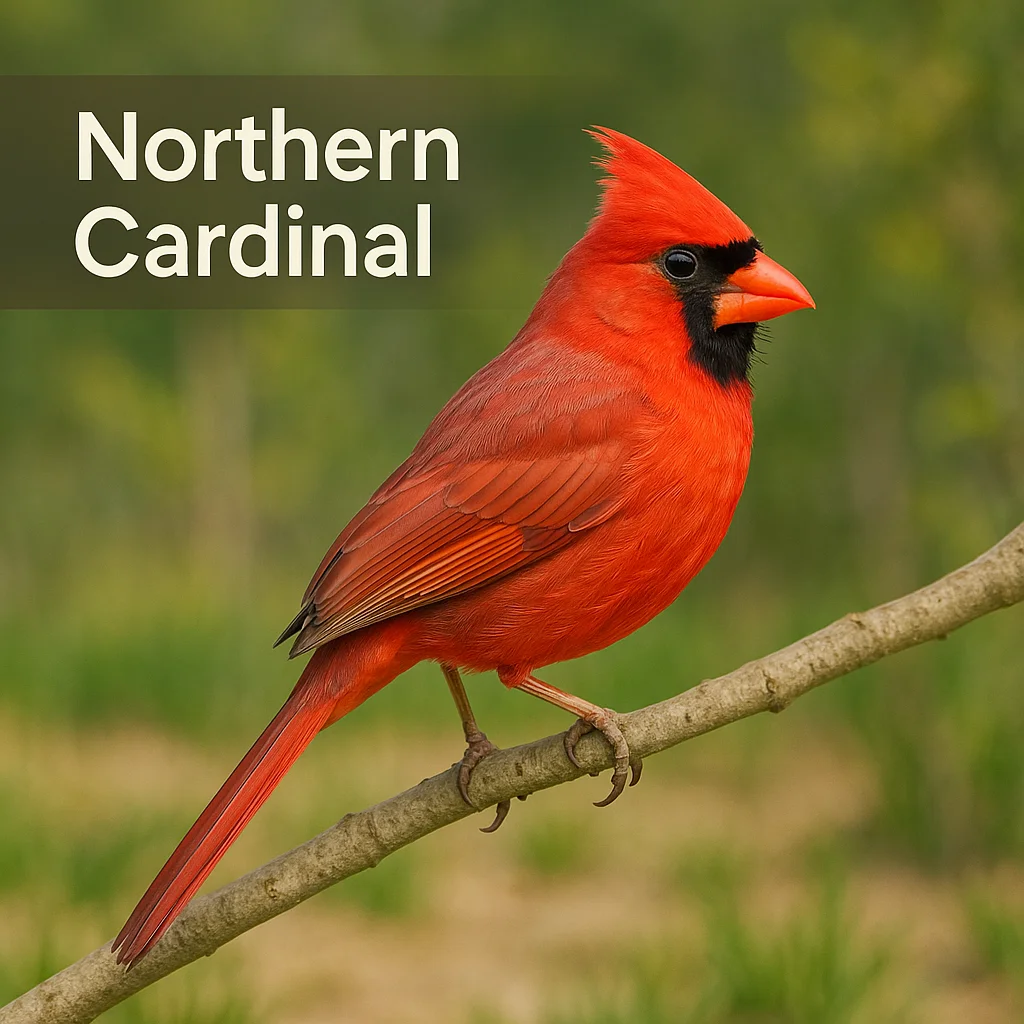
- Common Name(s): Northern Cardinal
- Scientific Name: Cardinalis cardinalis
- Animal Type: Bird
- Typical Adult Size: 21-23 cm (8.3-9.1 in) in length; weight around 42-48 grams (1.5-1.7 oz)
- Typical Lifespan: Up to 15 years in the wild
- Diet Type: Omnivore; consumes seeds, fruits, and insects
- Activity Pattern: Diurnal
- Social Structure: Often found in pairs or family groups
- Speed / Movement Highlights: Moderate flyer, agile within dense vegetation
- Intelligence/Learning: Known for recognizing patterns and learning from past experiences
- Primary Habitats: Woodlands, gardens, shrublands
- Geographic Range: Eastern and Central North America, from Canada to Mexico
- Predators/Threats: Hawks, owls, domestic cats
- Conservation Status: Least Concern
🔍 Identification & Appearance
The Northern Cardinal is easily recognized by its vivid red plumage and crest. Males are particularly striking with their bright red feathers, while females are more subdued in coloration but equally distinctive with their warm brown tones and hints of red on wings and crest.
- The bird has a sizable, conical orange-red beak, perfect for cracking seeds.
- Its crest is an iconic feature, often raised when the bird is alert or excited.
- The dark mask around the face contrasts sharply with the rest of its plumage.
- Juveniles resemble females but have a darker bill.
- Common look-alikes include the Pyrrhuloxia, distinguishable by its slimmer build and grey coloration.
- The cardinal's song is a series of clear whistles and is a key identifier in dense foliage.
- Top ID Tips
- Watch for the distinctive crest and face mask.
- Note the bright red of males versus the tan-red of females.
- Listen for their recognizable whistling call.
- Look for them at feeders—cardinals are frequent visitors.
- The white underparts of wings can be seen in flight.
- Note the robust conical beak, perfect for seed diets.
- Juveniles can be identified by their dark bill.
- Often found perched conspicuously in trees near open areas.
🧱 Body Structure & Physical Adaptations
The Northern Cardinal is designed to thrive in a variety of environments. Its body is adapted for both agility in thick vegetation and the ability to exploit open areas for foraging.
- Build and Proportions: Medium-sized, robust bird with a stocky build, optimized for maneuvering through foliage.
- Beak: The stout, robust beak is perfectly shaped for cracking hard seeds.
- Wings: Short and rounded, allowing for quick bursts of flight.
- Sensory Strengths: Excellent vision helps in foraging and spotting predators, while hearing complements its social and territorial vocal communications.
- Key Adaptations
- Strong, seed-cracking beak.
- Bright plumage serves for mate attraction and territorial displays.
- Keen eyesight suited for spotting predators.
- Robust build aids in survival during harsh winters.
- Crest helps convey mood and social signals to others.
- Agility in flight adapted for dodging predators.
- Adapted to varied environments, from urban to rural.
🌍 Range & Distribution
The Northern Cardinal enjoys a wide distribution across North America, taking advantage of diverse landscapes that provide adequate food and nesting sites. The species is mostly sedentary, occupying territories year-round.
- Primarily found in the eastern United States, ranging from Maine to southern Texas.
- Also found in parts of southeastern Canada and extends into Mexico.
- Inhabits varied environments, from the dense forests to open backyards.
- Does not typically migrate, remaining within its established territory.
- Where You Might Find It
- Wooded parks and gardens.
- Shrublands and forest edges.
- Thickets along riverbanks.
- Residential areas with bird feeders.
- Farmlands and rural environments.
- Southeastern Canada to the Gulf Coast.
- Lower Midwest regions, including Illinois and Ohio.
🏞️ Habitat & Shelter
The Northern Cardinal thrives in a variety of habitats that provide ample cover and foraging opportunities. They are adept at exploiting both natural and human-altered environments.
- Preferred Habitats: Forest edges, thickets, gardens, and urban spaces rich with shrubs and trees.
- Microhabitats and Shelter: Nest within dense shrubbery or low tree branches for protection and concealment.
- Weather/Seasonal Changes: Active year-round, but may shift diet based on season availability (e.g., relying on seeds more heavily in winter).
- Habitat Influence on Behavior: Territories are often maintained and fiercely defended year-round, making suitable habitats crucial for breeding success.
🧭 Behavior & Ecology
The Northern Cardinal exhibits an array of behaviors that contribute to its adaptability and success as a species. Their antics and vivid song make them a significant part of their ecosystems.
- Daily Routine: Active during the day, often seen flitting from branch to ground in search of food.
- Communication: Known for their varied whistles and calls, used for attracting mates or warning intruders.
- Ecosystem Roles: Acts as both seed dispersers and prey for larger animals, maintaining ecological balance.
- Mutualistic Relationships: In urban gardens, they may benefit from food provided by humans.
- Territorial Defense: Males vigorously defend territories with song and displays.
- Feeding Behavior: Foraging often occurs on the ground, especially near shrubs and feeders.
- Behavior Highlights
- Males deliver striking territorial songs at dawn.
- Pairs exhibit bonding behaviors like mutual preening.
- They are agile in feeding from suspended feeders.
- Bright plumage is utilized in courtship displays.
- Pairs maintain lifelong bonds, often seen together throughout seasons.
- Quick to adapt to urban environments, visiting backyard feeders.
👥 Social Life & Group Dynamics
Northern Cardinals are generally social within their family groups, exhibiting a range of behaviors from territorial disputes to cooperative parenting.
- Social Tendencies: Often seen in pairs or small family groups rather than large flocks.
- Group Dynamics: Mated pairs remain together throughout the year, occasionally joined by offspring.
- Cooperation: Both parents feed and care for the young, demonstrating species-specific cooperative behavior.
- Conflict Resolution: Territorial disputes often resolved through vocal and visual displays.
- Social Structure Notes
- Close-knit family units protect young collectively.
- Use of song in territorial battles.
- Strong pair bonding with courtship feeding and mutual calls.
- Juveniles may linger with parents until the next breeding season.
- Dominance established through displays rather than violence.
🍽️ Diet, Prey & Predators
The diet of the Northern Cardinal is varied and adaptable, allowing it to thrive in numerous environments. Their diet primarily consists of seeds but includes a variety of other foods depending on availability.
- Diet: Mainstay diet includes seeds, fruits, and occasional insects.
- Feeding Strategy: Forages on the ground, bushes, and at feeders.
- Predators: Targets include hawks, owls, and sometimes domestic cats.
- Defensive Strategies: Fast takeoff and retreat into dense cover to escape predators.
- Feeding Notes
- Enjoys sunflower seeds from feeders.
- Insects provide protein to nestlings.
- Fruits are seasonal favorites during breeding.
- Foraging on the ground, often kicking debris to uncover seeds.
- Utilizes strong beak efficiently for cracking hard shells.
- Highly adaptable diet based on seasonal availability.
🦌 Hunting, Foraging & Movement
The movement and foraging habits of the Northern Cardinal reflect its versatile nature and adaptability to different feeding grounds.
- Locomotion Style: Primarily flier; hops on the ground while foraging.
- Speed and Endurance: Short and swift flights between perches and feeders.
- Foraging Strategy: Active forager, using keen eyesight to detect food sources.
- Navigation: Largely home-based; does not migrate, maintaining consistent ranges.
- Movement & Strategy
- Prefers bushy areas for protection while foraging.
- Quick flights guard against predators.
- Sharp eyes aid in locating seeds and insects.
- Strong flier despite short wings.
- Favor dense trees and shrubs for rest and cover.
🧠 Intelligence & Senses
The Northern Cardinal is known for its acute senses and behavioral intelligence, contributing to its survival and successful adaptation across its range.
- Problem Solving: Adaptive learning in response to feeder designs.
- Sensory Use: Relies heavily on excellent eyesight to detect predators and food sources.
- Cognitive Abilities: Recognizes individual birds, maintaining social bonds.
- Notable Abilities
- Rich repertoire of vocalizations for communication.
- Ability to distinguish individual human voices at feeders.
- Butterfly flight to navigate through dense vegetation.
- Distinct songs help identify individuals, crucial in dense environments.
🪺 Reproduction, Pregnancy & Parenting
Northern Cardinals exhibit particular breeding habits with a focus on shared parental duties and strong pair bonds that benefit offspring survival.
- Breeding Seasonality: Starts in early spring, culminating in multiple broods through summer.
- Mating System: Monogamous, with strong pair bonding rituals.
- Clutch Size: Typically 2-5 eggs; incubation by female while male provides food.
- Parental Role: Both sexes partake in feeding young; females incubate while males guard and gather food.
- Reproduction Snapshot
- Excellent parenting ensures high survival rate of nestlings.
- Multiple broods per season possible, increasing reproductive success.
- Young fledge in 10-11 days post-hatching.
- Both parents defend nest site vigorously from intruders.
♀️♂️ Male vs Female Differences
Male and female Northern Cardinals show distinct differences in appearance and slightly in behavior, allowing easy identification based on primary cues.
- Size and Weight: Males and females are similar in size.
- Coloration: Males are bright red, while females are tan with red overlays on wings and tail.
- Sex Differences at a Glance
- Males feature more vibrant coloring for mating displays.
- Females blend better with nesting habitats for camouflage.
- Both display crest but with varying intensity.
- Males often initiate song to attract mates and establish territory.
🧬 Subspecies & Variation
While the Northern Cardinal display limited subspecies variation, regional differences in coloration and size may occur based on environmental factors.
- Regional Variations: Slight differences in size and coloration by region can occur, though generally consistent across range.
- Local Adaptations: Ability to thrive in diverse habitats from rural to urban landscapes.
- Variation Notes
- Minimal genetic variance suggests stability within the species.
- Subtle changes in plumage intensity across different regions.
⚠️ Threats, Conservation & Human Interaction
The Northern Cardinal is relatively stable but faces natural and anthropogenic threats. Adaptability has favored its persistence.
- Natural Threats: Predation by raptors and domestic cats.
- Human Pressures: Habitat changes but generally resilient in suburban areas.
- Conservation: Currently not threatened, widespread population.
- Coexistence Tips: Encourage provision of appropriate feeders and winter food supplies for support.
- Responsible Notes
- Support habitats by maintaining garden shrubbery.
- Responsible pet ownership to reduce predation threats.
- Promote awareness of native species' roles in garden ecosystems.
- Avoid using pesticides that may harm food sources.
- Encourage habitat connectivity through native planting.
✨ Fun Facts & Unique Traits
- The cardinal song is easily recognizable and varies geographically across its range.
- State bird of seven US states, reflecting its cultural significance.
- Sometimes mistaken for "redbirds," but differentiated by their distinct call and crest.
- Notoriously aggressive towards reflections, considering them territorial intrusions.
- Cardinals do not molt into a duller winter plumage, maintaining their bright color all year.
- Their vivid color results from carotenoids in their diet.
- Males have been known to feed nestlings with colorful food more attractive to mates.
📌 Summary
- Easily identified by its vivid coloring and iconic crest.
- Widespread across North America, from forests to urban environments.
- Omnivorous diet, favoring seeds, insects, and fruits.
- Primary predators include birds of prey and often domestic cats.
- Strong pair bonds and cooperative rearing of young.
- Not migratory, maintaining year-long territories.
- Distinctive song acts as territory defense and mating call.
- Adapted to diverse habitats, showing resilience to environmental changes.