🦁 Betta
🧾 Quick Facts
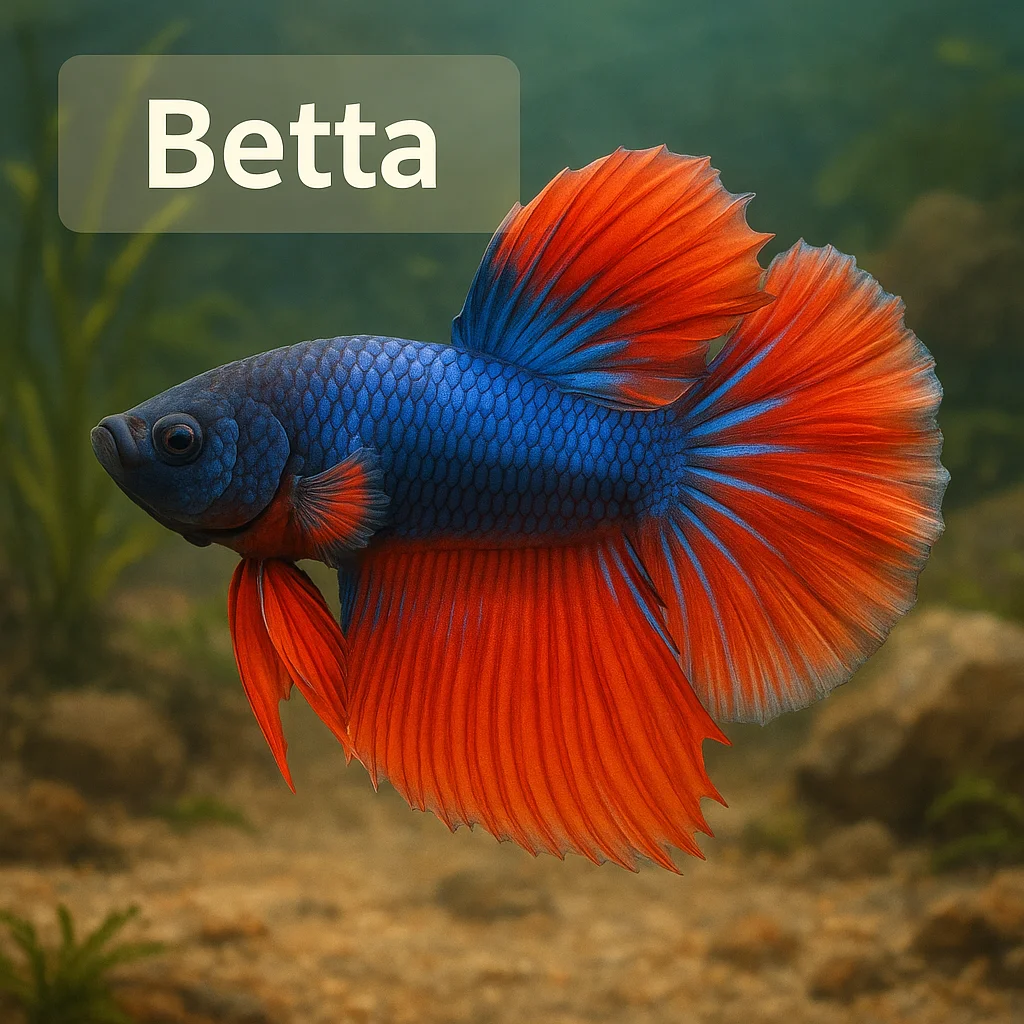
The Betta fish, often celebrated for its vibrant colors and elaborate fins, is a popular freshwater fish with a fascinating history and biology. Native to Southeast Asia, Betta splendens, commonly known as the Siamese fighting fish, will captivate any aquarist with its striking appearance and engaging behavior.
- Common name(s): Betta, Siamese fighting fish
- Scientific name: Betta splendens (varies for other species in the genus)
- Animal type: Fish
- Typical adult size: 2 to 3 inches long
- Typical lifespan: 2 to 5 years (captivity); less in the wild
- Diet type: Carnivore; feeds on insects, larvae, and commercial fish flakes
- Activity pattern: Diurnal
- Social structure: Solitary; territorial, especially males
- Speed / movement highlights: Slow swimmer, capable of short bursts
- Intelligence/learning: Responsive to stimuli and can recognize caretakers
- Primary habitats: Shallow waters, rice paddies, ponds
- Geographic range: Native to Southeast Asia, particularly Thailand and Cambodia
- Predators/threats: Larger fish and birds; habitat loss due to human activity
- Conservation status: Not endangered; varies by species
🔍 Identification & Appearance
Recognizing a Betta involves noting its distinctive body and fin structure. Bettas have elongated bodies and dramatic fins that can be short and rounded or long and flowing. They are known for their brilliant coloration, ranging from red and blue to unique iridescent shades. Age and health can affect their color intensity.
- Top ID Tips:
- Elongated body with lush finnage
- Vivid coloration varies by individual and lighting
- Unpaired long fin on top and bottom (dorsal and anal fins)
- Small, rounded pectoral fins
- Occasionally confused with gouramis but have more extravagant colors
- Bubble nests as a sign of territory, especially in males
- Pale or dull color may indicate stress or illness
🧱 Body Structure & Physical Adaptations
Bettas display a slender build optimized for navigating still or slow-moving waters in their native habitat. Their small, upward-facing mouth is adapted for feeding on insects at the water surface. Their labyrinth organ allows them to breathe surface air, an adaptation for surviving low oxygen environments.
- Key Adaptations:
- Labyrinth organ for atmospheric breathing
- Slender, streamlined body
- Long, flowing fins balance aesthetics and function
- Superior mouth position for surface feeding
- Vision adapted to dim, underwater lighting conditions
- Color variation may play a role in attracting mates
🌍 Range & Distribution
Betta fish are native to the freshwater environments of Southeast Asia. They commonly inhabit the warm, still waters of rice paddies, slow-moving streams, and shallow ponds. Their ability to adapt to varied aquatic environments has led to widespread distribution in captivity.
- Where You Might Find It:
- Tropical areas of Thailand
- Cambodian freshwater regions
- Laos and Vietnam wetland ecosystems
- Rice paddies and agricultural waterways
- Human-made waterways and ponds
🏞️ Habitat & Shelter
Bettas thrive in quiet, shallow waters with abundant vegetation, which provides both food and cover. Seasonal rain impacts their habitats, expanding their available territory. Their adaptability to lower oxygen environments allows them to inhabit crowded or stagnant waters dangerous to other species.
🧭 Behavior & Ecology
Bettas are known for their territorial and occasionally aggressive nature. Males are notably defensive of their space, which is marked by bubble nests they blow at the water’s surface. Bettas communicate through displays, such as flaring gills to appear larger and deter potential threats.
- Behavior Highlights:
- Bubble nest-building as a sign of territory
- Flaring to establish dominance
- Intellectual engagement with environment and owners
- Solitary by nature, less aggressive in females
- Use of lateral lines to detect water movement
- Recognize human companions
👥 Social Life & Group Dynamics
Bettas are predominantly solitary. While males will fiercely guard their territory against each other, females can sometimes be housed together with caution. Betta species communicate through visual displays during encounters, with males particularly sculpting elaborate bubble nests to attract potential mates.
- Social Structure Notes:
- Highly territorial among males
- Slightly communal among female groups
- Displays deter aggression without contact
- Female hierarchy when grouped together
- Mating displays involve fin fanning and color enhancement
🍽️ Diet, Prey & Predators
Betta fish typically feed on insects and larvae at the water's surface. In captivity, they thrive on formulated pellets and occasional live food treats. They face predation from larger fish and birds in the wild, utilizing their labyrinth organ to access oxygen-depleted waters as refuge from predators.
- Feeding Notes:
- Consume a diet rich in protein
- Natural diet includes insect larvae
- Occasional small crustaceans and worms
- In captivity, fed on specialized pellets and live/frozen food
- Labyrinth organ aids in evading predators by accessing less oxygen-rich environments
🦌 Hunting, Foraging & Movement
In foraging, Bettas are surface dwellers, adept at seizing small insects and larvae. Their swimming style maximizes maneuverability rather than speed. Bettas inspect their environment thoroughly, adjusting to slight changes in water conditions.
- Movement & Strategy:
- Maneuver rather than sprint in water
- Surface feeders with agile adaptations
- Occasional leaping to catch airborne prey
- Evaluate surroundings meticulously
- Limited fast swimming capabilities
🧠 Intelligence & Senses
Betta fish are known for their strong memory and the ability to recognize individual humans. They can engage in problem-solving behaviors and exhibit curiosity. Their vision is adapted to perceiving contrasts, aiding in prey capture.
- Notable Abilities:
- Recognizes regular caretakers
- Excellent memory for spatial features
- Shows problem-solving through activity changes
- Adapted vision for dim aquatic conditions
- Responds to environmental changes quickly
🪺 Reproduction, Pregnancy & Parenting
Bettas engage in elaborate courtship with males showcasing vibrant colors and building a bubble nest. Females release eggs that are fertilized by the male, who then tends to the eggs in the nest. Betta fry emerges fully developed but requires careful environmental control to ensure survival.
- Reproduction Snapshot:
- Bubble nests central to breeding
- Females exhibit selective mate choice
- Males solely care for eggs post-fertilization
- Fry are independent but require stable conditions
- Courtship rituals involve visual displays
♀️♂️ Male vs Female Differences
Males usually display larger, more colorful fins compared to females. While both sexes may share similar size ranges, males are typically more aggressive and show more elaborate coloring used during courtship and territory defense.
- Sex Differences at a Glance:
- Brighter, longer fins in males
- Bolder behavior in courtship displays
- More vivid colors on males when healthy
- Females may have subtle fin edging
- Bubblenests built exclusively by males
🧬 Subspecies & Variation
The Betta genus contains various species, each exhibiting unique traits. Differences include size, fin layout, and color ranges. The classification of subspecies can vary, with some hybrids commonly observed in captivity.
- Variation Notes:
- Species diversity within Betta genus
- Variable coloration leads to numerous artificial breeds
- Environmentally influenced behavior in captivity
- Hybrids developed to enhance color patterns
- Size and fin type can vary across subspecies
⚠️ Threats, Conservation & Human Interaction
Although not endangered, Betta fish face threats such as habitat destruction and pollution. They are commonly bred in captivity, presenting ethical considerations regarding tank setup and care. Observers should focus on sustainable practices that benefit biodiversity and natural habitats.
- Responsible Notes:
- Population pressure due to overbreeding
- Importance of habitat-preserving practices
- Avoid release of non-native bettas into wild environments
- Ethical breeding to maintain natural characteristics
- Advocate for environmental protections in native regions
✨ Fun Facts & Unique Traits
- Bettas can breathe air thanks to their labyrinth organ.
- They are believed to recognize their human caregivers.
- Their territorial aggression is innate, in part due to competition for mates.
- Betta fish can display a wide range of colors even within the same species.
- Each Betta fish has a unique temperament, some being more docile than others.
- Betta fish have inspired art and culture, particularly in Thailand where they are native.
📌 Summary
- Betta fish exhibit vibrant colors and elaborate fins.
- They inhabit shallow, vegetarian-rich water systems in Southeast Asia.
- Diet includes insects; threats include habitat destruction.
- Typically solitary, with males known for aggressiveness.
- Reproduction involves bubble nest creation by males.
- Their labyrinth organ allows breathing in low oxygen environments.
- Possessability to recognize caretakers.
- Due to their aesthetic appeal, Bettas are popular in aquariums worldwide.