🦁 Pleco
🧾 Quick Facts
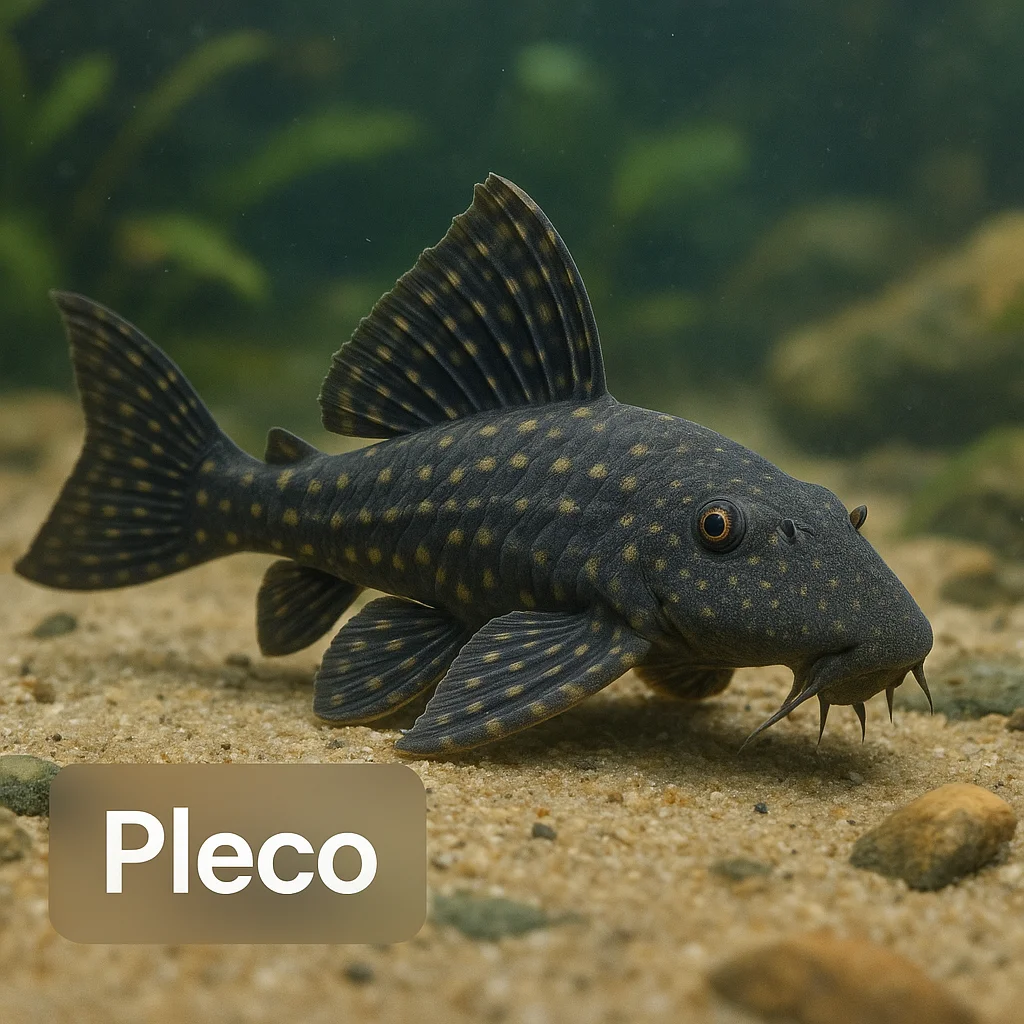
The term "Pleco" refers to a diverse group of armored catfish, belonging mainly to the family Loricariidae. These freshwater fish are popular in the aquarium trade due to their algae-eating habits and unique appearance. Despite their common name, plecos include several species with varying characteristics.
- Common name(s): Pleco, Plecostomus, Armored Catfish
- Scientific name: Varies by species (e.g., Hypostomus plecostomus)
- Animal type: Fish
- Typical adult size: 5–24 inches (13–60 cm), varies by species
- Typical lifespan: 10–15 years in captivity
- Diet type: Omnivore; algae, detritus, small invertebrates
- Activity pattern: Mostly nocturnal
- Social structure: Solitary or small groups
- Speed / movement highlights: Capable swimmers
- Intelligence/learning: Known for adaptability to aquarium conditions
- Primary habitats: Freshwater rivers and streams
- Geographic range: South America, Central America
- Predators/threats: Larger fish, birds; human habitat impact
- Conservation status: Varies by species, some under threat
🔍 Identification & Appearance
Plecos are easily recognized by their bony armor plates and sucker mouth, which they use to cling to surfaces and scrape algae. They have a generally elongated body with a broad, flat head. The colors can vary, including browns, blacks, and patterns like spots or bands.
- Body shape and silhouette: Elongated with wide, flat head
- Key colors/patterns: Varied browns and blacks, spots, and bands
- Distinctive features: Sucker mouth, dorsal fins can be prominent
- Tracks, scat, or other field signs: Not applicable
- Common look-alikes: Other catfish; differentiate by armor and mouth shape
- Top ID Tips:
- Look for the flattened body and head with armored plating
- Note the unique sucker mouth used for algae scraping
- Check for spots or band patterns depending on species
- Look for the prominent dorsal fin
- Typically nocturnal, active at night
- Distinguished from simple catfish by armor and mouth structure
- Colour may help in identifying specific species
🧱 Body Structure & Physical Adaptations
Individual pleco species exhibit specific physical adaptations to thrive in their environments. They tend to have a stocky build, well-suited for withstanding currents in their natural habitats.
- Build and proportions: Stocky, adapted for stability in currents
- Teeth/beak/jaw adaptations: Suction-cup mouth for scraping algae
- Claws/hooves/wings/fins: Fins optimized for clinging rather than speed
- Sensory strengths: Good at detecting changes in water current
- Key Adaptations:
- Bony plates provide protection against predators
- Modified mouth helps hold onto surfaces in fast-flowing water
- Strong fins aid in maintaining position against currents
- Good tactile abilities through barbels around the mouth
- Some can breathe air if oxygen levels in the water are low
🌍 Range & Distribution
Plecos are widespread in tropical and subtropical regions of the Americas, particularly South America. They can be found in a variety of countries where riverine ecosystems are prominent.
- Continents/regions: South America, Central America
- Typical countries/biomes: Brazil, Peru, Venezuela, Amazon River Basin
- Elevation range: Predominantly lowland waters
- Seasonal movements or migration: Mostly resident
- Where You Might Find It:
- Amazon and Orinoco river systems
- Coastal streams in Colombia and Venezuela
- Riverbanks with ample vegetation
- Tropical rivers flowing through dense forests
- Shallower river sections with abundant algae
🏞️ Habitat & Shelter
Plecos thrive in freshwater habitats, typically within tropical river systems that provide ample vegetation and algae growth. They shelter among submerged structures and vegetation, contributing to their camouflage and protection from predators.
- Preferred habitats: Freshwater rivers and streams with moderate to fast flow
- Microhabitats and shelter: Hide among roots, rocks, and dense aquatic plants
- How weather/season changes behavior: Increased activity during wet seasons
- Why habitat knowledge matters: Improves understanding of ecological roles and supports conservation efforts
🧭 Behavior & Ecology
Plecos are primarily nocturnal, helping them to avoid predation and effectively feed on the algae covering submerged surfaces. They play a crucial role in controlling algae growth in their habitats and are often used in aquariums for similar purposes.
- Daily routine: Active at night, resting during the day in shelters
- Communication: Limited; mostly manifests through movement
- Typical interactions with other species: Important in controlling algae levels
- Role in the ecosystem: Algae consumer and detritus cleaner
- Behavior Highlights:
- Mainly nocturnal and secretive
- Contributes to keeping water clean and clear
- Uses substrate to hide and avoid predators
- Low aggression towards other fish, relatively peaceful
- Important prey for larger fish and predatory birds
👥 Social Life & Group Dynamics
While plecos are largely solitary, they may coexist with other fish without significant conflict, making them suitable for community aquariums. They don't participate in complex social structures, as their ecological roles primarily revolve around solitary activities, such as feeding and hiding.
- Solitary vs social tendencies: Mostly solitary
- Group types: May form loose associations in rich feeding areas
- Cooperation: Limited, but can live alongside non-aggressive species
- Social Structure Notes:
- Primarily solitary but non-territorial
- Can tolerate the presence of similar species when resources are abundant
- Low tolerance for competition in limited spaces
- Shows no complex social structures
🍽️ Diet, Prey & Predators
Plecos are omnivorous, with a diet predominantly consisting of algae and detritus scrapped from surfaces using their specialized mouths. In natural settings, they might also consume small invertebrates.
- What it eats: Algae, detritus, small invertebrates
- Hunting targets and strategies: No traditional hunting, relies on scraping
- Main natural predators: Larger fish, birds
- Typical anti-predator defenses: Camouflage, bony plates
- Feeding Notes:
- Primarily consumes algae off surfaces
- Diet changes slightly with seasons as algae availability changes
- Relies on sucker mouth for scraping
- Contributes to water quality through consumption of detritus
🦌 Hunting, Foraging & Movement
Plecos are strong swimmers, rarely moving far from their feeding grounds. They cling to surfaces within the riverbed, using their sucker mouth to extract necessary nutrients.
- Locomotion style: Swimmer with adherent abilities to withstand currents
- Speed and endurance: Good endurance, fit for extended feeding sessions
- Typical hunting/foraging times: Primarily active and foraging at night
- Movement & Strategy:
- Stable positioning using sucker mouth in currents
- Efficient movement for algae scraping on riverbeds
- Nocturnal foraging reduces predator risks
- Minimal movements required when sufficient algae is present
🧠 Intelligence & Senses
Plecos display resilience and adaptability, especially in artificial environments like aquariums. They use tactile senses to locate food and communicate minimal movement among different individuals.
- Problem-solving and learning: Limited, mostly related to adaptation in tanks
- Senses and how they are used: Tactile senses around mouth; vision for low-light navigation
- Notable Abilities:
- Adapts well to changing environmental conditions
- Utilizes tactile systems to feel around substrates
- Efficiently scrapes algae with specialized mouth
- Limited social intelligence but coexists peacefully
🪺 Reproduction, Pregnancy & Parenting
Specific breeding habits vary across species, but plecos often demonstrate interesting reproductive strategies. The males may guard the eggs, indicating some level of parental involvement.
- Breeding seasonality and courtship: Season varies, simple pairing
- Mating system: Often monogamous for duration of season
- Gestation/incubation period: Varies, generally short among fish
- Litter/clutch size: Moderate, species-dependent
- Reproduction Snapshot:
- Males may guard the eggs until hatching
- Fertilization mostly external
- Parental care mainly seen in egg guarding
- Breeding condition and strategies vary across species
♀️♂️ Male vs Female Differences
Distinctions between male and female plecos can be subtle, primarily noticed during breeding. Males may be more territorial or exhibit enhanced decorative features to attract mates.
- Size/weight differences: Often males slightly larger, varies by species
- Coloration/horns/antlers: Occasional more pronounced features in males
- Behavioral role differences: Males may guard eggs, display territorial tendencies
- Sex Differences at a Glance:
- Males may have more developed fin extensions
- Guarding behavior more prevalent in males
- Breeding features in males can be subtle
🧬 Subspecies & Variation
There is significant diversity among plecos, resulting in various subspecies and morphs. These differences often reflect adaptations to specific environments, such as varying water conditions or available diets.
- Known subspecies: Many, includes bristle nose plecos, zebra plecos, etc.
- Local adaptations: Coloration and size often reflect environmental pressures
- Subspecies clarity: Classification can sometimes be debated or adjusts with new research
- Variation Notes:
- Zebra plecos are distinguished by black and white stripes
- Bristle-nose plecos have distinct nasal outgrowths
- Size varies greatly depending on species and environment
⚠️ Threats, Conservation & Human Interaction
Pleco populations face threats from habitat alteration, pollution, and collection for the aquarium trade. While not all species are under threat, habitat conservation is essential for their sustainability.
- Natural challenges: River pollution, habitat reduction
- Human-related pressures: Aquarium trade impact, overharvesting
- Coexistence tips: Sustainable aquarium practices; conserve natural habitats
- Responsible Notes:
- Many plecos adapt well to home aquariums but require appropriate care
- Avoid introducing into non-native habitats
- Understand captive management practices for breeding and health
✨ Fun Facts & Unique Traits
- Plecos are often kept as "cleaner" fish in aquariums.
- Some plecos can breathe air when in oxygen-poor environments.
- Their sucker mouths allow them to feed and hold onto rocks in fast currents.
- Barnacles sometimes grow on their sturdy, armored bodies.
- They are known for their peaceful coexistence in multi-species tanks.
- Plecos play a vital role in river ecosystems by helping control algae.
📌 Summary
- Plecos are a diverse group of armored catfish from the Loricariidae family.
- They inhabit tropical freshwater rivers, primarily in South America.
- Recognizable by their sucker mouths and bony armor.
- Serve an ecological role in algae control and detritus cleaning.
- Generally solitary with a mostly nocturnal lifestyle.
- Diet mainly consists of algae, detritus, and small invertebrates.
- Parental roles include males guarding the eggs.
- Face threats from habitat loss and collection for the aquarium trade.
- Displays show variation that reflects local environmental adaptation.