🦁 American Bison
🧾 Quick Facts
The American Bison, often referred to as the buffalo, is a quintessential symbol of the North American prairie. Known for their massive size and iconic presence, these creatures play a critical role in the ecosystem. Below are some quick facts to help you understand this majestic animal.
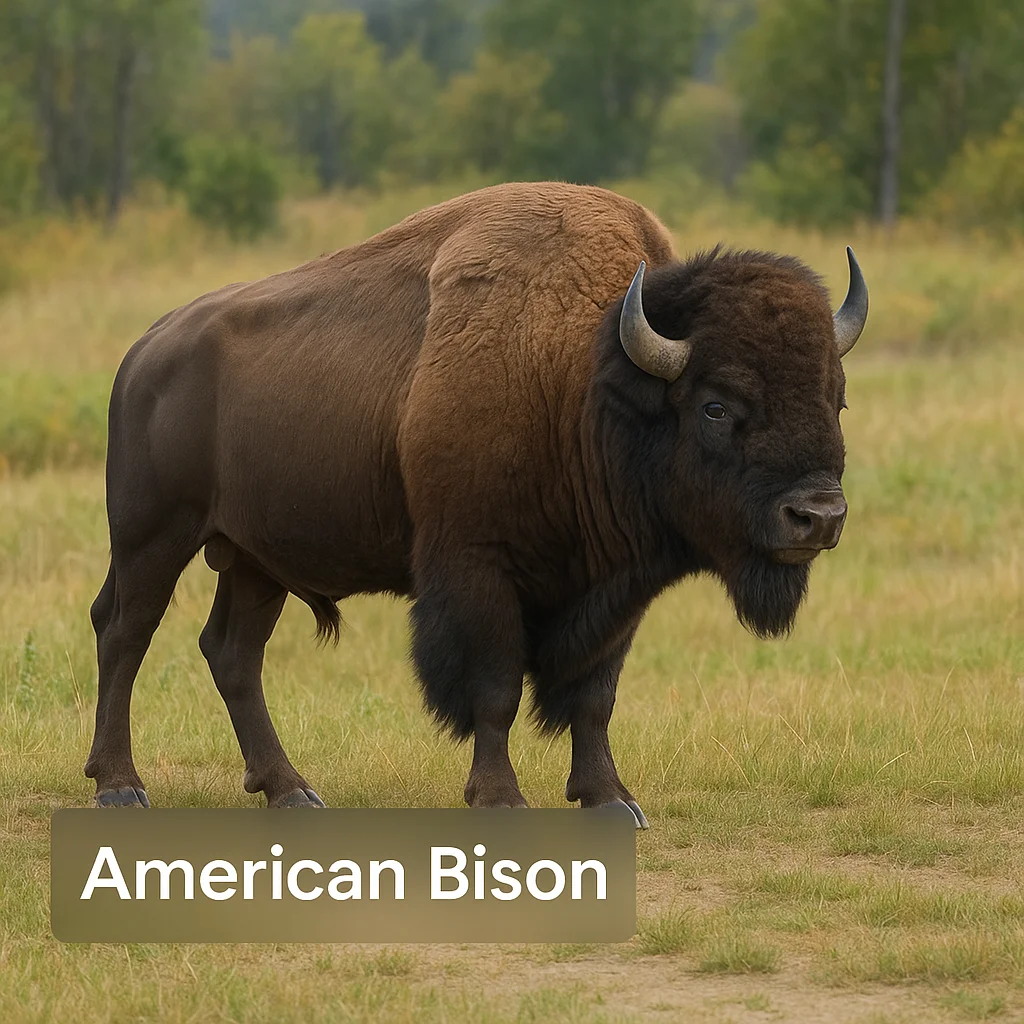
- Common name(s): American Bison, Buffalo
- Scientific name: Bison bison
- Animal type: Mammal
- Typical adult size: 7-12 feet in length, 5-6 feet in height at the shoulder, weighing 1,000-2,200 pounds
- Typical lifespan: 12-20 years in the wild, up to 25 years in captivity
- Diet type: Herbivore; primarily grasses and sedges
- Activity pattern: Primarily diurnal but may be active at all times of the day and night
- Social structure: Herds that vary in size depending on the season
- Speed/movement highlights: Can run up to 35 mph
- Intelligence/learning: Known for complex social structures and strong spatial memory
- Primary habitats: Grasslands, plains, and sometimes parklands
- Geographic range: Historically across North America, now primarily in protected areas
- Predators/threats: Wolves, mountain lions; human pressures include habitat loss and historical hunting
- Conservation status: Near Threatened, populations stable in protected areas
🔍 Identification & Appearance
The American Bison is easily identified by its immense size, humped shoulders, and large head. Their shaggy mane contrasts with a shorter and lighter summer coat.
- Robust, muscular build with a distinctive shoulder hump
- Dark brown fur, often becoming lighter in summer
- Short, curved horns present in both males and females
- Large, blocky head with a thick forehead
- Typically leaves large, cloven-hoofed tracks
- Puffs of dense undercoat visible in colder months
- Distinguished from cattle by their massive head and distinct shoulder hump
- Always fully grown with a characteristic horizontal silhouette
🧱 Body Structure & Physical Adaptations
The American Bison's body structure is specifically adapted for survival in open plains and grasslands. Their physical features support their ability to graze, navigate, and ward off predators.
- Large, humped shoulders with powerful muscles for head butting and plowing through snow
- Wide, flat snout optimized for grazing grass
- Thick, insulated coat that adapts seasonally to varying temperatures
- Sturdy, cloven hooves for traversing diverse terrain
- Keen sense of smell aids in locating food and detecting danger
- Excellent peripheral vision despite lacking depth perception
🌍 Range & Distribution
Originally widespread across North America's prairies and plains, the American Bison now primarily resides in protected areas including national parks and reserves.
- Found largely in the Great Plains region
- Present in smaller, protected populations in the Rocky Mountains
- Occasionally found in prairie and grassland reserves
- Historical range from the eastern woodlands to the Rocky Mountains
- Largely absent from their historical range outside of conservation areas
- Non-migratory except for short, seasonal movements
🏞️ Habitat & Shelter
American Bison prefer open grasslands where they graze and roam freely. Their ability to thrive in these environments is key to understanding their behavior and ecosystem importance.
- Primarily dwell in open prairies and plains
- Can also be found in meadows within woodlands
- Utilize natural landscape features for shelter against elements
- Seasonal behavior includes moving to lower areas in winter
- Essential to maintaining grassland ecosystems through grazing practices
🧭 Behavior & Ecology
The behavior and ecology of the American Bison are closely tied to their role as grazers on North American plains. They impact their environment significantly through their feeding habits and interactions.
- Grazing during the day is main activity
- Communicate through grunts and other vocalizations
- Display social behavior, with clear hierarchies in herds
- Act as keystone species in grassland habitats
- Interact with other herbivores like pronghorn and elk
- Use wallows to cool off, disrupt soil, and shape landscape
👥 Social Life & Group Dynamics
As social creatures, American Bison form herds with complex dynamics. Their group behavior influences their survival and breeding success.
- Lives in large herds for safety in numbers
- Female-led herds are common, males often solitary except during breeding
- Sub-groups within herds based on gender and age
- Strong maternal bonds within herds
- Horns used for resolving conflicts mildly
- Calves are well-guarded within the herd environment
🍽️ Diet, Prey & Predators
Primarily herbivorous, the American Bison's diet consists predominantly of grass, which influences both their ecological role and physical adaptations.
- Eats a variety of grasses, sedges, and herbs
- Feeding activity peaks during early morning and late afternoon
- Minimal predation risk due to size, mainly vulnerable to wolves and mountain lions
- Employs group vigilance for predators
- Minimal scavenging despite occasional protein intake from soil ingestion
🦌 Hunting, Foraging & Movement
Though non-predatory, bison spend much time foraging, their movement and grazing patterns integral to their survival and influence on the landscape.
- Efficient grazers in groups
- Capable of remarkable speed bursts to evade predators
- Mass migration is not typical
- Foraging involves selective grass preference
- Adapt to seasonal changes in vegetation
🧠 Intelligence & Senses
American Bison are equipped with sensory adaptations that enhance their survival, though little is known about their cognitive abilities beyond instinctive behavior.
- Use of sophisticated communication methods to maintain herd cohesion
- Strong spatial awareness due to migratory ancestry
- Keen olfactory senses help in food and predator detection
- Visual acuity assists in spotting distant movements
- Some learn to adapt rapidly to human presence without domestication
🪺 Reproduction, Pregnancy & Parenting
Reproductive strategies in the American Bison involve seasonal mating and strong maternal care, ensuring offspring survival in challenging environments.
- Breeds primarily July through September
- Mating system typically polygynous
- Gestation lasts approximately 9 months
- Single calf birthed, rarely twins
- Offspring are precocial, standing shortly after birth
- Shared maternal protectiveness within herds
♀️♂️ Male vs Female Differences
Male and female American Bison exhibit noticeable differences in size and social roles, important for their societal structure and breeding behavior.
- Males significantly larger than females
- Males possess thicker horns
- Mating displays predominantly male
- Females form stable, cohesive social units
- Males tend to be more solitary outside breeding season
🧬 Subspecies & Variation
While the primary species is Bison bison, there are variations and potential subspecies that show differences in habitat preference and physical characteristics.
- Plains Bison, found in grasslands, identified by geographical distribution
- Wood Bison, found in forested regions, distinguishable by bulkier build
- Variation in coat density based on climate
- Local adaptations in hoof structure due to terrain differences
- Subspecies classification recognized with careful observation
⚠️ Threats, Conservation & Human Interaction
The past threat of extinction due to hunting has shifted largely to conservation. Understanding the bison's needs is crucial for their continued survival.
- Primarily threatened by habitat fragmentation
- Conservation efforts focusing on reservation and park protection
- Preservation of genetic diversity critical
- Restoration initiatives underway in multiple regions
- Human interactions mostly limited to ecotourism
✨ Fun Facts & Unique Traits
- Once roamed in tens of millions across North America
- Bison have been known to grow a distinctive "beard" of winter hairs
- Part of "buffalo jumps" practice by indigenous peoples, key in historical human interactions
- Playful nature observed in occasional wallow "bathing"
- Bison trails can change the landscape and aid fire breaks
- Customarily symbolized on the U.S. National Park Service Logo
- Bison are featured prominently in some Native American stories
📌 Summary
- A massive mammal recognizable by its hump and distinct mane
- Inhabits grasslands and parklands primarily in North America
- Diet consists predominantly of grass; a key grazer in ecosystems
- Faces predation mainly from wolves and mountain lions
- Highly social with strong herd dynamics
- Breeding occurs in summer; calves are well-protected
- Adaptations include powerful legs and strong olfactory senses
- Ongoing conservation efforts crucial for their survival