🦁 Bactrian Camel
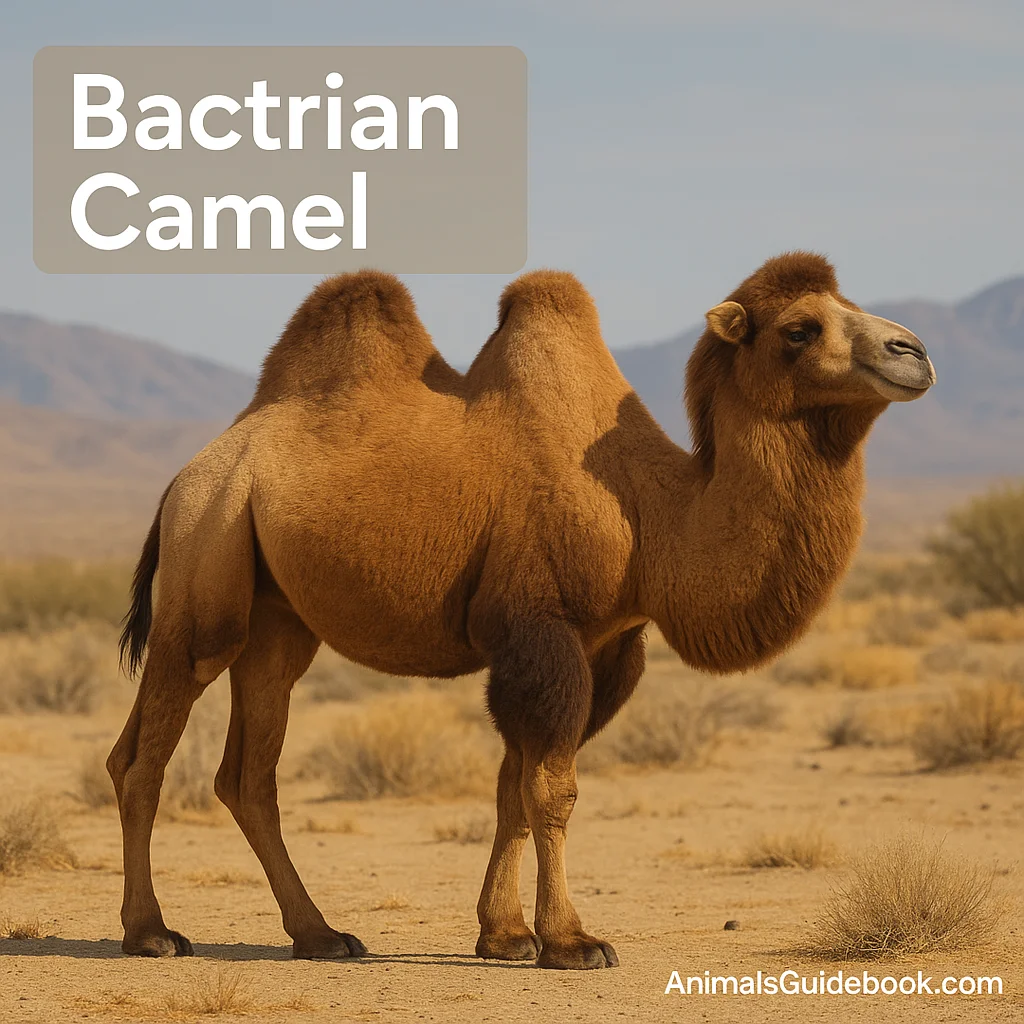
The Bactrian camel, often recognized as the two-humped camel, is a remarkable species adapted to the harsh climates of Central Asia's deserts. Known scientifically as Camelus bactrianus for the domesticated form, and Camelus ferus for the wild species, this camel has played a crucial role in human history as a pack animal.
🧾 Quick Facts
- Common name(s): Bactrian Camel
- Scientific name: Camelus bactrianus (Domestic), Camelus ferus (Wild)
- Animal type: Mammal
- Typical adult size: 220 – 230 cm tall; 450 – 1,000 kg in weight
- Typical lifespan: 20 – 40 years (varies wild vs captive)
- Diet type: Herbivore; primarily grasses, leaves, and shrubs
- Activity pattern: Diurnal
- Social structure: Group; herds
- Speed / movement highlights: Can run up to 65 km/h in short bursts
- Intelligence/learning: Known for adaptability and learning from past experiences
- Primary habitats: Deserts and semi-arid regions
- Geographic range: Central Asia, predominantly Mongolia and China
- Predators/threats: Wolves, humans (hunting and habitat encroachment)
- Conservation status: Domesticated (not at risk); Wild Bactrian is Critically Endangered
🔍 Identification & Appearance
The Bactrian camel is distinguishable by its two prominent humps, which are used for fat storage. They have long, shaggy hair that varies in color, providing warmth during cold desert nights and can be shed during warmer months. Their sturdy bodies and long limbs make them well-suited for traversing sandy or rocky terrains.
- Top ID Tips
- Distinctive two humps
- Long shaggy fur, typically sandy or brown
- Broad feet with two toes and soft pads
- Long eyelashes and closable nostrils
- Short ears and thick eyebrows
- Robust lower jaw with powerful chewing muscles
- Tall, lean silhouette with long legs
- Distinctive curved neck shape
- Large, expressive eyes
- Generally friendly demeanor towards humans
🧱 Body Structure & Physical Adaptations
The Bactrian camel's build is robust, with a voluminous chest and a high-set, flexible head. They have powerful jaws equipped with rough-surfaced molars, ideal for grazing tough desert vegetation. Their feet are broad and flat, allowing them to walk on loose desert sands without sinking. Adapted to extreme desert climates, they have efficient kidneys and digestive systems that minimize water loss.
- Key Adaptations
- Two humps for fat storage
- Thick fur for insulation against cold
- Flat feet for traversing sand
- Efficient water retention abilities
- Nostrils that can close to guard against sand
- Long eyelashes to protect eyes from dust
- Adjustable body temperature to conserve water
- Highly adaptable diet, needs minimal water intake
- Powerful, gritty molars for chewing tough vegetation
- Resistant to temperature extremes
🌍 Range & Distribution
The Bactrian camel is native to the steppes of Central Asia. They are mostly found in countries like Mongolia and China, with the domesticated type spreading further afield as pack animals in arid regions.
- Where You Might Find It
- Mongolia's Gobi Desert
- Northern China
- Kazakhstan desert plains
- Central Asian dry steppes
- Remote regions of Western China and Inner Mongolia
- Altai mountainous regions
- Hot desert environments
🏞️ Habitat & Shelter
Bactrian camels thrive in desert and semi-arid environments, making efficient use of sparse vegetation. They are well-adapted to survive the extreme temperatures and limited water sources of these regions. During sandstorms or cold nights, they can shelter behind natural rock formations or vegetation.
🧭 Behavior & Ecology
These camels are primarily diurnal, spending their days grazing and moving in search of food and water. Their movement patterns adapt to seasonal changes, covering large areas when resources are scarce. Bactrian camels communicate through vocalizations like grunts and bellows and through body language, such as head tilts and limb movements.
- Behavior Highlights
- Migratory behavior based on resource availability
- Strong family and herd bonds
- Favoring sandy or rocky substrates
- Calculative water and food foraging strategies
- High tolerance for temperature extremes
- Display curiosity and cautiousness around humans
- Defensive group formations against predators
- Social grooming within herds
👥 Social Life & Group Dynamics
Bactrian camels live in herds led by a dominant male. These herds provide added protection from predators and facilitate better chances of finding food and water. While mainly social, instances of solitary camels occur, especially among older males. Herd dynamics can change based on environmental pressures like food availability.
- Social Structure Notes
- Typically found in herds of up to 30 individuals
- Dominance established by mature males
- Herds may merge or split based on resources
- Strong social bonds and cooperative behaviors
- Younger males may form bachelor groups
- Females often lead calf nurturing efforts
🍽️ Diet, Prey & Predators
Bactrian camels are primarily herbivorous, feeding on desert shrubs, leaves, and grass. Their diet allows them to go without water for extended periods. While they have few natural predators, wolves sometimes target the calves. Defensive tactics include forming protective circles around young members and vocal alarms to alert the herd.
- Feeding Notes
- Adapted to graze sparse desert vegetation
- Can endure long periods without water
- Consume tough, salty, or thorny plants
- Thick lips protect against sharp flora
- Occasionally graze in agricultural lands
- Ruminants with a multi-chambered stomach for digesting tough plants
🦌 Hunting, Foraging & Movement
As natural foragers, Bactrian camels cover significant distances daily in search of sustenance. They can travel swiftly and with endurance, using a unique loping gait that conserves energy. During food-scarce periods, they prioritize areas with known vegetation and water sources, strategically spacing out herd movements to minimize competition for resources.
- Movement & Strategy
- Walking and trotting as primary modes of travel
- Adapted for long-distance trekking
- Seasonal migrations for grazing
- Naviagation using environmental landmarks
- Strategic rest periods to conserve energy
🧠 Intelligence & Senses
Bactrian camels exhibit impressive memory and learning capabilities, often remembering resource locations over time. Their acute senses are critical for detecting threats and guiding their movement across the vast deserts. Although sight and smell are their most developed senses, they also rely on tactile feedback while foraging.
- Notable Abilities
- Excellent memory of migratory routes
- Adept at learning new feeding strategies
- Highly sensitive sense of smell
- Sharp hearing for detecting distant predators
- Creative in dealing with environmental challenges
🪺 Reproduction, Pregnancy & Parenting
Breeding primarily occurs in the winter months, with a gestation period of roughly 13 to 14 months. Females typically give birth to a single calf, which is relatively well-developed at birth. Parental care is mainly provided by the mother, with strong maternal-offspring bonds that last for several years. Social stability aids calf survival within the herd.
- Reproduction Snapshot
- Breeding season during colder months
- Gestation lasts 13-14 months
- Typically one calf per birth
- Calves are initially dependent but quickly gain independence
- Maternal care is essential for early survival
- Herd provides communal protection for calves
♀️♂️ Male vs Female Differences
Male Bactrian camels tend to be larger and exhibit more defined musculature compared to females. Behaviorally, males often engage in displays of dominance during mating seasons. Horn growth and size marks another significant difference between the sexes.
- Sex Differences at a Glance
- Males larger and heavier than females
- Males possess thicker necks
- Domineering behavior during the breeding season
- Some males develop small horn-like projections
- Females lead nurturing groups
🧬 Subspecies & Variation
The Bactrian camel is divided into the domesticated and wild varieties, with the latter being critically endangered. Domestic Bactrian camels are characterized by varied hair coloration depending on their historical breeding impact, whereas wild camels retain a more consistent sandy hue for camouflage.
- Variation Notes
- Domesticated camels exhibit diverse coat colors
- Wild camels remain consistent in sandy brown
- Difference in hump size between wild and domestic
- Wild camels tend to be more slender and agile
⚠️ Threats, Conservation & Human Interaction
The wild Bactrian camels face severe threats from habitat fragmentation, hunting, and competition for water resources. Conservation efforts focus on protecting their natural habitats and preventing illegal poaching. Sustainable use by humans, such as eco-tourism and regulated breeding programs, support their survival without negatively impacting their numbers.
- Responsible Notes
- Support conservation efforts for wild Bactrian camels
- Avoid disturbance in natural habitats
- Participate in regulated eco-tourism initiatives
- Ensure ethical treatment in domestic settings
- Raise awareness of their conservation status
✨ Fun Facts & Unique Traits
- Bactrian camels have been used for over 2,500 years as pack animals.
- Their humps can weigh up to 36 kg of stored fat.
- They can drink up to 57 liters of water in one sitting.
- Bactrian camels have three sets of eyelids and two rows of eyelashes to protect against sand.
- They can close their nostrils to prevent sand ingress.
- Domestic Bactrian camels are used in desert racing in some regions.
📌 Summary
- Bactrian camel is identifiable by its two humps and long, shaggy fur.
- Found across Central Asian steppes, adapted to desert environments.
- Herbivorous diet, with adaptations for water conservation.
- Social creatures, forming protective herds.
- Breeding sees single calves, with dedicated maternal care.
- Wild Bactrian camels critically endangered, conservation needed.
- Adaptable diet, notable resilience to extreme conditions.
- Used historically as pack animals, still vital in some cultures.