🦁 Bottlenose Dolphin
🧾 Quick Facts
The bottlenose dolphin is one of the most widely recognized marine mammals, known for its intelligence and playful nature. Its unique adaptation to various marine environments makes it a fascinating subject for study and conservation.
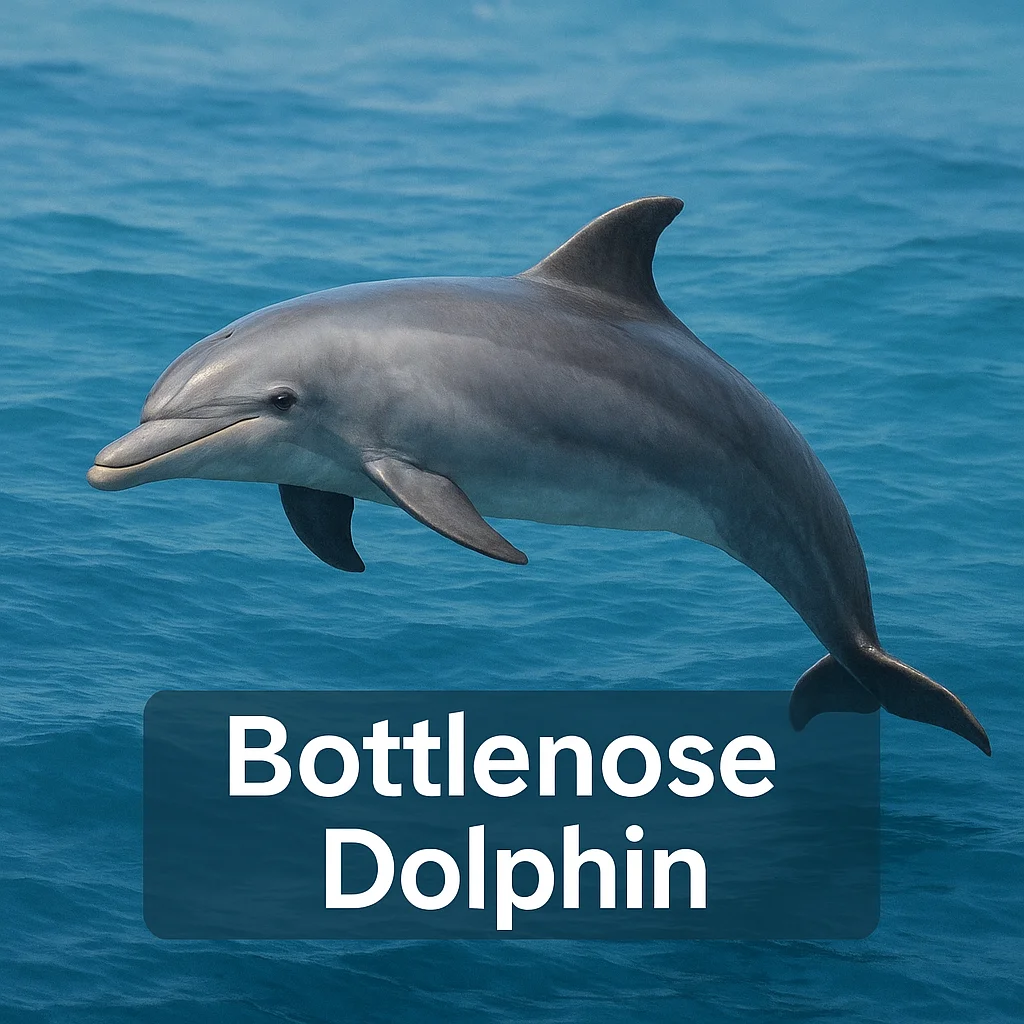
- Common name(s): Bottlenose Dolphin
- Scientific name: Tursiops truncatus (varies by classification)
- Animal type: Mammal
- Typical adult size: 2 to 4 meters (6.5 to 13 feet) in length; 150 to 650 kg (330 to 1430 lb) in weight
- Typical lifespan: 20 to 50 years (longer in captivity)
- Diet type: Carnivore, primarily fish and squid
- Activity pattern: Primarily diurnal, but can be active at night
- Social structure: Group-oriented, often in pods of 10-30
- Speed / movement highlights: Can swim up to 25 km/h (15 mph)
- Intelligence/learning: Highly intelligent with problem-solving and learning abilities
- Primary habitats: Coastal waters, often near estuaries and bays
- Geographic range: Global distribution in temperate and tropical oceans
- Predators/threats: Sharks, orcas; human activity and pollution
- Conservation status: Varies by region; some populations are threatened
🔍 Identification & Appearance
Bottlenose dolphins are easily identifiable by their streamlined bodies, pronounced dorsal fin, and distinct "bottle-shaped" snout. Their coloration typically ranges from light gray to slate gray with a lighter underside, allowing them to blend into their oceanic surroundings effectively.
- Sleek, torpedo-shaped body
- Light to dark gray back with lighter belly
- Curved dorsal fin located mid-back
- Broad pectoral flippers
- Characteristic beak-like snout
- Prominent blowhole used for breathing
- Top ID Tips
- Look for the curved dorsal fin
- Note the elongated, slender body shape
- Spot the characteristic bottlenose profile
- Observe the group swimming behavior
- Listen for vocalizations and surface breathing
- Check for social interactions around boats
- Dark eye ring visible in close encounters
- White foam and spray when surfacing is frequent
🧱 Body Structure & Physical Adaptations
The bottlenose dolphin's body is perfectly adapted for life in marine environments. Its sleek, hydrodynamic shape and powerful musculature allow it to navigate through the water with agility and speed.
- Build and proportions: Streamlined, with a robust yet flexible body
- Teeth/jaw adaptations: Conical teeth for grasping slippery prey
- Fins: Dorsal fin for stability, pectoral fins for steering
- Sensory strengths: Acute sonar abilities for echolocation
- Key Adaptations
- Streamlined body for efficient swimming
- Echolocation for hunting and navigation
- Up to 100 conical teeth for capturing prey
- Flexible neck for quick direction changes
- Thick blubber for temperature regulation
- Powerful tail fluke for propulsion
- High intelligence and problem-solving skills
🌍 Range & Distribution
Bottlenose dolphins are found in oceans worldwide, preferring warm and temperate coastal waters. They inhabit a range of environments from the Antarctic to Cape Cod, showcasing their adaptability to various marine habitats.
- Where You Might Find It
- Atlantic Ocean – North and South
- Indian Ocean coastal regions
- Pacific Ocean – from the U.S. to Peru
- Mediterranean and Black Seas
- Bays and estuaries globally
- Coastal areas and high seas
- Coral reef proximity
- Temperate and tropical zones
🏞️ Habitat & Shelter
Bottlenose dolphins prefer coastal areas where the seafloor shallows, providing abundant prey. They often frequent bays, estuaries, and open seas. Understanding their habitat preferences helps in protecting these areas from human activities and preserving dolphin populations.
🧭 Behavior & Ecology
Bottlenose dolphins exhibit complex behaviors, including social interactions, feeding techniques, and communication. They play a crucial role in their ecosystem by maintaining fish population balance and serving as prey for larger marine predators.
- Behavior Highlights
- Use echolocation for hunting and navigation
- Highly social, living in groups or pods
- Cooperative hunting strategies
- Acrobatic displays above water
- Caring for young in group settings
- Recognizable vocal patterns and clicks
- Occasional interactions with humans
- Community knowledge transfer observed
👥 Social Life & Group Dynamics
Bottlenose dolphins are highly social creatures, often forming complex social networks called pods, which can range in size from a small group to larger aggregations during feeding or mating.
- Social Structure Notes
- Commonly seen in pods of 10-30
- Occasional merging into super pods
- Strong social bonds and cooperation
- Care and defense of younger members
- Communication through whistles and clicks
- Ensemble in play and acrobatics
- Females form nurseries for cooperative rearing
🍽️ Diet, Prey & Predators
Bottlenose dolphins are carnivores mainly feeding on fish and squid. They use various hunting techniques like herding and fish circling. Predation primarily comes from sharks and orcas, although human activities also pose significant threats.
- Feeding Notes
- Prefers fish and squid
- Uses echolocation for locating prey
- Conducts coordinated hunting in groups
- Avoids areas with high shark density
- Adapts diet based on prey availability
- Occasionally known to play with food
🦌 Hunting, Foraging & Movement
Bottlenose dolphins are sophisticated hunters capable of various strategies to catch their prey. They exhibit high levels of dexterity and adaptability in their movement and when foraging at different depths or in diverse marine habitats.
- Movement & Strategy
- Excellent swimmers with speeds up to 25 km/h
- Use cooperative strategies in deeper waters
- Skilled at herding fish into clusters
- Investigates new areas for prey
- Employs team tactics to confuse schools of fish
🧠 Intelligence & Senses
The bottlenose dolphin is renowned for its intelligence, exhibiting behaviors like problem-solving and complex communication. They possess well-developed senses, particularly echolocation, which facilitates hunting and social interactions.
- Notable Abilities
- Ability to solve complex puzzles
- High memory and learning capacity
- Impressive use of echolocation
- Capacity for mimicry and learning by observation
- Social learning within community groups
🪺 Reproduction, Pregnancy & Parenting
Bottlenose dolphins do not have a strict breeding season and can reproduce year-round. They are usually polygamous, and females typically give birth every three to four years. The gestation period lasts about 12 months, and after birth, the calf remains dependent on the mother for at least two years.
- Reproduction Snapshot
- Non-seasonal breeders
- Single calf per birth
- Parental care predominantly by the mother
- Strong bond between mother and calf
- Calves learn by imitation and social learning
♀️♂️ Male vs Female Differences
There are subtle differences between male and female bottlenose dolphins, often related to size and social behavior. Males are typically larger and may play different roles within pods compared to females.
- Sex Differences at a Glance
- Males are generally slightly larger than females
- Females often lead nurseries
- Size differences subtle but consistent
🧬 Subspecies & Variation
There are several recognized subspecies of bottlenose dolphins, with variations in size, coloration, and habitat preferences. Classification can be debated, and there is variation observed between different geographic populations.
- Variation Notes
- Coastal vs offshore population differences
- Geographic coloration variation
- Habitat-specific call differences
⚠️ Threats, Conservation & Human Interaction
Bottlenose dolphins face several threats, including habitat degradation, pollution, and accidental capture in fishing gear. Conservation efforts focus on habitat protection, reducing bycatch, and limiting chemical pollutants.
- Responsible Notes
- Be mindful of boating near dolphin habitats
- Supporting conservation initiatives is crucial
- Respect marine protected areas
- Engage in sustainable fishing practices
✨ Fun Facts & Unique Traits
- Bottlenose dolphins are among the most studied marine mammals
- They have been known to use tools, like sponges, to protect their snouts
- Communicate with a complex system of whistles and clicks
- Often help rescue or guide lost marine animals
- Known for their playful exuberance and intricate social structures
📌 Summary
- Bottlenose dolphins are distinguished by their streamlined bodies and pronounced snouts
- They inhabit a variety of marine environments worldwide, particularly in coastal areas
- As carnivores, they primarily feed on fish and squid, utilizing efficient hunting tactics
- Known for their high intelligence and social structures within dynamic pods
- Learning and problem-solving capabilities are well-documented
- Challenges include pollution, habitat loss, and bycatch
- Conservation efforts focus on protecting habitats and reducing bycatch
- Unique traits include the ability to use tools and complex communication skills