🦁 Elephant Seal
🧾 Quick Facts
Elephant seals are large marine mammals that exhibit some of the most fascinating behavioral traits. Known for their impressive size and unique physical characteristics, these pinnipeds are often spotted along coastal regions during breeding and molting seasons.
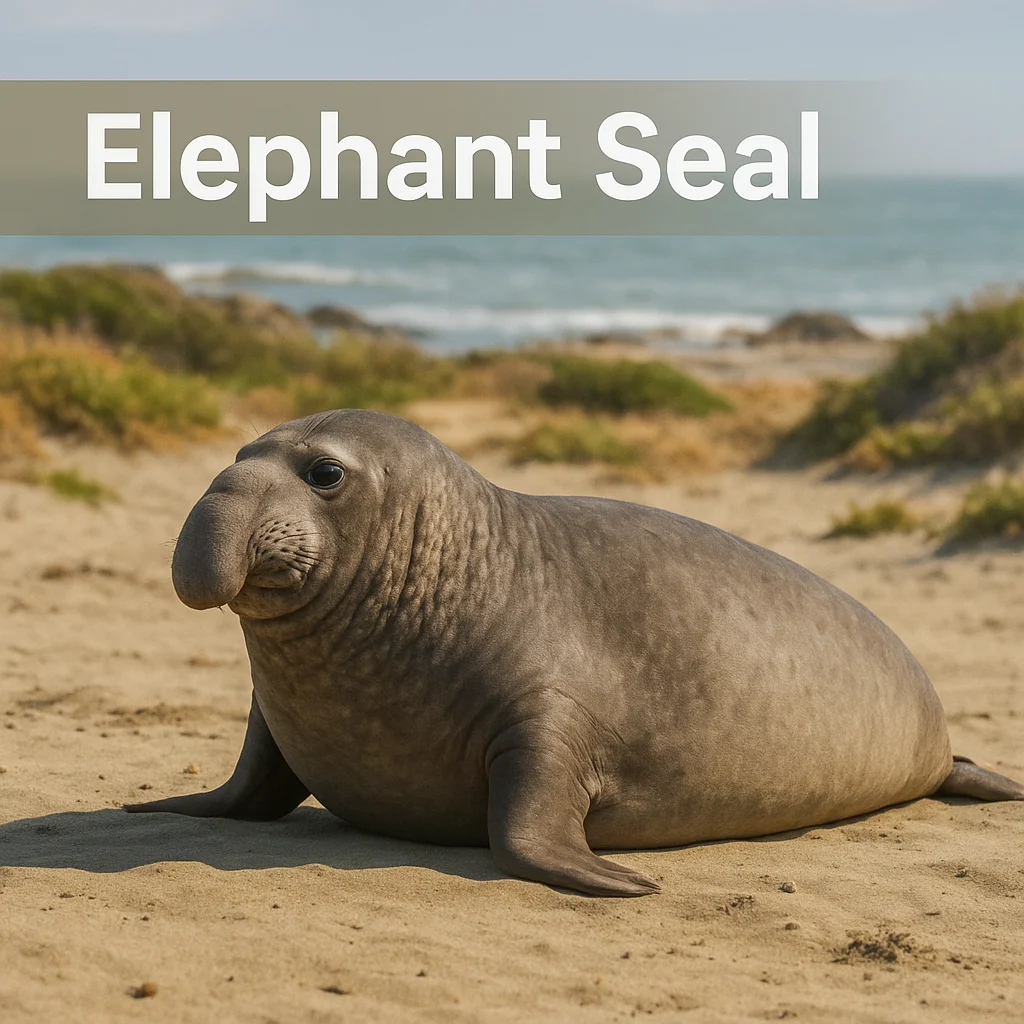
- Common name(s): Elephant Seal
- Scientific name: Genus Mirounga, two species: Mirounga angustirostris and Mirounga leonina
- Animal type: Mammal
- Typical adult size: 4 to 6 meters (13 to 20 feet) in length, weighing 900 to 4,000 kilograms (2,000 to 8,800 pounds)
- Typical lifespan: 9 to 22 years in the wild; varies by species and sex
- Diet type: Carnivore; primarily squid and fish
- Activity pattern: Mostly diurnal, but can hunt at any time of day or night
- Social structure: Group (colonies during breeding season); solitary on foraging dives
- Speed / movement highlights: Can dive up to 1,500 meters (4,921 feet) and stay submerged for up to 2 hours
- Intelligence/learning: Strong navigational abilities and memory for dense marine environments
- Primary habitats: Coastal areas and open ocean
- Geographic range: Northern Pacific, Southern Hemisphere, including sub-Antarctic islands
- Predators/threats: Sharks, orcas; also human-induced threats like habitat disturbances and entanglement
- Conservation status: Varies by region; northern populations are generally recovering
🔍 Identification & Appearance
Elephant seals are known for their massive size and distinctive "trunk-like" inflatable noses, especially in males. They have a torpedo-shaped body that is well-adapted for an aquatic life. Their skin is generally gray or brown, with males displaying thicker necks equipped for battle during the breeding season.
- Torpedo-shaped body with robust build
- Gray to brown coloration, sometimes molting to reveal smoother contours
- Mature males have a pronounced proboscis resembling an elephant's trunk
- Females typically smaller, lacking large proboscis
- Distinctive blubber layer for insulation
- Breed and molt on land annually, providing observing opportunities
- Juveniles show clearer coloration changes as they age
- Tracks often seen on sandy shores where they haul out
- Top ID Tips
- Look for the large, inflatable nose in mature males
- Massive size compared to other seals
- Behavior during breeding: large gatherings on beaches
- Mostly gray or brown with a thick layer of blubber
- Notice molting patterns along the shorelines
- Observe their hauling behavior on beaches
- Distinct vocalizations during mating
🧱 Body Structure & Physical Adaptations
Elephant seals possess several unique adaptations that make them proficient marine predators. Their bodies are optimized for diving to extreme depths in search of food, with physiological adaptations that allow them to conserve oxygen and sustain long duration underwater excursions.
- Streamlined, torpedo-shaped body for efficient swimming
- Absence of external ears to aid hydrodynamics
- Large eyes adapted for low light conditions beneath the sea surface
- Strong, sharp teeth for catching slippery prey
- Powerful front flippers for propulsion
- Blubber layer for insulation against cold ocean currents
- Capable of reducing heart rate during deep dives to conserve oxygen
- Flexible ribs to withstand intense underwater pressure
- Key Adaptations
- Large, flexible nostrils: reduced drag underwater
- Enlarged eyes: enhance vision in dim aquatic environments
- Vibrissae (whiskers): detect prey movements
- Adapted lungs: efficiently exchange oxygen
- Extreme diving capacity sustained by bradycardia
- Seasonal molting to maintain new, healthier skin
🌍 Range & Distribution
Elephant seals can be found along the coastal waters of both the Northern and Southern Hemispheres. Their range extends across vast distances, as they migrate between breeding and feeding grounds. The Northern Elephant Seal (M. angustirostris) is commonly found along the coasts of California and Baja California, while the Southern Elephant Seal (M. leonina) inhabits sub-Antarctic and Antarctic regions.
- Throughout the Northern Pacific for Northern species
- Southern Hemisphere including sub-Antarctic islands for Southern species
- Breed on sandy shores and islands
- Habitats can range from temperate to cold waters
- Extended trips to open ocean for feeding
- Major breeding sites: Channel Islands, Macquarie Island
- Migratory patterns: significant distance between feeding and breeding grounds
- Mostly poles to sub-poles in Southern Hemisphere
- Where You Might Find It
- California coast during breeding season
- Sub-Antarctic islands for Southern populations
- Antarctic Peninsula fringes
- Open ocean dives for foraging
- Sandy shores and coastal outcrops
🏞️ Habitat & Shelter
Elephant seals favor coastal environments for breeding and molting. These areas provide the necessary protection and space for raising pups and conducting social behaviors. While their lives are primarily spent in the open ocean, the coastal habitats play a critical role during certain life stages.
- Sandy beaches and coastal islands for hauling out
- Prefers specific sites for breeding and molting annually
- Migrate to deeper waters for feeding, often far from coasts
- Engage in seasonal land gatherings influenced by breeding cycles
- Exposed coastal areas, relying on tide schedules for timing
- Ocean depths provide food richness that determines migratory period
🧭 Behavior & Ecology
The behavior and ecological contributions of elephant seals are pivotal to the ecosystems they inhabit. Acting as marine predators, these mammals influence prey populations and serve as critical indicators of marine health. Communication and social structures are most evident during the breeding season.
- Feeding and diving are prominent behaviors in the open ocean
- Mating uniquely characterized by territorial male combat
- Vocalizations are frequent, especially in competitive contexts
- Dominance displays during breeding; retreat back at sea after mating
- Integral to oceanic food web dynamics
- Annual land migrations for breeding and molting
- Sustains long-duration dives in quest for food across abundantly rich waters
- Behavior Highlights
- Impressive diving strategies to locate squid and fish
- Male displays and fights for mates
- Feeding far from shore, returning to beaches seasonally
- Known for deep, prolonged dives
- Molts once a year shedding skin and fur
👥 Social Life & Group Dynamics
Elephant seals exhibit varying social structures depending on the season. Breeding colonies become the sites of intense social interaction, while non-breeding periods are typically characterized by solitary behavior at sea. Males exhibit particular patterns of dominance while females incline towards nurturing aspects.
- Harem-style social structure during breeding season
- Males establish territories through vocalization and displays
- Females gather in groups to give birth and nurse pups
- Non-breeding season spent solitarily in the ocean
- Cooperative behaviors observed during molting phases
- Hierarchy within a harem determines mating success
- Social Structure Notes
- Colony dynamic during breeding
- Solitary foraging journeys
- Strong sexual dimorphism influences social roles
- Competition prevalent among males
- Pup interactions under maternal guidance
🍽️ Diet, Prey & Predators
As proficient marine carnivores, elephant seals have a varied diet consisting mainly of cephalopods and fish. Their feeding habits are adapted to the pelagic environment, taking advantage of the deep-sea bounty. Despite their size, they face natural predation from large marine predators.
- Mollusks and various fish species constitute diet
- Deep-sea squid captured during foraging dives
- Interplay with the deep-diving hunting strategy
- Avoidance behavior exhibited around sharks and orcas
- Pup survival heavily influenced by maternal care
- Exploration of large ocean expanses in search of prey
- Feeding Notes
- Joins pelagic fish in ocean depths
- Intervals between feeding bouts vary seasonally
- Predation risks primarily at sea
- Juveniles learn from adults through observation
- Mainly target squids with sharp teeth adaptations
🦌 Hunting, Foraging & Movement
As adept swimmers and divers, elephant seals have evolved to exploit some of the deepest marine environments. Their foraging and movement behaviors are crucial for their survival, relying on finely tuned physiological strategies.
- Dives can last from 20 minutes to over an hour
- Excels in foraging in twilight zones under the ocean surface
- Can cover vast distances between feeding grounds
- Aggressive pursuit of prey in deep-sea habitats
- Excellent polar navigators demonstrating impressive migratory capabilities
- Dive profiles vary between sexes, reflecting differing hunting strategies
- Movement & Strategy
- Implemented long, fasting periods while near breeding sites
- Optimized movements to conserve energy
- Display complex navigation through open ocean
- Use of cold currents to access deeper, richer waters
- Both males and females demonstrate endurance for extended dives
🧠 Intelligence & Senses
Elephant seals exhibit an impressive range of cognitive skills, particularly in terms of navigation and environmental awareness. Their sensory adaptations are essential for interacting with their deep-sea habitat effectively.
- Strong memory for feeding and breeding sites
- Advanced navigational senses for extensive ocean voyages
- Vibrissae allow detection of underwater pressure changes
- Sharp visual acuity in dim light
- Communication through vocal sounds; vital for breeding and social hierarchy
- Notable Abilities
- Use of the Earth's magnetic field for navigation
- Ability to reduce metabolic rate during dives
- Social communication through deep, resonant vocalizations
- Exhibits spatial awareness when navigating deep waters
- Recognize kinship through vocal identification
🪺 Reproduction, Pregnancy & Parenting
Reproduction in elephant seals is highly competitive, with males often battling to secure mating rights. The birthing process is synchronous, and parental investment in the pups is crucial for their survival during the early weeks.
- Breeding season varies between Northern and Southern populations
- Polygynous mating system with dominant males securing harems
- Gestation about 11 months; estrus and birthing occur shortly after arrival on land
- A single offspring per pregnancy, born precocial
- Suckling period lasts approximately a month, with rapid pup growth
- Reproduction Snapshot
- Mating challenges revolve around male dominance
- Birth synchronized to maximize pup survival synchrony
- Females raise pups with intensive maternal investment
- Behavioral adaptations for minimal disturbance to pup
- Annual return to same breeding grounds
♀️♂️ Male vs Female Differences
Male and female elephant seals differ markedly, with males being significantly larger and adorned with a pronounced proboscis. Their roles within the species' social and reproductive dynamics vary accordingly.
- Sexual dimorphism is significant: males often three times the size of females
- Mature males have a distinctive, large proboscis
- Males exhibit aggressive behaviors during breeding
- Females' roles focus on nurturing the young
- Seasonal behavior differences reflect various life responsibilities
- Sex Differences at a Glance
- Males: size and distinctive proboscis
- Females: predominantly nurturing roles
- Physical traits tie directly to social and mating strategies
- Males engage in competitive displays
- Communication patterns reflect these differences
🧬 Subspecies & Variation
Elephant seals consist primarily of two species distinguished by geographic range and morphology. Limited regional variations exist within these groups, primarily seen in size and breeding behaviors.
- Northern Elephant Seal (M. angustirostris)
- Southern Elephant Seal (M. leonina)
- Size discrepancies often noted between specific colonies
- Minor differences in fur coloration and body mass based on local conditions
- Adaptations based on climatic conditions vary geographically
- Variation Notes
- Northern and Southern species display different breeding timelines
- Ecological niches reflect different oceanic regions
- Behavioral adaptations to regional ecological challenges
- Minor physical differences are habitat-induced
- Conservation status reports vary by ecological stresses faced
⚠️ Threats, Conservation & Human Interaction
While elephant seals have rebounded from historical exploitation, they face ongoing challenges such as habitat disturbance, climate change, and pollution. Conservation efforts focus on mitigating these pressures and maintaining healthy populations.
- Populations were historically hunted for blubber
- Ensuring breeding and resting beaches are undisturbed is critical
- Objects like fishing nets pose entanglement risks
- Climate change affects food availability and migration
- Pollution—especially plastics—represents an emerging threat
- Responsible Notes
- Avoid disturbing seals on beaches
- Support conservation areas that protect habitats
- Advocate for pollution reduction in marine environments
- Observe seals from a safe distance during beach visits
- Report any seals in distress to appropriate authorities
✨ Fun Facts & Unique Traits
- Their impressive dives can reach depths exceeding 1,500 meters (4,921 feet)
- Males' proboscises can inflate dramatically to amplify vocal sounds
- Elephant seals can fast for around six weeks during the breeding season
- They possess vibrant whiskers known as vibrissae, highly sensitive to movements
- Travel extensive distances—up to 21,000 kilometers (13,000 miles) annually
- Molting involves shedding a layer of skin and fur, likened to a snake shedding its skin
- Known to use unique vocalizations for individual identification
- Dominant males sire most offspring in a harem
📌 Summary
- Massive marine mammals with distinct proboscises in males
- Mostly reside in coastal and open ocean habitats
- Found in Northern Pacific and sub-Antarctic regions
- Feeds on deep-sea squids and fish
- Major predators include sharks and orcas
- Breeding colonies exhibit a harem-style social structure
- Unique adaptations allow for deep, prolonged dives