🦁 Fur Seal
🧾 Quick Facts
Fur seals, members of the Otariidae family, are recognizable marine mammals known for their thick fur and external ear flaps. This profile offers an overview of these fascinating creatures, highlighting their unique adaptations and ecology.
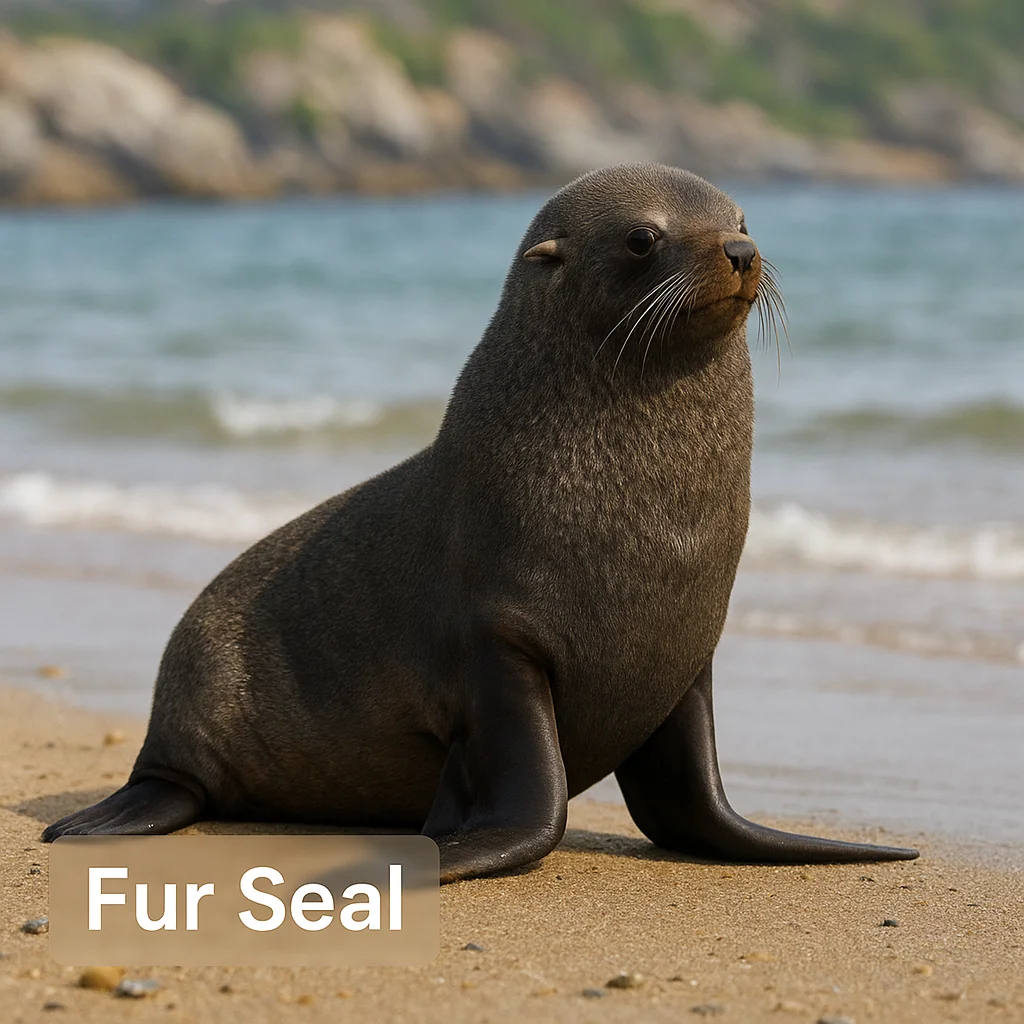
- Common name(s): Fur Seal
- Scientific name: Arctocephalus (genus), Callorhinus (genus); varies by species
- Animal type: Mammal
- Typical adult size: 1.5 - 2.5 meters (5 - 8 feet) in length; weight varies by species
- Typical lifespan: 12 - 30 years in the wild
- Diet type: Carnivore; mainly fish, squid, and crustaceans
- Activity pattern: Primarily diurnal but can be active at night
- Social structure: Form colonies, especially during breeding season
- Speed / movement highlights: Agile swimmers, reaching speeds of 15 - 25 km/h (9 - 16 mph)
- Intelligence/learning: Exhibits problem-solving abilities and social learning
- Primary habitats: Coastal waters and rocky shores
- Geographic range: Southern hemisphere; northern fur seals found in North Pacific
- Predators/threats: Sharks, orcas, human-related activities
- Conservation status: Varies by region and species
🔍 Identification & Appearance
Fur seals are sleek, robust marine mammals with distinctive features such as external ear flaps and a dense underfur. Their color ranges from deep gray to brown depending on age and species. They often have long whiskers and distinctive features making them easily identifiable from similar species like sea lions.
- Body shape: Streamlined with a robust, torpedo-shaped body
- Key colors/patterns: Deep gray to brown; lighter on the belly
- Distinctive features: Large, visible ears; long whiskers
- Field signs: Tracks often found near shorelines; scat is generally found in coastal zones
- Common look-alikes: Sea lions; distinguishable by thicker fur and smaller size
- Build and proportions: Compact with strong flippers adapted for swimming
- Teeth: Sharp, conical teeth for grasping slippery prey
- Forelimbs: Wing-like flippers for powerful propulsion
- Sensory strengths: Acute hearing and sensitive whiskers for detecting movement
- Continents/regions: Southern Hemisphere, North Pacific
- Elevation range: Coastal areas to subantarctic islands
- Climate range: Cold to temperate marine environments
- Seasonal movements: Some species undertake seasonal migrations
- Daily routine: Active during the day, resting on land
- Communication: Vocalizations and body gestures for social interactions
- Ecosystem role: Predator, maintaining fish populations
- Group types: Colonies, varying in size
- Cooperation: Social cooperation during breeding and protection
- Dominance hierarchies: Established during breeding seasons
- Primary diet: Fish and squid
- Hunting strategy: Swift swimming and group coordination
- Natural predators: Sharks and orcas
- Locomotion style: Swimmers with agile, quick movements
- Foraging times: Diurnal, aligned with prey availability
- Navigation: Use of landmarks and stellar navigation
- Problem-solving: Evidence of simple problem-solving abilities
- Senses: High-definition vision both in and out of water
- Breeding season: Varies by location
- Mating system: Polygynous
- Gestation period: Approximately 11-12 months
- Parenting roles: Primarily maternal care
- Size differences: Males are significantly larger
- Behavioral roles: Males establish territories; females focus on rearing
- Known subspecies: Varies by region
- Local adaptations: Cold-climate traits in colder regions
- Natural challenges: Predation and changing oceanic conditions
- Human-related pressures: Overfishing, pollution, and habitat disturbance
- Fur seals can dive up to 200 meters (656 feet) deep to catch prey.
- They have two layers of fur: a dense underlayer for insulation and a waterproof top layer.
- Migration patterns can cover thousands of miles for some species.
- Fur seal pups learn to swim approximately ten days after birth.
- Fur seals are identifiable by their streamlined bodies and thick fur.
- They inhabit coastal waters of the southern hemisphere.
- Diet mainly consists of fish, squid, and crustaceans.
- Known predators include sharks and orcas.
- Socially, they form colonies, especially during breeding seasons.
- Exhibit polygynous breeding systems with significant parental care.
- Key adaptations include their flippers and insulating blubber.
- Facial whiskers aid in sensing underwater movements.
🧱 Body Structure & Physical Adaptations
Fur seals are well adapted for aquatic life, with strong limbs for swimming and a thick layer of blubber for insulation in cold water. Their teeth and jaws are adapted for gripping fish, and their sensory whiskers (vibrissae) are sensitive to underwater movements.
🌍 Range & Distribution
Fur seals are primarily found in the southern hemisphere, with a significant presence in subantarctic and temperate regions. Northern fur seals inhabit the North Pacific. They typically prefer cold, nutrient-rich environments.
🏞️ Habitat & Shelter
Fur seals are commonly found in coastal areas and rocky shores, where they haul out for rest, breeding, and molting. During harsh weather or when disturbed, they may seek refuge in tidal caves or dense kelp forests. Understanding their habitats is essential in appreciating their ecological niche and behavior.
🧭 Behavior & Ecology
Fur seals exhibit intriguing behaviors, including vocalizations and body movements to communicate. They are known to establish territories during breeding seasons and interact with other marine species. As predators, they control fish populations, playing a vital role in marine ecosystems.
👥 Social Life & Group Dynamics
Fur seals are gregarious and form large colonies, especially during breeding seasons. Colonies can vary in size and may exhibit hierarchical structures. Some species show cooperative behavior during threat responses.
🍽️ Diet, Prey & Predators
Fur seals primarily feed on fish, squid, and crustaceans. They are skilled hunters, using stealth and speed to catch their prey. Known predators include sharks and orcas, against which they employ agility and social tactics to evade.
🦌 Hunting, Foraging & Movement
Fur seals are adept swimmers, often diving to moderate depths in search of prey. They demonstrate impressive agility in the water, relying on their body structure for speed and maneuverability. Typically, they forage during the day, following fish migrations.
🧠 Intelligence & Senses
Fur seals are known for their problem-solving abilities and social intelligence. They use their keen senses of hearing and sight to navigate and hunt. Though research on all species is not exhaustive, their ability to learn from peers is noted.
🪺 Reproduction, Pregnancy & Parenting
Fur seals exhibit polygynous breeding systems, with males establishing territories on breeding sites. Breeding season varies by location but generally occurs in warmer months. Females give birth to a single pup annually, with a gestation period of 11-12 months, including delayed implantation. Pups are altricial, relying heavily on maternal care.
♀️♂️ Male vs Female Differences
Male fur seals are typically larger and more robust than females, often displaying more pronounced physical features, such as a thicker neck and larger head. Behavioral differences, especially during the breeding season, include territorial displays and combat between males.
🧬 Subspecies & Variation
Several fur seal species exist, exhibiting regional diversity in size, coloration, and behavior. Some populations are adapted to specific environmental conditions, like colder climates, showcasing variations in physical features to cope with diverse habitats.
⚠️ Threats, Conservation & Human Interaction
Fur seals face threats from natural predators and human activities such as habitat loss, commercial fishing, and climate change. Some populations are protected under legal frameworks, yet ongoing efforts are needed to ensure their conservation. Responsible interaction includes respecting wildlife and supporting marine protection initiatives.