🦁 Aardvark
🧾 Quick Facts
The aardvark is a unique mammal known for its nocturnal habits and specialized diet. Often referred to as the "earth pig," this solitary creature is an essential part of its ecosystem.
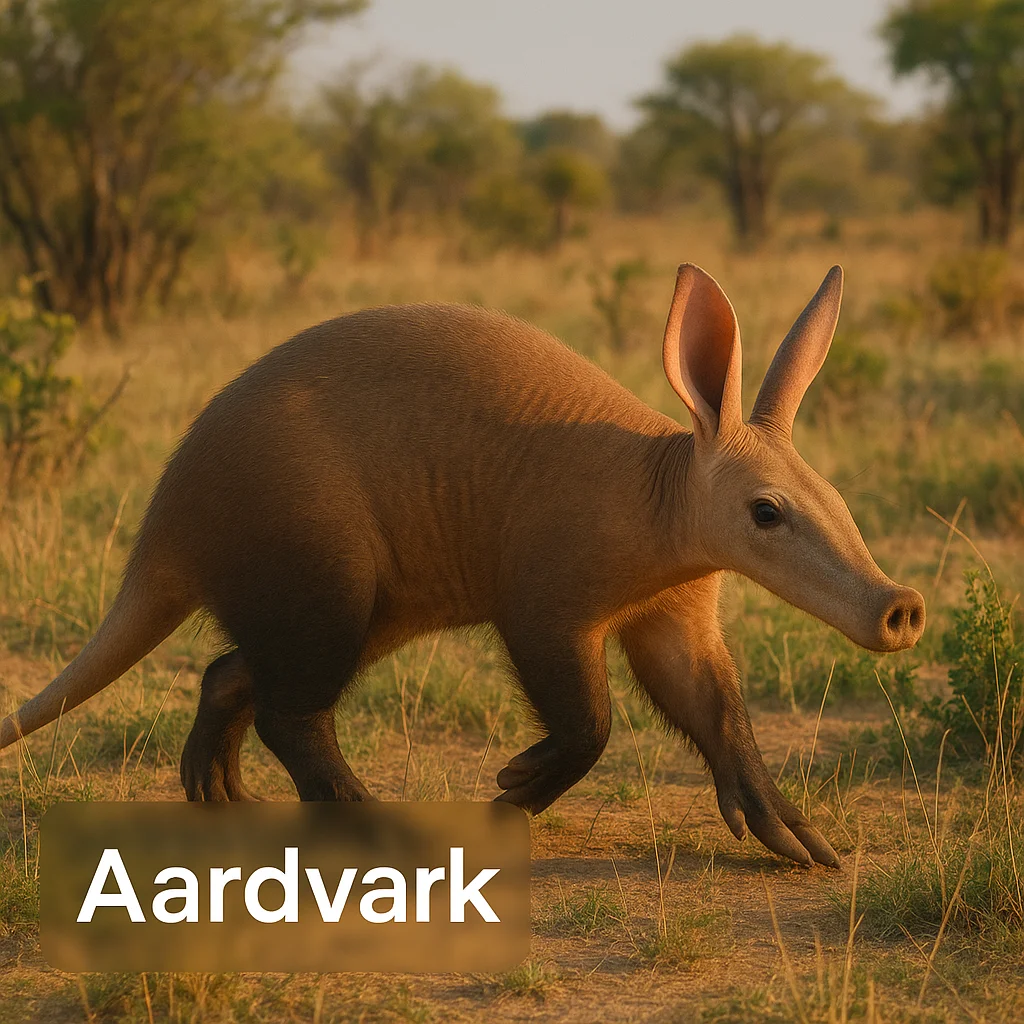
- Common name(s): Aardvark
- Scientific name: Orycteropus afer
- Animal type: Mammal
- Typical adult size: 105-130 cm in length, 40-65 kg in weight
- Typical lifespan: 10-15 years in the wild
- Diet type: Insectivore, primarily feeding on ants and termites
- Activity pattern: Nocturnal
- Social structure: Solitary
- Speed / movement highlights: Can dig rapidly and cover large distances
- Intelligence/learning: Moderate, uses environmental cues for foraging
- Primary habitats: Savannas, grasslands, and woodlands
- Geographic range: Sub-Saharan Africa
- Predators/threats: Lions, leopards, hyenas, and human encroachment
- Conservation status: Least Concern but varies by region
🔍 Identification & Appearance
The aardvark is easily identified by its distinct body shape and long snout. Its body is bulky and robust, supported by strong legs and equipped with sharp claws for digging. The aardvark's skin is tough and hairless, predominantly a grayish color though it can appear reddish due to soil coloration in its environment. Key features include a pig-like snout, long ears, and a tapered tail.
Tracks show a distinctive shape with digit impressions, while scat is often found near feeding areas, consisting primarily of ant and termite debris.
- Top ID Tips
- Stocky body with a pig-like snout
- Long, rabbit-like ears
- Thick, tapering tail
- Grayish skin, sometimes appearing reddish
- Powerful limb structure with sharp claws
- Distinctive zigzag movement pattern
- Large, padded feet with blunt toes
- Solitary signs, such as isolated tracks
- Found in areas abundant with termite mounds
🧱 Body Structure & Physical Adaptations
The aardvark's body is perfectly adapted for its lifestyle of nighttime foraging and burrowing. Its elongated limbs and sharp claws allow it to dig quickly into termite mounds and underground burrows. The aardvark’s strong jaw supports a long, sticky tongue that efficiently captures insects. Its teeth are unique with a composition well-suited for grinding insects.
Its sense of smell is highly developed for locating insects, although its eyesight is less sharp, focusing more on detecting movement in low light conditions.
- Key Adaptations
- Elongated limbs for efficient digging
- Specialized teeth adapted for grinding
- Long, sticky tongue for gathering termites and ants
- Highly developed olfactory sense
- Compact ear structure for intense sound detection
- Tough, thick skin for protection against insect bites
- Digestive system adapted specifically for high-protein insect diets
🌍 Range & Distribution
The aardvark is widespread across Sub-Saharan Africa, inhabiting a variety of ecological zones. They can be found in a range of habitats from savannas to woodlands. Aardvarks are mostly resident, though they may make localized movements in search of food sources as seasons change.
- Where You Might Find It
- Savannas of southern Africa
- Woodlands and bushland in East Africa
- Tropical and arid zones across West Africa
- Grassland regions in central Africa
- Northern fringes of the Kalahari Desert
- Outside dense forests and heavily urbanized areas
🏞️ Habitat & Shelter
Aardvarks are primarily found in open habitats that offer ample opportunities for feeding, such as grasslands and savannas. They create burrows that provide shelter from predators and extreme weather. These burrows are vital for their survival, offering a safe spot during daylight hours.
Knowledge of their habitat is essential for understanding their behavior, as availability of food directly influences their activity and reproductive success.
🧭 Behavior & Ecology
The aardvark is nocturnal, spending its nights foraging for food by digging into termite mounds and anthills. They are solitary creatures that communicate via a range of vocalizations and scent markings. Aardvarks play a crucial role in their ecosystem by controlling insect populations and maintaining soil aeration through their digging activities.
- Behavior Highlights
- Nocturnal foraging in cooler hours
- Scent marking for territory delineation
- Solitary lifestyle with minimal social interactions
- Insect population control by diet
- Vocal communication for defense and alertness
- Burrowing activity altering landscape
👥 Social Life & Group Dynamics
Aardvarks are solitary animals, with interactions between individuals generally limited to mating encounters and aggressive territorial disputes. There is little evidence to suggest cooperation or complex social structures. Their solitary nature means each aardvark establishes its own territory and foraging range.
- Social Structure Notes
- Primarily solitary, except during mating
- Minimal conflict avoidance strategies
- Territory marked through scent
- Transient interactions primarily for reproduction
🍽️ Diet, Prey & Predators
Aardvarks are specialized insectivores, primarily targeting ants and termites. They are known to consume large quantities in a single night, using their keen sense of smell to locate mounds. Natural predators include large cats and hyenas; aardvarks use burrows as protection against these threats. No significant scavenging behavior is noted.
- Feeding Notes
- Primarily feeds on termites and ants
- Forages extensively in nutrient-rich areas
- Employs a systematic search for mound detection
- Uses burrowing to avoid predators
🦌 Hunting, Foraging & Movement
The aardvark's movement is characterized by a peculiar zigzag pattern as it forages for food. They are swift diggers, capable of burrowing efficiently to escape threats or reach food sources. Typically solitary, they cover extensive ground during nocturnal foraging expeditions.
- Movement & Strategy
- Zigzag foraging motion through territory
- Highly effective burrowing for escape
- Extensive searching for food
- Territory exploration pattern varies nightly
🧠 Intelligence & Senses
Aardvarks possess acute olfactory senses, allowing them to locate food sources effectively. Their problem-solving capabilities are moderate, often seen in their ability to locate difficult-to-find insect mounds. Their primary reliance on smell is due to relatively weak eyesight.
- Notable Abilities
- Highly developed sense of smell
- Efficient nocturnal navigation
- Ability to adapt burrows to varying conditions
🪺 Reproduction, Pregnancy & Parenting
The aardvark’s breeding season may vary by region but typically occurs annually. They are thought to form temporary pair bonds during this time. Aardvarks generally give birth to a single, altricial offspring after a gestation period of about seven months. The mother is solely responsible for nurturing the young until independence.
- Reproduction Snapshot
- Annual breeding with temporary pair bonds
- Gestation lasts approximately seven months
- Typically one offspring per reproductive cycle
- Offspring are altricial, requiring maternal care
♀️♂️ Male vs Female Differences
Sexual dimorphism in aardvarks is minimal, with males and females being similar in size and appearance. Behavioral differences are not well-documented, though females may show increased secretiveness when caring for young. Physical differences, if present, are subtle.
- Sex Differences at a Glance
- Minimal size and coloration differences
- Both sexes exhibit solitary behavior
🧬 Subspecies & Variation
Currently, there are no recognized subspecies of aardvark, although their physical appearance can show variation based on environmental conditions such as soil type and regional climate.
- Variation Notes
- Variation primarily in environmental adaptation
- No formally classified subspecies
⚠️ Threats, Conservation & Human Interaction
While aardvarks are widespread and currently classified as least concern, habitat loss and fragmentation pose significant risks. They are also susceptible to bushfires and agricultural development. Aardvarks are not typically kept in captivity outside of certain research support efforts, and human interaction is minimal.
- Responsible Notes
- Avoid habitat disturbance in aardvark regions
- Encourage protection of ecosystems supporting their food sources
✨ Fun Facts & Unique Traits
- Aardvark burrows can provide shelter for other species.
- They consume up to 50,000 ants and termites in a single night.
- Aardvarks have 20 teeth, without enamel coating.
- The name "aardvark" means "earth pig" in Afrikaans.
- Aardvarks have been around since the Pleistocene epoch.
- Despite their odd appearance, they are highly efficient diggers.
📌 Summary
- Easily identified by their pig-like snout and long ears
- Found throughout Sub-Saharan Africa
- Specialized diet of ants and termites
- Escapes predators by burrowing
- Mostly solitary, except during breeding
- One offspring per reproductive cycle
- No recognized subspecies, but regional variations exist
- Key ecosystem role as insect predator and environment modifier