🦁 Baboon
🧾 Quick Facts
Baboons are one of the most intriguing and well-studied primates native to Africa and the Arabian Peninsula. Known for their intelligence and complex social structures, these animals provide rich insights into the lives of our distant relatives. Here is a quick overview of the baboon's defining characteristics:
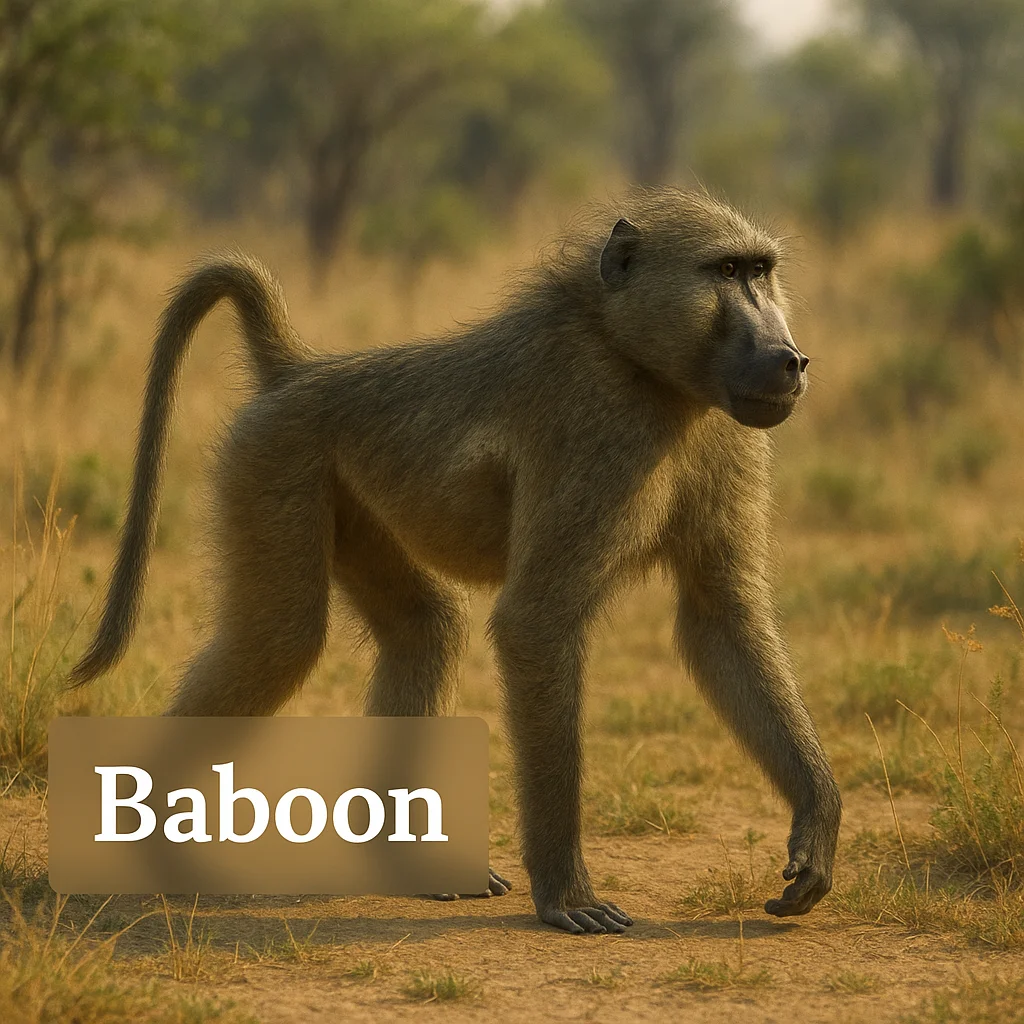
- Common name(s): Baboon
- Scientific name: Genus Papio (varies by species)
- Animal type: Mammal
- Typical adult size: 20-40 inches tall, weighing 30-88 pounds depending on species
- Typical lifespan: 20-30 years in the wild, can exceed 45 years in captivity
- Diet type: Omnivore; fruits, seeds, insects, and small vertebrates
- Activity pattern: Diurnal
- Social structure: Troops with complex hierarchies
- Speed / movement highlights: Agile climbers and can run up to 30 mph
- Intelligence/learning: Exhibits strong problem-solving and tool-using abilities
- Primary habitats: Savannas, woodlands, and semi-arid areas
- Geographic range: Sub-Saharan Africa and parts of the Arabian Peninsula
- Predators/threats: Predators include leopards, lions, crocodiles; human habitat encroachment
- Conservation status: Some species are of least concern; others are threatened
🔍 Identification & Appearance
Baboons have a distinctive appearance characterized by their size, shape, and social demeanor. Their body is heavily built with a dog-like muzzle, and they are well-adapted for both terrestrial and arboreal life. Coat color varies from olive to brownish-gray, with some species featuring dramatic colored patches or faces.
- Body shape and silhouette: Medium to large primates with long, heavy limbs
- Key colors/patterns: Olive to brown coat; some species with colorful facial markings
- Distinctive features: Long face, powerful jaws, large canine teeth, and distinctive calluses on buttocks
- Tracks, scat, or other field signs: Easily identifiable by their large size and scattered, open ground foraging sites
- Common look-alikes: Often confused with macaques but can be distinguished by size and habitat range
- Top ID Tips:
- Look for robust physique and dog-like snout
- Check for prominent calluses on rump
- Note troop-based social behavior
- Color variations can indicate specific species
- Watch for agile climbing ability
- Recognize loud vocal communications
- Facial coloration can aid in species identification
- Observe tail structure; typically not prehensile
- Identify their notable grooming habits
🧱 Body Structure & Physical Adaptations
Baboons are physically adapted to thrive both on land and in trees. Their strong, agile bodies are perfect for walking, running, climbing, and foraging. Their limbs are proportionate, with powerful upper bodies and strong hind legs for movement and support.
- Key Adaptations:
- Stocky build with powerful upper bodies for climbing
- Large canine teeth designed for a varied diet and defense
- Non-prehensile tails used for balance when on the move
- Strong jaws aid in processing tough plant materials
- Acute vision essential for spotting predators
- Good hearing aids in communication and threat detection
- Adapted to a wide range of temperatures
- Calloused rump facilitates sitting on hard surfaces
- Thick skin protects against bites and abrasions
- Dexterous fingers assist in foraging and tool use
🌍 Range & Distribution
Baboons are widely distributed across various regions in Africa and a small part of the Arabian Peninsula. They show notable adaptability to different habitats, making them one of the most widespread African primates.
- Where You Might Find It:
- Sub-Saharan Africa
- Countries include Kenya, Tanzania, South Africa, and Namibia
- Also found in the Arabian Peninsula
- Common in savanna settings
- Woodlands and gallery forests
- Occasionally in rocky, mountainous areas
- Often near agricultural lands
- Adapted to semi-arid environments
- Found at various elevations depending on species
🏞️ Habitat & Shelter
Baboon species inhabit a variety of environments but show a preference for open savannas, grasslands, and woodlands. They are also seen in rocky landscapes and human-modified areas. Shelter is typically sought in trees or caves, depending on local conditions.
Environmental changes, including seasonal shifts, play a crucial role in their movement and foraging habits. During adverse weather conditions, such as extreme heat or storms, baboons retreat to higher ground or sheltered trees.
🧭 Behavior & Ecology
Baboons are known for their complex social behaviors and elaborate troop structures. They exhibit various forms of communication and interact with many other species within their ecosystems. Troop dynamics are a crucial part of their survival strategy, offering protection and social interaction.
- Daily routine: Foraging, grooming, resting during midday heat
- Communication: Use vocalizations, body language, and facial expressions
- Ecosystem role: Seed dispersers due to their varied diet
- Interactions: Compete for resources with other primates
- Cluster behavior: Group protection from predators
- Mutualistic relationships: May act as sentinels for other species
- Creatures of habit: Benefit from using established trails
👥 Social Life & Group Dynamics
Baboons are highly social animals that live in troops ranging from a few individuals to hundreds. Within these groups, structured hierarchies dictate the social order, mating opportunities, and conflict resolution. Dominance is often asserted through displays, vocalizations, and strategic alliances.
- Social Structure Notes:
- Troop sizes vary greatly
- Males typically dominate, but females maintain stability
- Participate in alloparenting
- Cooperation in predator evasion
- Alpha males often face challenges
- Loss of rank in old age
- Complex grooming behavior for bonding
- Territorial but may share overlapping ranges
- Frequent migrations for food
🍽️ Diet, Prey & Predators
Baboons have an omnivorous, opportunistic diet and play a unique role as both predator and prey in their ecosystems. They feed on a wide array of plant materials, insects, and small animals. Their varied diet is a testament to their adaptability, which aids their survival in different habitats.
- Feeding Notes:
- Prefer fruits and seeds
- Supplement diet with insects
- Occasionally hunt small vertebrates
- Highly opportunistic foragers
- Scavenge remains when available
- Have been observed consuming human foods in settlements
- Rely on observation and memory for food sources
🦌 Hunting, Foraging & Movement
Baboons are energetic foragers that typically roam vast areas in search of food. Their agility allows for both arboreal and ground-based foraging, and they utilize a combination of keen senses and learned behaviors in their search for sustenance.
- Movement & Strategy:
- Swift, agile runners on land
- Skillful climbers
- Forage during daylight hours
- Can quickly adapt to food availability
- Utilize social networks for locating resources
- Groups spread out to maximize foraging efficiency
- Careful strategic movements when near predators
- Known to throw objects as deterrents
🧠 Intelligence & Senses
Baboons exhibit notable intelligence and possess acute senses that aid in their survival. They demonstrate problem-solving skills and engage in strategic planning, utilizing their senses to detect food and predators efficiently.
- Notable Abilities:
- Capable of tool use
- Strong memory and learning abilities
- Effective communication systems
- Good night vision despite diurnal activity
- Keen sense of hearing
- Complex social interactions
- Utilize facial expressions skillfully
🪺 Reproduction, Pregnancy & Parenting
Baboons have intricate reproductive systems tied to their social structures. While they do not breed seasonally, environmental factors may influence breeding activity. Within troops, both males and females play roles in parenting and social cohesion, with supportive networks for newborn care.
- Reproduction Snapshot:
- Mating occurs year-round
- Typically polygynous mating system
- Average gestation period of about 6 months
- Usually one offspring per birth
- Young born relatively dependent (altricial)
- Females are primary caregivers
- Males may offer protection and grooming
- Youth have prolonged development phases
♀️♂️ Male vs Female Differences
Baboons exhibit sexual dimorphism with noticeable differences between males and females. Males are often larger and more dominant, with distinctive physical characteristics like larger canines that play roles in both defense and social hierarchy management.
- Sex Differences at a Glance:
- Males significantly larger than females
- Dominant males display more pronounced canines
- Varied levels of social responsibility
- Females typically more involved in childcare
- Behavioral assertiveness more common in males
- Prominent anatomical features in males
🧬 Subspecies & Variation
The genus Papio consists of several baboon species and subspecies, each with unique adaptations to their environments. These variations manifest in physical traits, color patterns, and size, reflecting evolutionary responses to particular habitats and challenges.
- Variation Notes:
- Chacma baboon (Papio ursinus) is the largest
- Olive baboon (Papio anubis) is widely spread
- Yellow baboon (Papio cynocephalus) prefers open woodlands
- Hamadryas baboon (Papio hamadryas) has strikingly unique social structures
- Guinea baboon (Papio papio) is smallest of the group
⚠️ Threats, Conservation & Human Interaction
Baboons face several challenges in the wild, including habitat destruction and human-wildlife conflict. Conservation efforts vary by region, with some populations more threatened than others. Expanding agricultural practices and urbanization are key issues impacting baboon survival.
- Responsible Notes:
- Habitat loss is a significant threat
- Protected areas help preserve populations
- Human-baboon conflict in agricultural zones
- Conservation varies from species to species
- Some populations adapted to human presence
- Increased ecotourism can benefit conservation
- Public education crucial for coexistence
- Habituation to human food can lead to conflicts
✨ Fun Facts & Unique Traits
- Baboons can recognize and remember human faces
- Known for colorful and expressive facial expressions
- Have been observed using stones to crack nuts
- Baboons use social grooming to reinforce bonds
- Capable of swimming across small bodies of water
- Communicate with a complex array of calls and gestures
- Known to plan and execute cooperative tasks
📌 Summary
- Baboons are large primates from the genus Papio
- Found across sub-Saharan Africa and the Arabian Peninsula
- Occupy savannas, woodlands, and semi-arid regions
- Diet is highly varied, including fruits, seeds, and small prey
- Form complex troop structures with defined hierarchies
- Physical adaptations include robust bodies and sharp canines
- Exhibit intelligent problem-solving and social interaction
- Face threats from habitat loss and human conflict
- Recognizable by long faces and pronounced rumps
- Intriguing social behaviors and communication skills