🦁 Butterflyfish
🧾 Quick Facts
Butterflyfish are a diverse group known for their striking patterns and vibrant colors. These marine fish can be found in various tropical regions, flitting gracefully through coral reefs and adding color to underwater landscapes.
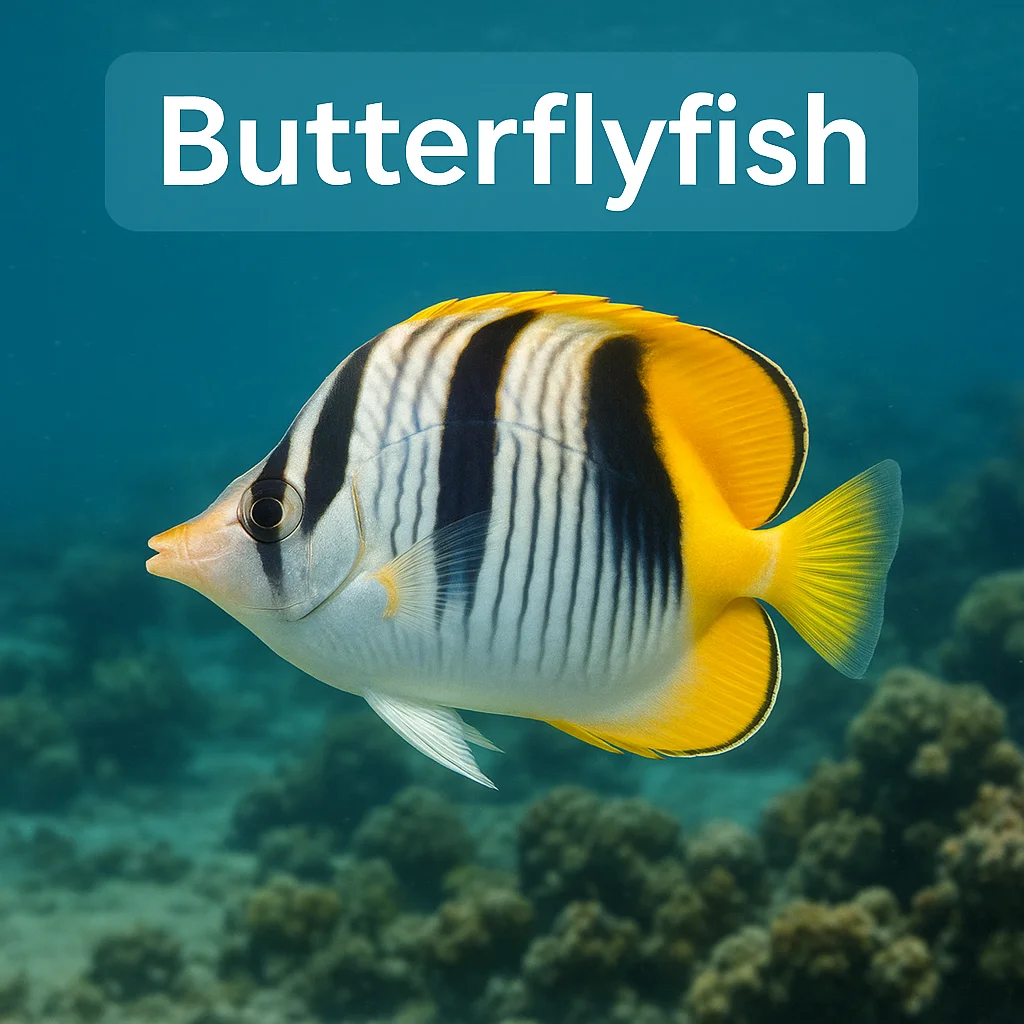
- Common name(s): Butterflyfish
- Scientific name: Family Chaetodontidae
- Animal type: Fish
- Typical adult size: 12–22 cm (5–9 inches) in length
- Typical lifespan: 5–12 years in the wild
- Diet type: Omnivore; primarily feeds on coral polyps, algae, and small invertebrates
- Activity pattern: Diurnal
- Social structure: Often found in pairs or small groups
- Speed / movement highlights: Agile swimmers capable of quick maneuvers
- Intelligence/learning: Known for curiosity and interactions with their environment
- Primary habitats: Coral reefs
- Geographic range: Indian, Pacific, and Atlantic Oceans
- Predators/threats: Larger fish, human activities such as habitat destruction
- Conservation status: Varies by region; some species are threatened
🔍 Identification & Appearance
Butterflyfish are easily recognizable thanks to their compressed bodies, elongated dorsal fins, and vibrant color patterns. They often feature combinations of bright yellow, white, black, and blue with various stripes or spots.
- Body shape and silhouette: Laterally compressed body with prominent dorsal fins
- Key colors/patterns: Bright yellows, whites, and blacks; often with bands or spots
- Distinctive features: Elongated snouts in some species for extracting food from crevices
- Tracks, scat, or other field signs: Not applicable
- Common look-alikes: Angelfish; distinguish by their smaller size and elongated snout
- Top ID Tips:
- Look for vibrant colors and distinct patterns
- Check for a small mouth suited to nibble on coral
- Notice the laterally compressed body
- Identify elongated dorsal and caudal fins
- Observe the swimming style: quick and agile
- Note the presence in coral-rich areas
- Identifying key: elongated snouts for crevice feeding
🧱 Body Structure & Physical Adaptations
Butterflyfish exhibit adaptations that allow them to thrive in complex coral ecosystems. Their bodies are designed for agility, and their snouts enable them to reach food within coral structures.
- Build and proportions: Slender, compressed with a streamlined form
- Teeth/beak/jaw adaptations: Small, protruding mouths ideal for nibbling on coral polyps
- Claws/hooves/wings/fins: Fins optimized for precise, agile movements
- Sensory strengths: Excellent vision for recognizing patterns and colors; limited smell
- Key Adaptations:
- Compressed body for navigating coral crevices
- Protruding snout for specialized feeding
- Agile, rapid swimmers for avoiding predators
- Colorful patterns for camouflage and signals
- Highly developed ocular sensitivity for light changes
- Dorsal fins provide stability and maneuverability
🌍 Range & Distribution
Butterflyfish are predominantly found in the tropical coral reefs of the Indo-Pacific region. They thrive in warm, shallow waters where coral growth is abundant.
- Where You Might Find It:
- Indo-Pacific reefs
- Red Sea
- Great Barrier Reef
- Islands of the Philippines
- Caribbean reefs
- Western Atlantic coasts
- Seychelles and Madagascar marine areas
- East African coral ecosystems
🏞️ Habitat & Shelter
Butterflyfish depend heavily on coral reefs for shelter and food. They form territories, often small patches of reef, and prefer areas with abundant coral polyps and crevices.
- Preferred habitats: Coral reefs and lagoons
- Microhabitats and shelter: Depend on coral formations for feeding and protection
- Seasonal behavior: Relative stability in water temperature allows year-round activity
- Habitat importance: Understanding habitat helps in protecting coral ecosystems that support fish diversity
🧭 Behavior & Ecology
Butterflyfish are known for their allegiance to a specific territory within a reef. They may exhibit cleaning behavior, removing parasites from other fish, which evidences ecological roles like mutualism.
- Daily routine: Active during the day, spending time feeding and cruising reefs
- Communication: Color patterns used for mate selection and territorial warnings
- Interactions: May clean parasites off larger fish in symbiotic relationships
- Ecosystem role: Predators of coral polyps thus influencing coral health and growth
- Behavior Highlights:
- Territorial, defending specific reef areas
- Colorful displays for courtship and competition
- Participates in cleaning symbiosis
- Responds to threats with agile escape behaviors
- Feeding periods span most daylight hours
- Shows pair bonding in some species
👥 Social Life & Group Dynamics
While often seen in pairs, some butterflyfish species are solitary. Pairing is thought to support cooperative defense of territories and to aid in reproductive success.
- Social tendencies: Often found in pairs; some solitary
- Group types: Pair bonding is common; small groups sometimes form
- Cooperation: Paired individuals cooperate to maintain territories
- Dominance hierarchies: Less documented but some posturing noted during interactions
- Social Structure Notes:
- Pairs defend territories collaboratively
- Intra-species competition occurs over space
- Pairs coordinate during feeding and threat responses
- Social interactions can influence mating success
- Some exhibit communal behaviors in dense populations
🍽️ Diet, Prey & Predators
Butterflyfish have a diverse diet that varies seasonally. While primarily feeding on coral polyps, they also consume marine plants and small invertebrates. These fish must remain vigilant to avoid predation by larger reef inhabitants and humans.
- What it eats: Coral polyps, algae, small crustaceans, and worms
- Main natural predators: Larger fish, especially groupers and snappers
- Anti-predator defenses: Quick, agile swimming and retreating into crevices
- Scavenging behavior: Not typically known as scavengers
- Feeding Notes:
- Diet varies with coral availability
- Omnivorous with a preference for live coral
- Selective feeders with specialized snouts
- May feed in small groups to maximize foraging
- Relies on coral health and abundance
🦌 Hunting, Foraging & Movement
Butterflyfish are adept at navigating reefs, utilizing quick, darting movements to access food and evade predators. Their foraging strategy hinges on their ability to reach within coral crevices using their elongated snouts.
- Locomotion style: Swift swimmers, capable of precise movements
- Speed and endurance: Noted for rapid bursts to escape danger
- Typical hunting times: Diurnal, feeding actively throughout the day
- Navigation and spatial behavior: Home range fidelity; no long migrations
- Movement & Strategy:
- Agility allows navigating tight coral spaces
- Relies on speed and turns for predator evasion
- Forages from early morning to late afternoon
- Follows established reef routes routinely
- Can synchronize movements with pair mates
🧠 Intelligence & Senses
While not renowned for advanced cognition, butterflyfish show evidence of spatial awareness and territorial behavior. They heavily rely on vision to navigate and identify threats within their reef environments.
- Problem-solving: Limited; more reactive in nature
- Senses: Strong visual acuity; limited olfactory capabilities
- Research on intelligence: Generally limited; varies among species
- Notable Abilities:
- Visual recognition of mates and rivals
- Memory of territorial boundaries
- Awareness of reef changes and disturbances
- Pattern identification for mate selection
- Quick reaction times to visual threats
- Demonstrates learning in territory defense
🪺 Reproduction, Pregnancy & Parenting
The reproduction of butterflyfish involves elaborate courtship displays. Many species are monogamous, forming long-term pair bonds that help with mutual territory defense.
- Breeding seasonality: Typically aligned with temperature changes or food abundance
- Mating system: Primarily monogamous
- Egg-laying: Typically spawn in open water, where eggs drift with currents
- Parenting roles: Minimal; parents do not tend to the eggs
- Newborn development: Larvae are planktonic, developing in ocean currents before settling
- Reproduction Snapshot:
- Bright color displays during courtship
- Pair bonding occurs pre-spawning
- Eggs are not guarded post-spawning
- Larvae drift in open ocean currents
- Spawning may be timed with lunar cycles
- Density-dependent spawning practices
♀️♂️ Male vs Female Differences
Butterflyfish exhibit limited sexual dimorphism. While males and females generally appear similar, minor variations in size or coloration may exist in specific species.
- Size differences: Typically minimal, males might be marginally larger
- Coloration: Both sexes are usually similarly colored
- Behavioral roles: Both participate in territory defense and mating displays
- Sex Differences at a Glance:
- Minor size differences in some species
- Males may exhibit more frequent displays
- Females equally involved in territory vigilance
- Both sexes contribute to courtship dynamics
🧬 Subspecies & Variation
The butterflyfish family (Chaetodontidae) includes many species with different adaptations based on local reef conditions. Some experts debate the taxonomic classifications given their variability.
- Known subspecies: Many but composition varies, with diverse color forms
- Local adaptations: Coral diet specialization, size variations
- Taxonomic debate: Exists around the classification of certain populations
- Variation Notes:
- Island populations may show distinct colors
- Reef depth influences color and form variations
- Diet-driven adaptation visible in snout length
- Current debates on specific genetic divergences
- Phenotypic plasticity within reef contexts
⚠️ Threats, Conservation & Human Interaction
Butterflyfish are susceptible to habitat degradation, particularly coral reef bleaching and destruction. Conservation efforts focus on preserving reefs, which support their populations alongside educational initiatives.
- Natural challenges: Coral bleaching, predation by larger fish
- Human-related pressures: Overfishing, habitat destruction, climate change
- Coexistence tips: Encourage responsible tourism and reef protection
- Commonly kept status: Popular in aquariums; ethical collection standards urged
- Responsible Notes:
- Support coral reef conservation
- Be aware of sustainable fishing practices
- Preserve reef habitats as butterflyfish homes
- Encourage eco-friendly tourism initiatives
- Promote reef-friendly policies and projects
✨ Fun Facts & Unique Traits
- The name "butterflyfish" refers to their vibrant coloration reminiscent of butterfly wings.
- Some species of butterflyfish have been observed as far up as altitudes where coral growth occurs despite conditions.
- They can be very selective with their diet, often specializing in particular species of coral or sea anemones.
- A few species belong to a select group of fish known to engage in what appears to be mate fidelity.
- Despite their beauty, they can be aggressive when defending their territory.
- Their elongated snouts are perfectly adapted for poking into crevices to reach food that other fish cannot.
- They are often used as indicator species due to their sensitivity to environmental changes in reef ecosystems.
- Butterflyfish are highly vocal and have been recorded making audible clicking sounds, possibly during mating rituals or when startled.
📌 Summary
- Recognizable by their vibrant colors and patterns.
- Found primarily in coral reefs across the Indo-Pacific, Atlantic, and Indian Oceans.
- Omnivorous, feeding on coral polyps and small invertebrates.
- Preyed upon by larger fish and impacted by human activities.
- Often live in pairs; some engage in mutual territory defense.
- Reproduction involves elaborate displays; larvae drift on currents.
- Adapted with elongated snouts and agile, rapid swimming.
- Sensitive to environmental changes, acting as indicators for reef health.
- Unique for their pronounced coloration and specialized feeding habits.