🦁 Galápagos Tortoise
🧾 Quick Facts
The Galápagos tortoise is among the most iconic and longest-lived reptiles found on the planet. Native to the Galápagos Islands, these tortoises showcase incredible diversity across different islands, leading to distinct subspecies with unique characteristics adapted to their specific environments.
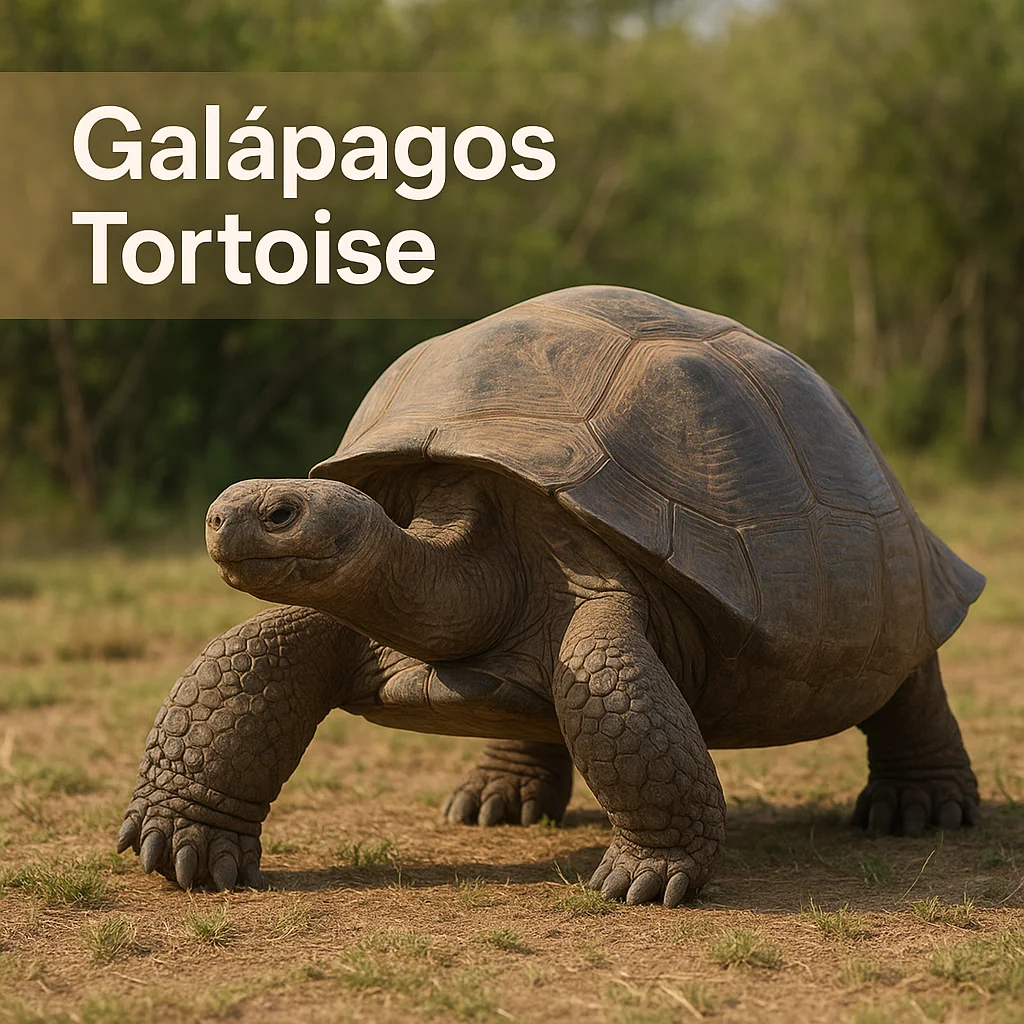
- Common name(s): Galápagos tortoise
- Scientific name: Chelonoidis nigra (Note: subspecies variation is complex)
- Animal type: Reptile
- Typical adult size: 1.2 to 1.5 meters (4 to 5 feet) in length; up to 417 kg (919 lbs)
- Typical lifespan: 80 to 150 years, varies by individual
- Diet type: Herbivore; consumes cacti, grasses, fruits
- Activity pattern: Diurnal
- Social structure: Generally solitary or loosely associated; groupings can occur around shared resources
- Speed / movement highlights: Slow-moving, typically 0.3 km/h (0.2 mph)
- Intelligence/learning: Known for memory and problem-solving abilities within captive environments
- Primary habitats: Arid lowlands, highland grasslands
- Geographic range: Restricted to the Galápagos Islands
- Predators/threats: Human activities, invasive species like rats and feral goats
- Conservation status: Often varies by subspecies; many are vulnerable or endangered
🔍 Identification & Appearance
The Galápagos tortoise is recognized by its massive, domed shell and elephantine limbs. Their shells, known as carapaces, are generally dark and can show varied shapes, influencing how they forage: saddleback shapes allow for more significant head elevation, aiding in reaching higher vegetation, while domed shapes are suited to grazing on ground-level plants.
- Large, round, and heavy shell
- Grayish to dark brown coloration
- Long neck and limbs
- Small eye openings, indicating protective measures against the sun
- Thick, sturdy scales on legs
- Young tortoises often have a more textured, greenish hue
- Distinguished from other giant tortoises by region and size
- Large, scaly forelimbs with prominent claws
- Heavy-duty, columnar rear legs
- Top ID Tips:
- Look for massive size and dome-shaped, leathery shell
- Gray-brown color is typical
- Saddleback vs domed shell helps determine subspecies identity
- Limbs and neck are thick but long for reaching vegetation
- Consider geographic location: the Galápagos Islands
- Juvenile presence hints at nearby nesting grounds
- Slow and deliberate movements
🧱 Body Structure & Physical Adaptations
The Galápagos tortoise showcases significant physical adaptations that allow it to thrive in varying island environments. Their large-size gives them an edge in thermoregulation and resource retention.
- Dome-shaped or saddleback shell for protection and movement efficiency
- Thick torso accommodates large internal organs, aiding digestion
- Leathery, tough skin reduces water loss
- Forelimbs with notable claws to assist in digging and stability
- Excellent olfactory sense for identifying food sources
- Nutrient processing assisted by a large cecum
- Heavy-set muscles to support large body mass
- Key Adaptations:
- Robust shell formations for predator defense
- Long limbs to access varied food sources
- Effective at water storage, a survival mechanism
- Limb claws aid in maneuvering tough terrain
- Age-old shell-shape variations aid dietary access
- Olfactory adaptations suit dry climate environments
🌍 Range & Distribution
The Galápagos tortoise is endemic to the archipelago it is named after, with individual populations on ten different islands, each island hosting tortoises with variations suited to the specific ecological demands present.
- Galápagos Islands off the coast of Ecuador
- Isabela Island, the largest host of subspecies
- Santa Cruz, home to research and conservation stations
- Santiago Island, notable for reintroduced populations
- San Cristóbal, historical site of first European sightings
- Elevation preference ranges from sea level to highland regions
- Where You Might Find It:
- Wooded highlands on larger islands
- Coastal arid zones offering sunbathing sites
- On less disturbed islands with protective measures
- Areas of historical human impact where efforts are being restored
- Protected National Park zones with anti-poaching efforts
🏞️ Habitat & Shelter
The preferred habitats of Galápagos tortoises range from arid to more luxuriant ecosystems depending on the island. Shelter mainly relies on natural land formations, given their resilience to direct sunlight and external weather conditions.
In different seasons, habitat needs may shift slightly, with tortoises migrating within islands to access scarce resources during drier periods.
🧭 Behavior & Ecology
Galápagos tortoises are intrinsically linked to their environmental roles, offering contributions such as seed dispersal and plant pruning, impacting the entire ecosystem positively.
- Behavior Highlights:
- Primarily solitary, aligning lifestyle with manifold resource access
- Nocturnal rest under cover, relying on environmental shade
- Displays territory-based behaviors with selective feeding areas
- Known for gentle interaction when meeting other tortoises
- Promotes seed dispersal essential for plant population control
- Occasional sociability around basking sites and water sources
👥 Social Life & Group Dynamics
While generally solitary, the Galápagos tortoise may gather loosely at communal resources such as water bodies or specific feeding zones. They employ simple social hierarchies without rigid structures, relying on individual positioning and resource interests.
- Social Structure Notes:
- Primarily solitary with specific interactions
- Occasional gregarious groupings at basking locations
- Tolerates proximity during favorable seasonal gatherings
- Growth periods of young contribute to aggregate behaviors
- Non-aggressive; mild territorial disputes usually settled swiftly
- Resource competition primarily driving social interactions
🍽️ Diet, Prey & Predators
Severely herbivorous, Galápagos tortoises consume a wide array of local vegetation, including cacti, grasses, and low shrubs. They have specially adapted systems to maximize nutrient intake and, during scarcity, an ability to fast for extended periods.
- Feeding Notes:
- Relies on broad-leaved plants and various grasses
- Capable of deriving moisture from diverse sources
- Herbaceous diet includes small fruits scattered achieved on islands
- Seasonal shifts lead to dietary broadening
🦌 Hunting, Foraging & Movement
Though slow movers, Galápagos tortoises cover their habitat systematically, utilizing energy-efficient movement to maximize feeding and basking in sun-drenched areas. These tortoises are remarkably capable of surviving off minimal energy and sustaining long without food.
- Movement & Strategy:
- Methodical wanderer with wide-ranging tastes
- Grazing showcases continuous, low-energy movement
- Seeking shade amid warmer conditions
- Frequently moves between grasslands and forest edges
- Adaptations allow impressive energy conservation
🧠 Intelligence & Senses
Galápagos tortoises demonstrate significant cognitive abilities with their keen internal maps of their habitats, remembering locations of watering holes and safe resting places. Studies indicate response and learning flexibility within changed environments.
- Notable Abilities:
- Utilizes advanced memory for resource locating
- Keen sense of smell assists with finding food
- Simple problem-solving skills exhibited in captivity
- Minimal observable tool use
🪺 Reproduction, Pregnancy & Parenting
Most mating occurs during the warmer dry season, with males actively seeking females, leading to seasonal breeding variations and different times. The resulting eggs are often hidden under shallow ground covers, minimizing predation risks.
- Reproduction Snapshot:
- Breeding season varies; dry season peaks preferred
- Mating driven by male exploration and courtship
- Clutches incubate over 4-8 months
- Females often responsible for egg coverage and site choice
- Newborn emergence marks end-of-season juveniles
♀️♂️ Male vs Female Differences
Males generally exhibit larger physical sizes compared to females; however, coloration differences are subtle. Males are notable for their tendency to cover more ground seasonally as part of mating behaviors.
- Sex Differences at a Glance:
- Males average larger and heavier than females
- Neck extension during mating rituals
- Swifter movements from male side during exploration
- Female nesting habits under observed conditions
- Some dimorphism in limb length and shell curvature
🧬 Subspecies & Variation
The Galápagos tortoise exists in numerous subspecies, each uniquely adapted to the environments of specific islands in the archipelago. Differences can be subtle yet hold ecological importance.
- Variation Notes:
- 13 surviving distinct subspecies based on island variation
- Differences in size and shell shape
- Shell morphology adapted for diverse feeding strategies
- Continued subspecies research ongoing
- Some islands host reintroduced populations based on genetic studies
⚠️ Threats, Conservation & Human Interaction
Primary threats evolve from invasive species, historical hunting, and human encroachment. Conservation efforts focus on habitat restoration and invasive species eradication. Galápagos tortoises symbolize conservation successes with dedicated breeding and release programs.
- Responsible Notes:
- Accountable conservation necessary following introduced species conflict
- Community collaborations vital for continued success
- Engage in mindful tourism practices to aid ongoing efforts
- Supports ex-situ breeding programs for genetic diversity
- Engagement with educational outreach highlights tortoise role
✨ Fun Facts & Unique Traits
- Tortoises can survive without food for up to a year due to well-stored body fats.
- Their sleep patterns accommodate six hours after dark.
- Galápagos tortoises are excellent swimmers, able to travel between islands.
- The tortoises' slow metabolism is central to their survival.
- Many individuals are beneficiaries of extensive genetic studies aiding conservation.
- Once serving as a food reserve for sailors, they are now protected by international law.
📌 Summary
- Iconic for their large, dome-shaped shells and lumbering movements
- Endemic to the Galápagos Islands, showcasing high degree of island-driven subspeciation
- Primarily herbivorous; diet adapts with food supply changes
- Slow movement correlates with energy conservation tactics
- Social life consists of selective communal activity, sparsed by wide resource distribution
- Reproduction includes significant egg-based protection strategies
- Males exhibit larger, more prominent structures than females
- Conservation effort showcases resilience amid adversity
- Distinctive for both long life spans and advanced adaptability
- Symbol of biological resilience and diversity