🦁 Electric Ray
🧾 Quick Facts
The Electric Ray is a fascinating group of cartilaginous fish known for their unique ability to generate electric shocks. Often found in warm and temperate waters, these fish have intrigued scientists and enthusiasts alike with their specialized adaptations.
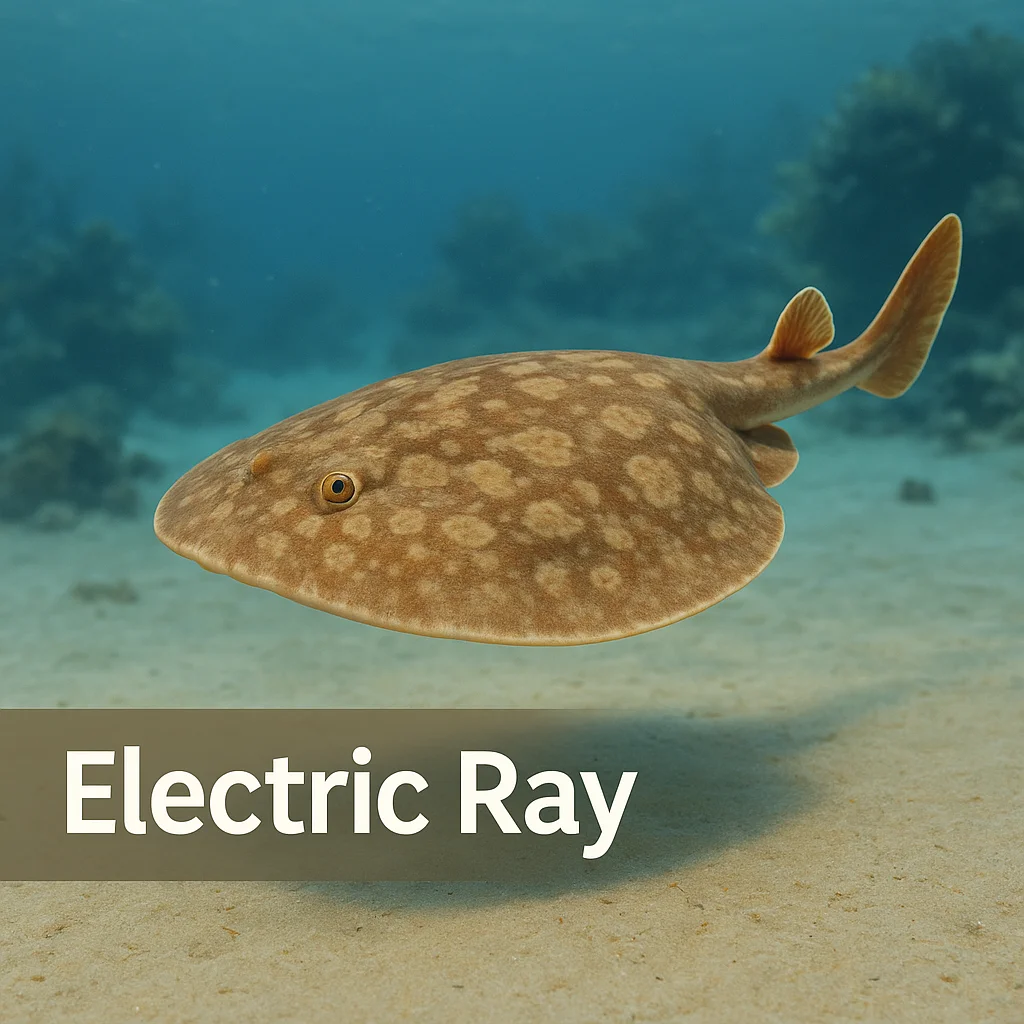
- Common name(s): Electric Ray
- Scientific name: Varies (several genera, including Torpedo and Narcine)
- Animal type: Fish
- Typical adult size: 30 to 95 cm (length), varies by species
- Typical lifespan: 15 to 25 years in the wild, varies by species
- Diet type: Carnivore, primarily feeding on fish and invertebrates
- Activity pattern: Nocturnal
- Social structure: Solitary
- Speed / movement highlights: Slow swimmer
- Intelligence/learning: Limited research; capable of basic problem-solving
- Primary habitats: Marine environments, including sandy and muddy bottoms
- Geographic range: Temperate and tropical oceans worldwide
- Predators/threats: Larger fish, sharks; habitat degradation and bycatch
- Conservation status: Varies by species; some are vulnerable
🔍 Identification & Appearance
Electric Rays are easily recognizable by their distinct flat, rounded bodies and short tails. Their coloration varies, often featuring muted browns and grays to camouflage with the ocean floor.
- Flat, disc-shaped body with a round silhouette
- Coloration: brown, gray, sometimes with mottled patterns
- Short tail compared to body size
- No dorsal fin on the tail
- Pairs of electric organs on either side of the head
- Often buried in sand or mud with only eyes visible
- Top ID Tips
- Look for a round, flattened body outline
- Check for small, sometimes hidden eyes on top of the body
- Spot muted body colors with variable patterns
- Note lack of dorsal fins on the tail
- Electric organs visible in some species
🧱 Body Structure & Physical Adaptations
The unique body design of Electric Rays supports their lifestyle as bottom dwellers and ambush predators. They are capable of producing electric shocks to stun prey and deter predators.
- Flat, robust build with rounded pectoral fins
- Modified muscle tissue forms electric organs
- Electroreception to detect prey and environment
- Small, grinding teeth for crunching crustaceans
- Poor vision but enhanced tactile sense
- Key Adaptations
- Electric organs for defense and capturing prey
- Camouflaged coloration for blending into seabeds
- Electroreception adapted to detect prey
- Hydrodynamic body for maneuvering along the ocean floor
- Strong tactile sense for navigating and hunting
🌍 Range & Distribution
Electric Rays inhabit warm and temperate coastal waters worldwide. They are generally non-migratory and remain in specific regions with suitable environmental conditions.
- Found in Atlantic, Pacific, and Indian Oceans
- Inhabit continental shelves and slopes
- Temperature-tolerant, mainly in tropics and temperate zones
- Non-migratory, staying within specific, localized environments
- Where You Might Find It
- Warm waters of the Mediterranean Sea
- Coastal regions of the Americas, Asia, and Africa
- Tropical coral reefs and seagrass beds
- Sandy and muddy ocean floors
- Quiet bays and estuaries
🏞️ Habitat & Shelter
Electric Rays favor habitats that provide ample coverage and feeding opportunities. Sandy or muddy substrates often serve as resting and hunting grounds, allowing them to ambush unsuspecting prey.
- Prefer sandy and muddy ocean floors
- Commonly found in coastal lagoons and reefs
- Burrow into soft substrates for camouflage
- Predominantly residential with little seasonal habitat change
🧭 Behavior & Ecology
Electric Rays are primarily nocturnal, remaining buried in substrate during the day. They are solitary creatures that rely on electric shocks to catch prey and defend themselves.
- Rest during daylight hours, mostly hidden from view
- Utilize electric fields for nighttime hunting
- Minimal vocal communications; communicate through body language
- Serve as both predator and prey within ocean ecosystems
- Open waters provide feeding areas; reefs and bays offer shelter
- Behavior Highlights
- Tend to remain motionless and hidden during daylight
- Use electroreception to detect prey
- Stun prey with electric shocks before consumption
- May adopt mutualistic relationships with cleaner fish
- Electric shocks act as a natural deterrent to potential threats
👥 Social Life & Group Dynamics
Electric Rays are solitary by nature and do not display significant social behaviors. Occasionally seen in loose aggregations when food is abundant, these rays exhibit independence most of their lives.
- Predominantly solitary, rarely seen in groups
- No significant social hierarchy or dominance
- Aggressive only when threatened, using electric shocks
- No cooperative hunting or shared living arrangements
- Social Structure Notes
- Primarily independent lifestyle
- Occasional proximity to others in feeding zones
- Avoids confrontation with other species
- Short-term aggregations in rich feeding areas
🍽️ Diet, Prey & Predators
Electric Rays are carnivorous, preying on small fish and invertebrates. They utilize their electric capability to make hunting more efficient, stunning prey before consumption.
- Hunts small fish, shrimp, and bivalves
- Exploit camouflage and surprise as a hunting tactic
- Electric shock heightened in proximity to prey
- Natural predators: large fish, sharks, and marine mammals
- Use electric defense mechanism against larger predators
- Feeding Notes
- Consumes prey whole after stunning
- Feeds during night to avoid predation
- Electroreception aids in immobilizing prey
- Seasonal variations in prey availability
🦌 Hunting, Foraging & Movement
Electric Rays are skilled ambush predators who rely on stealth and surprise. Their slow, deliberate movements allow for effective hunting in murky water.
- Slow, stealthy movement across the seabed
- Ambush strategy, waiting for prey to come within reach
- Navigate using well-developed sensory systems
- Usually remain within specific territories
- Movement & Strategy
- Glide silently along the ocean floor
- Pounce on prey after stunning with electric shock
- Regularly return to favored hunting grounds
- Careful navigation in familiar territory
🧠 Intelligence & Senses
Electric Rays exhibit specific adaptations that enhance their ability to hunt and evade threats. Their reliance on electroreception demonstrates a unique aspect of sensory evolution.
- Possess electroreceptors to detect electric fields
- Learning and problem-solving skills limited
- Use electric fields to identify surroundings
- Poor vision compensated by tactile and electric senses
- Notable Abilities
- Accurate prey detection through electroreception
- Limited behavioral changes based on experience
- Sensitive to environmental electric fluctuations
- Detects movement and prey in dark waters
🪺 Reproduction, Pregnancy & Parenting
Reproductive strategies of Electric Rays vary across species, generally involving internal fertilization. Females give live birth, ranging from 2 to 20 newborns depending on the species.
- Breeding seasons may vary by region
- Internal fertilization with small litter sizes
- Gestation period ranges from several months to over a year
- Newborn development is initial precocial
- Females dominate parenting roles with little male involvement
- Reproduction Snapshot
- Live birth enhances juvenile survival rates
- Breeding cycles synchronized to local food availability
- Few offspring maximize maternal investment
- Mother provides early protection post-birth
♀️♂️ Male vs Female Differences
Differences between male and female Electric Rays are subtle, mainly seen in reproductive roles. Sexual dimorphism is not strongly pronounced across species.
- Males often have claspers for reproduction
- Females are slightly larger in some species
- Behavioral roles are mostly indistinct
- Differences relate mainly to mating and rearing offspring
- Sex Differences at a Glance
- Males possess reproductive claspers
- Size differences may appear in mature individuals
- Female biased size dimorphism supports reproduction
- Subtle behavioral differences during breeding
🧬 Subspecies & Variation
The group of fish termed as Electric Rays includes various species across several genera, each with unique attributes. Subspecies and genetic variations influence local adaptations.
- Different genera: Torpedo, Narcine, among others
- Local adaptations include size and coloration
- Insular species may show variations due to geographical isolation
- Classification of subspecies is ongoing and complex
- Variation Notes
- Species show variance in size and habitat preference
- Adaptation highlights include coloration discrepancies
- Species-specific electric organ development
- Debate continues over distinct subspecies boundaries
⚠️ Threats, Conservation & Human Interaction
Threats to Electric Rays include natural predation and human activities like habitat degradation, bycatch, and pollution. Conservation efforts remain complicated by their elusive nature.
- Bycatch in fisheries poses significant risks
- Habitat destruction due to coastal development
- Pollution impacts food availability and habitat quality
- Conservation efforts vary by region and species
- Responsible Notes
- Respect local habitats by minimizing human impact
- Awareness of fisheries bycatch regulations beneficial
- Conservation dependent on sustainable marine management
- Research importance in understanding local species needs
✨ Fun Facts & Unique Traits
- Electric rays can generate shocks up to 200 volts
- They possess unique electric organs derived from muscle tissue
- Their camouflage skills aid in effective ambush predation
- Electroreception surpasses that of many other marine animals
- Capable of small “flights” over seafloor by rapid tail movement
- Historical use of electric rays in therapy for pain relief
- Some species have been studied for bioelectrical innovations
- Electric rays exhibit unique interactions with some reef fish
📌 Summary
- Electric Rays are recognized for their round, flattened bodies
- Inhabit marine environments with sandy or muddy substrates
- Found worldwide in warm and temperate oceans
- Feed on small fish and invertebrates, using electric shocks
- Predation by larger marine animals is countered by electric defense
- Primarily solitary, with minimal social interaction
- Females give birth to live young, investing significantly in offspring
- Electric organs and electroreception are key adaptations
- Human activities threaten their survival, requiring conservation efforts