🦁 Mahi-mahi
🧾 Quick Facts
The mahi-mahi, also known as dolphin fish or dorado, is a fascinating fish species widely known for its vibrant colors and rapid swimming abilities. Recognized for its economic and recreational significance, the mahi-mahi is a staple in many coastal communities globally.
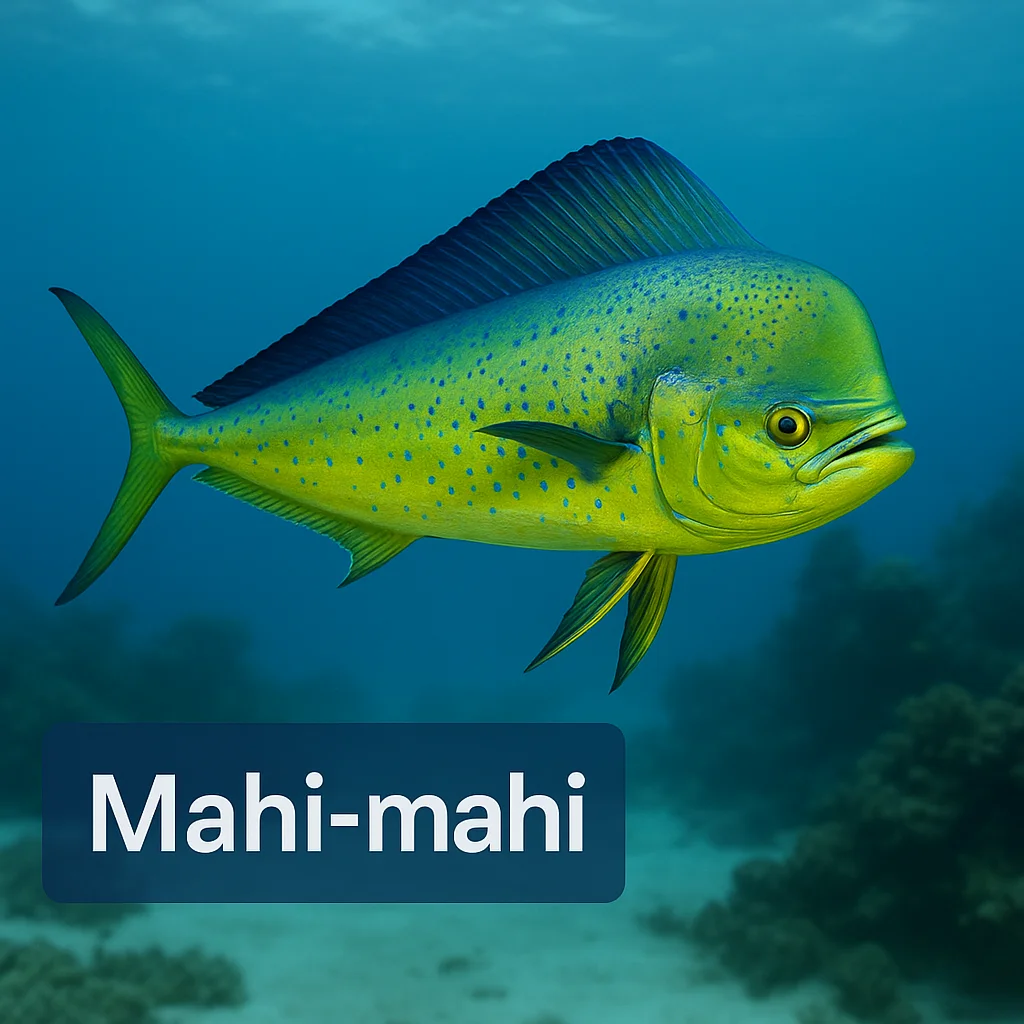
- Common name(s): Mahi-mahi, dolphin fish, dorado
- Scientific name: Coryphaena hippurus
- Animal type: Fish
- Typical adult size: 3 to 7 feet in length, can weigh up to 50 pounds
- Typical lifespan: 4 to 5 years
- Diet type: Carnivore; feeds on smaller fish, crustaceans, and squid
- Activity pattern: Diurnal
- Social structure: Often in groups or schools
- Speed / movement highlights: Can swim up to 50 mph
- Intelligence/learning: Demonstrates adept hunting techniques
- Primary habitats: Open ocean, especially in warm waters
- Geographic range: Tropical and subtropical waters worldwide
- Predators/threats: Sharks, larger fish, overfishing by humans
- Conservation status: Not currently endangered but varies by region
🔍 Identification & Appearance
The mahi-mahi is a striking fish, easily identified by its unique body shape and bright colors. It boasts a long, slender body with a distinctively concave dorsal fin extending almost the entire length of its back. Mahi-mahi are famous for their dazzling display of colors, typically showcasing bright greens, blues, and golds.
- Body shape: Elongated with a prominent dorsal fin
- Key colors/patterns: Iridescent blues, greens, and golds
- Distinctive features: Concave head and high dorsal fin
- Tracks/scat: Not applicable for aquatic species
- Common look-alikes: Can be confused with other large pelagic fish but has a more pronounced dorsal fin
- Top ID Tips
- Look for the elongated body and prominent dorsal fin
- Note the bright iridescent coloring
- Concave, sloped head shape
- Rapid color changes when caught
- Typical shovel-shaped teeth arrangement
- No scales on their head
🧱 Body Structure & Physical Adaptations
The mahi-mahi's body is designed for speed and efficiency in the open ocean. Its streamlined shape, powerful tail, and high dorsal fin allow it to slice through water with ease, an adaptation essential for catching quick prey and evading predators. Their teeth are small and densely packed to grip prey tightly and their fins are designed to optimize swimming efficiency at high speeds.
- Key Adaptations
- Streamlined, elongated body for swift movement
- High dorsal fin enhances maneuverability
- Dense, fine teeth for grasping slippery prey
- Exceptional vision for spotting prey from a distance
- Powerful caudal fin for propulsion
- Expandable gills for efficient oxygen uptake
🌍 Range & Distribution
Mahi-mahi are widely distributed in tropical and subtropical oceans across the globe. They inhabit the epipelagic zone, typically found in the upper layers of open water, where they enjoy warm temperatures and abundant food supply.
- Where You Might Find It
- Pacific Ocean
- Atlantic Ocean
- Indian Ocean
- Caribbean Sea
- Mediterranean Sea
🏞️ Habitat & Shelter
Mahi-mahi prefer the open waters of the ocean, particularly near the surface where sunlight penetrates. They often gather around floating debris, such as sargassum weeds and artificial structures, which provides them with shelter and hunting grounds. Although they primarily occupy open waters, understanding their habitat use is crucial for their conservation and management.
🧭 Behavior & Ecology
As fast and agile predators, mahi-mahi play a vital role in the marine food web. They exhibit behaviors such as active pursuit of prey and complex social structures when hunting in groups. These fish are known for their dynamic interactions with their environment, showcasing impressive navigation and orienting skills in the vast oceanic expanse.
- Behavior Highlights
- Daytime hunters
- Quick to react to threats
- Skilled at group hunting
- Role as a top predator in their ecosystem
- Migratory behaviors
👥 Social Life & Group Dynamics
Mahi-mahi are social creatures, often found schooling together, particularly around floating objects. Their social structures help enhance their hunting efficiency and provide protection from predators. These group dynamics also aid in navigation during their migratory patterns.
- Social Structure Notes
- Commonly found in schools
- Cooperative hunting strategies
- Social for navigation
- Loose group formations around feeding and breeding
- Aid in predator avoidance
🍽️ Diet, Prey & Predators
Mahi-mahi are carnivorous, with diets consisting primarily of small fish and squid. Their optimal hunting times are usually in the daylight to leverage their acute vision. Natural predators of mahi-mahi include sharks and larger fish, while they also face pressures from human fishing activities.
- Feeding Notes
- Prey includes flying fish, squid, and crustaceans
- Opportunistic hunters
- Utilize quick bursts of speed to capture prey
- Active during the day
🦌 Hunting, Foraging & Movement
Equipped with incredible speed, mahi-mahi are adept at hunting. They exhibit high-velocity movements using their robust caudal fins, which, alongside their keen senses, make them efficient predators. Mahi-mahi often forage near surface waters, employing group tactics to corner and trap prey.
- Movement & Strategy
- Exceptionally fast swimmers
- Utilize group hunting techniques
- Cruise open waters in search of prey
- Employs ambush tactics
🧠 Intelligence & Senses
Mahi-mahi showcase remarkable sensory capabilities that enhance their hunting success. Their sharp eyesight and extensive lateral line system allow them to detect and track prey effectively in the water. Although research on mahi-mahi intelligence is limited, their behavioral adaptations suggest a capacity for learning and problem-solving within their ecological context.
- Notable Abilities
- Excellent eyesight for spotting prey
- Sensitive lateral line for detecting movement
- Respond to environmental cues effectively
- Adept at avoiding larger predators
🪺 Reproduction, Pregnancy & Parenting
Mahi-mahi are fast-reproducing species, capable of spawning multiple times a year, especially in warm waters. Their reproductive strategy involves releasing eggs into the open ocean, where they are fertilized externally. The parents do not participate in parental care; instead, the young develop independently.
- Reproduction Snapshot
- Spawning peaks in warmer seasons
- Females release thousands of eggs
- External fertilization
- No parental involvement
♀️♂️ Male vs Female Differences
The differences between male and female mahi-mahi are mainly apparent in their physical appearance and size. Males, often termed bulls, typically have a more prominent forehead or nuchal hump compared to females. Although both sexes share similar coloration, the males are occasionally larger and more robust.
- Sex Differences at a Glance
- Males have distinct forehead hump
- Males usually larger
- Both genders share vibrant coloring
🧬 Subspecies & Variation
Currently, there are no recognized subspecies of mahi-mahi. However, variations may occur in terms of size and behavior across different oceanic regions. The variability in their habitats can cause distinct local adaptations such as slightly different coloration or body size.
- Variation Notes
- Size varies by region
- No officially recognized subspecies
- Minor color variation by habitat
⚠️ Threats, Conservation & Human Interaction
Although mahi-mahi populations are fairly robust, they face threats from overfishing and habitat degradation. Sustainable fishing practices and awareness about the impacts of climate change are crucial for ensuring the longevity of these vibrant species. Ethical considerations should guide fishing practices to minimize impact on their populations.
- Responsible Notes
- Overfishing is a primary threat
- Support sustainable seafood practices
- Monitor fishing limits to maintain populations
- Conservation efforts focus on habitat health
✨ Fun Facts & Unique Traits
- Mahi-mahi can change colors rapidly, a trait that often stuns predators and prey.
- The name "mahi-mahi" derives from Hawaiian, meaning "strong strong" in reference to its robust nature.
- Mahi-mahi have a streamlined body that makes them one of the ocean's speediest swimmers.
- Their vibrant colors are due to chromatophores in their skin, which are highly reflective.
- They occupy a niche at the top of the food chain within their habitat, controlling populations of smaller fish.
📌 Summary
- Mahi-mahi are identifiable by their elongated body and vibrant, iridescent colors.
- They inhabit tropical and subtropical oceans worldwide, preferring open water habitats.
- Their diet is primarily carnivorous, preying on small fish and squid.
- Mahi-mahi face natural predation from sharks and human-induced threats from overfishing.
- They are social, often forming groups for cooperative hunting and protection.
- Reproduction occurs through broadcast spawning with no parental care involved.
- Key adaptations include a streamlined shape for speed and acute vision for spotting prey.
- Distinctive features include the male's prominent forehead hump and both sexes' vivid colorations.