🦁 Herring Gull
🧾 Quick Facts
The Herring Gull is a familiar sight across many coasts and inland waterways. Known for its adaptability, it thrives in diverse environments and often interacts with human habitats.
- Common name(s): Herring Gull
- Scientific name: Larus argentatus (varies by region)
- Animal type: Bird
- Typical adult size: 19 to 26 inches in length, wingspan of 50 to 60 inches
- Typical lifespan: 10 to 20 years in the wild
- Diet type: Omnivore; eats fish, invertebrates, and refuse
- Activity pattern: Diurnal
- Social structure: Often seen in pairs or large colonies
- Speed/movement highlights: Strong fliers, capable of long-distance travel
- Intelligence/learning: Known for problem-solving and adaptability
- Primary habitats: Coasts, beaches, islands, lakes, and rivers
- Geographic range: North America, Europe, and Asia
- Predators/threats: Eagles, larger gulls, human activity
- Conservation status: Least Concern (varies by region)
🔍 Identification & Appearance
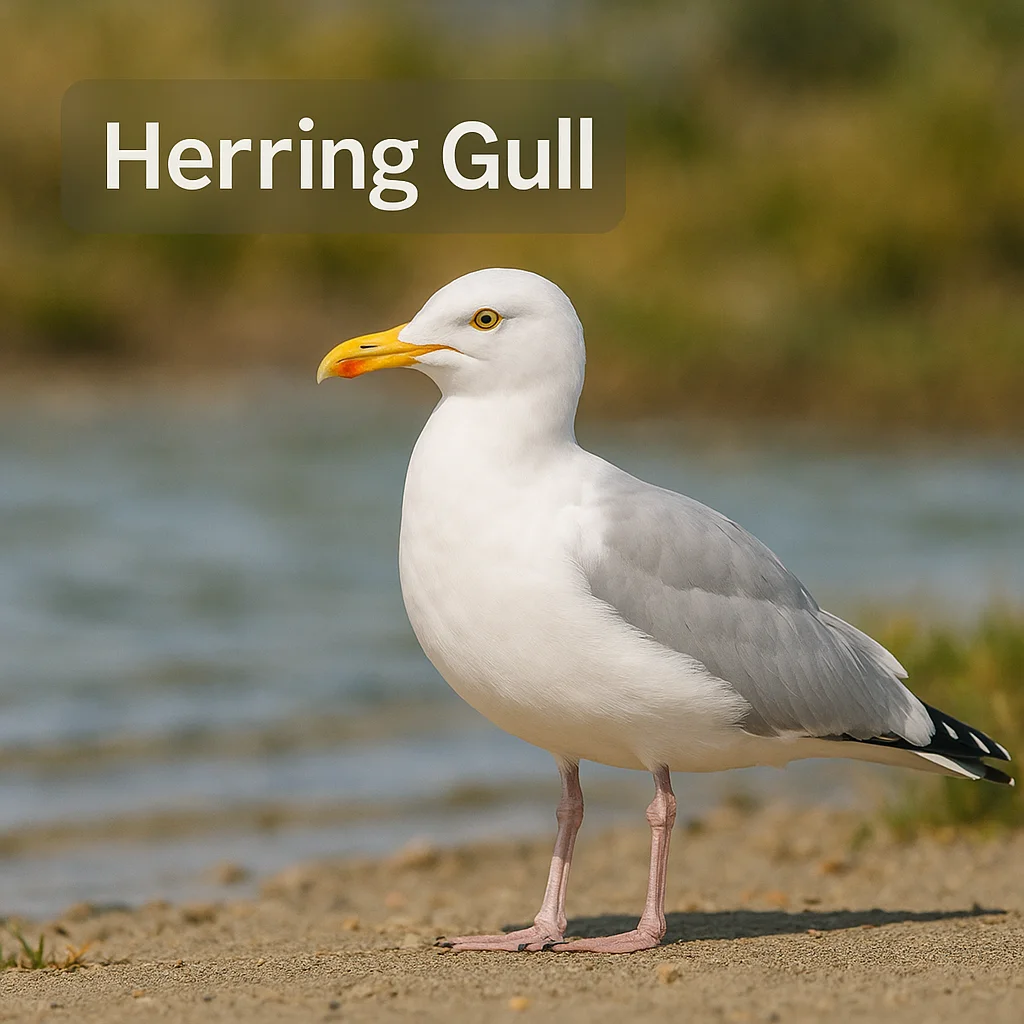
The Herring Gull is a medium to large gull, with a robust body, a substantial wingspan, and a slightly hooked bill. Adults typically have grey wings, white bodies, and a distinctive red spot on their yellow bill. Young Herring Gulls are mottled brown and take several years to reach adult plumage.
- Slim, long-bodied silhouette
- Adults: grey wings, white body, yellow bill with red spot
- Juveniles: brown mottled plumage, gradual color change with age
- Leg color varies from pink to yellow depending on region
- Distinct call: a loud, laughing “kyow-kow”
- Can be confused with: Lesser Black-backed Gull, which is smaller with darker wings
- Footprints: webbed marks in sand or mud
- Top ID Tips
- Look for the red spot on the lower mandible
- Check leg color (varies but often pinkish)
- Listen for the characteristic call
- Note the large, rounded wings when in flight
- Spot young individuals by their brown plumage
- Compare wing and bill size with other gulls
🧱 Body Structure & Physical Adaptations
The Herring Gull is well-built for life along coastlines and open waters. Its body structure allows for efficient flying and robust swimming. Its beak is adapted for a diverse diet, from fish to refuse, and its webbed feet aid in swimming and stability on slippery surfaces.
- Key Adaptations
- Strong wing muscles for sustained flight
- Efficient waterproof plumage
- Adaptable bill shape for varied diet
- Highly mobile neck for scanning and feeding
- Webbed feet for swimming and stability
- Acute vision for spotting prey
- Ability to drink saltwater due to specialized glands
- Resilient respiratory system for high-altitude flight
🌍 Range & Distribution
The Herring Gull is widespread across the northern hemisphere. They are found along coastlines, as well as inland water bodies. Their presence is broad, but they are highly adaptable in many environments, often capitalizing on human-modified landscapes.
- Where You Might Find It
- Coastal cliffs and headlands
- Sandy and rocky beaches
- Harbors and ports
- Inland lakes and reservoirs
- Urban environments near food sources
- Nesting on flat roofs and ledges
- Migrates to southern regions in winter
- Common in northern Europe and western North America
🏞️ Habitat & Shelter
Herring Gulls prefer habitats close to water bodies, including oceans and large lakes. They often nest in colonies on islands or coastal regions, using natural features or urban structures for shelter. Seasonal changes can influence their distribution, with some populations migrating to warmer areas during winter months.
Understanding their habitat preferences helps explain their feeding behavior and social structure, emphasizing their status as successful generalists.
🧭 Behavior & Ecology
The Herring Gull is renowned for its adaptability, both as a predator and scavenger. Daily activities often involve foraging, which they do both socially and independently. Vocalizations play a significant role in communication, ranging from alarms to mating calls.
- Behavior Highlights
- Engage in opportunistic foraging
- Vocal communication: diverse range of calls
- Adaptive feeding behaviors in urban areas
- Defend territories aggressively in breeding season
- Form large communal roosts in non-breeding season
- Clever exploitation of human refuse
- Known for problem-solving abilities
- Social dynamics influence foraging success
👥 Social Life & Group Dynamics
Herring Gulls are generally sociable birds, often forming large colonies that vary in size. Interaction within groups includes cooperative activities and some level of hierarchical structure. During breeding seasons, pairs may show increased territorial behavior.
- Social Structure Notes
- Strong pair bonds in breeding season
- Nests often in large colonies
- Communal roosting during migration
- Use group foraging to increase success
- Dynamic social interactions within groups
- Defend nesting sites from intruders
- Juveniles live in flocks with transient members
- Flexible group sizes based on food availability
🍽️ Diet, Prey & Predators
Herring Gulls are omnivores with a diet that reflects their opportunistic nature. They prey on fish and invertebrates and scavenge from landfills and refuse sites. Their role as scavengers is ecologically significant, helping to recycle nutrients.
- Feeding Notes
- Diet includes fish, crustaceans, and mollusks
- Scavenges on carrion and human waste
- Can locate food through keen observation of others
- Predation: eggs and chicks targeted by other birds
- Defensive strategies include mobbing predators
- Change diet based on seasonal availability
- Efficient use of urban food resources
- Often feeds near fishing boats
🦌 Hunting, Foraging & Movement
Known for their strong flying ability, Herring Gulls use their keen eyesight and intelligence for hunting and foraging. They employ various techniques from diving to scavenging, highlighting their adaptability. They are capable of long-distance travel, often migrating seasonally.
- Movement & Strategy
- Flight: powerful and sustained
- Foraging: both solo and in groups
- Utilize updrafts and thermals for efficient travel
- Forage by following fishing vessels
- Migrate to milder climates in winter
- Daytime foraging is most common
- Intelligent navigation across vast landscapes
- Plunder other species' nests opportunistically
🧠 Intelligence & Senses
Herring Gulls display significant intelligence and a high degree of adaptability. They are known for problem-solving, particularly in urban environments, and have excellent sensory perceptions that aid in foraging and avoiding danger.
- Notable Abilities
- Problem-solving and learning behaviors
- Use of social cues for finding food
- Keen eyesight for detecting prey and threats
- Intelligent use of urban structures and resources
- Memory skills for returning to successful foraging sites
- Spatial awareness in complex environments
- Adaptability to varied habitats
- Precise communication through calls and displays
🪺 Reproduction, Pregnancy & Parenting
Herring Gulls typically breed in colonies, with courtship beginning in spring. They form monogamous pair bonds, participating equally in incubation and chick-rearing. The eggs hatch after several weeks, and chicks are precocial, quickly leaving the nest to follow parents.
- Reproduction Snapshot
- Breeding season: mainly in spring and early summer
- Monogamous pairs with strong bonds
- Incubation period: approximately 30 days
- Usually lay 2-3 eggs per clutch
- Eggs hatch asynchronously
- Parents share incubation and feeding duties
- Chicks are semi-precocial and follow parents quickly
- Nesting often on inaccessible cliffs or rooftops
♀️♂️ Male vs Female Differences
While both male and female Herring Gulls appear similar, males are typically larger with slightly deeper voices. Behaviorally, both sexes share roles in nesting and chick-rearing, with minimal visible sexual dimorphism in plumage and coloration.
- Sex Differences at a Glance
- Males slightly larger than females
- Male vocalizations deeper in tone
- Shared responsibility in caring for young
- Subtle size differences visible during breeding display
- Both sexes equally involved in nest defense
🧬 Subspecies & Variation
The Herring Gull complex includes several subspecies, each adapted to their local environments. There are notable differences in size, plumage, and leg coloration across their range. In some areas, classification remains a topic of debate among ornithologists.
- Variation Notes
- Northern populations generally larger
- Western European gulls have distinct wing patterns
- Leg colors range from pink to bright yellow
- Status of subspecies debated in some regions
- Island populations may exhibit unique behaviors
⚠️ Threats, Conservation & Human Interaction
Despite being widespread, Herring Gulls face threats from habitat loss, pollution, and food scarcity. Human presence can both offer opportunities, such as food waste, and challenges, such as pollution. Conservation efforts focus on monitoring populations and ensuring sustainable environments.
- Responsible Notes
- Monitor population impacts from pollution
- Promote clean-up of coastal habitats
- Support sustainable waste management practices
- Encourage coexistence without reliance on urban waste
- Avoid disturbances during breeding season
- Recognize their role in nutrient recycling
✨ Fun Facts & Unique Traits
- Herring Gulls can drink both fresh and saltwater
- Known to drop shellfish onto rocks to break them open
- Highly adaptable to both city and coastal life
- Juvenile plumage changes over several years
- Sometimes mimic the calls of other bird species
- Have been observed using bread to lure fish
- Play an essential role in cleaning up beaches
📌 Summary
- Medium to large gull with grey and white plumage
- Adaptable habitats: coasts, lakes, urban areas
- Wide geographical distribution in Northern Hemisphere
- Omnivorous diet includes fish, invertebrates, and food waste
- Predators include birds of prey and larger gulls
- Sociable, nesting in large colonies and exhibiting cooperative foraging
- Pairs often form monogamous bonds for breeding
- Keen problem-solving abilities and flexible diet
- Key roles in ecosystem as scavengers and nutrient recyclers