🐾 The strongest animal for its size: Dung beetle
Primary subject: Dung beetle — Scarabaeidae
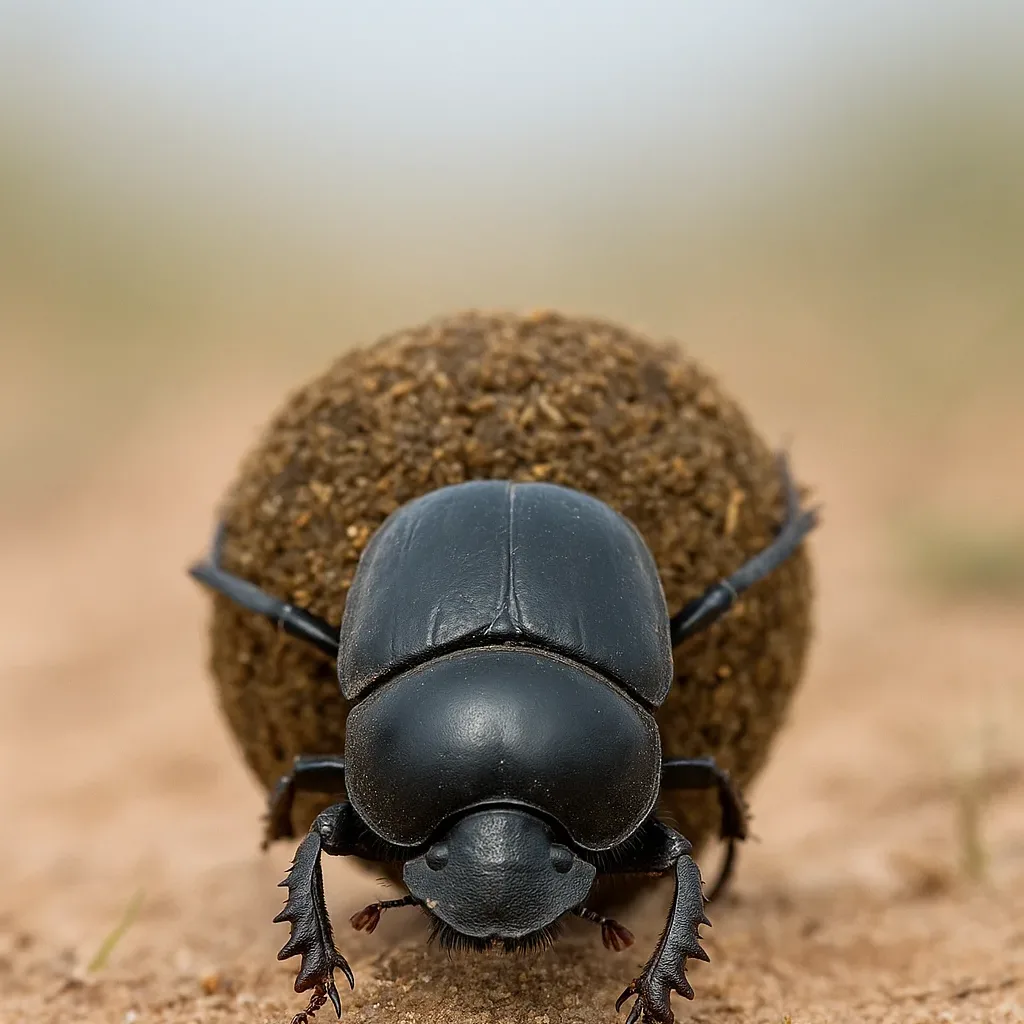
The strongest animal for its size is undoubtedly the dung beetle. It can move objects over 1,000 times its own body weight. This remarkable strength is due to its unique physique and ecological role.
🔎 Key Takeaways
- The dung beetle is the strongest animal for its size.
- Dung beetles move objects over 1,000 times their body weight.
- A male dung beetle can pull up to 1,141 times its own weight.
- This is similar to a human lifting about 80 tons.
🧬 Why It Happens
Dung beetles have extraordinary strength because they have evolved muscles specifically adapted for pulling and rolling heavy objects. Their body design efficiently distributes stress across a compact physique, enhancing their leverage.
These beetles primarily feed on animal feces, which they move to suitable sites for feeding or nesting. This behavior necessitates moving large quantities of dung, thus requiring significant strength. They have a remarkable exoskeletal structure that provides both protection and enhanced leverage.
In some species, male dung beetles compete for mates by engaging in strength competitions, further explaining their incredible lifting capacity. The astonishing strength-to-size ratio helps them thrive in environments where resource acquisition is competitive.
🌍 Where You Might See It
Dung beetles are found across various environments worldwide, including savannas, forests, and grasslands. They are most active in areas with abundant large herbivore populations where their primary resource, dung, is readily available.
⚠️ Practical Caution
- In general, avoid disturbing dung beetles in nature.
- Observe from a distance to appreciate their behavior without interference.
- Do not handle or disrupt them, as it can hinder their ecological role.
- Follow local guidelines on interacting with wildlife to ensure safety.
- Maintain a respectful distance to avoid stressing the animals.
Being mindful of dung beetles’ role in their ecosystems promotes ecological balance. Always prioritize calm behavior and avoid direct interaction.
Learn more fascinating animal facts on our homepage: AnimalsGuidebook.com