🐾 A living fossil still walking the Earth: Coelacanth
Primary subject: Coelacanth — Latimeria chalumnae
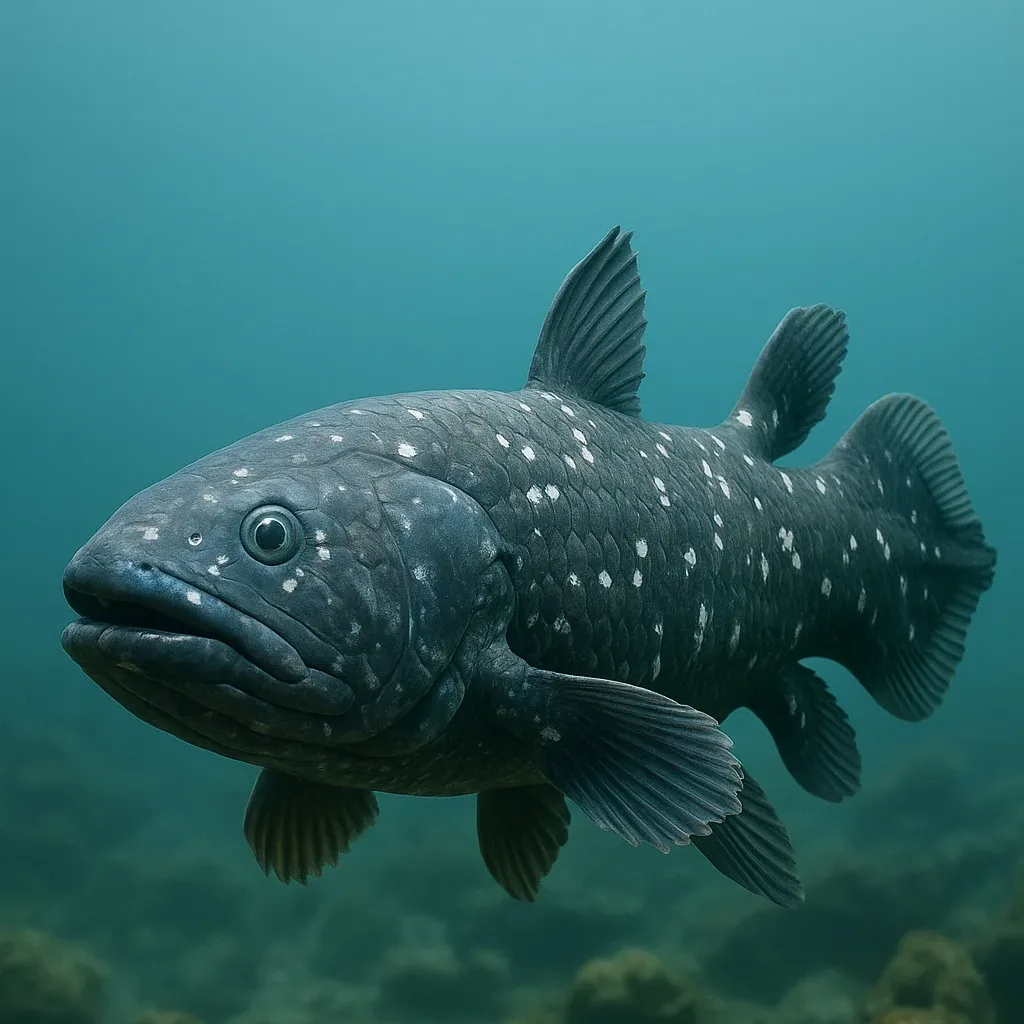
The coelacanth, a species once thought to be extinct, is a true living fossil, showcasing a lineage that stretches back roughly 400 million years. Known for its distinctive lobed fins that resemble early stages of limb development, the coelacanth provides scientists a glimpse into aquatic life from the Devonian period. Originally believed extinct until its rediscovery in 1938, the coelacanth remains one of the most intriguing subjects in evolutionary studies.
🔎 Key Takeaways
- The coelacanth is a living fossil whose lineage dates back about 400 million years.
- Its lobed fins provide a unique insight into the evolution of vertebrates.
- The coelacanth can grow to about 2 meters in length and weigh around 90 kilograms, similar to a large human adult.
- They can live at depths of 150 to 700 meters, often in underwater caves amid volcanic slopes.
🧬 Why It Happens
The coelacanth is classified as a living fossil due to its ancient lineage and structures that remain relatively unchanged over millions of years. Its lobed fins are of particular interest, as they are similar to the early anatomical features that may have helped ancestors of vertebrates transition from water to land.
Biologically, the coelacanth's physiology is adapted for life in deep ocean environments. They possess a unique rostral organ that offers electroreception, enabling them to detect prey in the dark depths. Further, they have a low metabolism, which suits their energy-efficient lifestyle in nutrient-scarce environments.
Apart from their physical attributes, coelacanths have an extended gestation period of nearly three years, one of the longest among vertebrates. This slow reproduction rate, along with their deep-sea habitat, contributes to their rarity and vulnerability.
🌍 Where You Might See It
The coelacanth can often be found near the Comoros Islands, off the east coast of Africa, and along parts of Indonesia's Sulawesi. They typically inhabit volcanic slopes and underwater caves at depths ranging from 150 to 700 meters, using these secluded areas as protection from predators and human activity.
⚠️ Practical Caution
- In general, coelacanths are located in deep ocean waters and are rare encounters for divers.
- Maintain a respectful distance if sighted during scientific or educational dives.
- Refrain from touching or attempting to capture these fish, as they are a protected species.
- Avoid shining bright lights directly at them, as this could disrupt their natural behavior.
- Follow local guidelines or regulations set by marine preservation groups when diving in areas known for coelacanth presence.
In general, it is essential to respect marine life by keeping your distance and avoiding any potential disturbances. Follow local guidance to ensure the safety and preservation of these remarkable creatures.
For more fascinating insights into unique wildlife, visit AnimalsGuidebook.com.