🐾 Found in only one place on Earth: Aye-aye
Primary subject: Aye-aye — Daubentonia madagascariensis
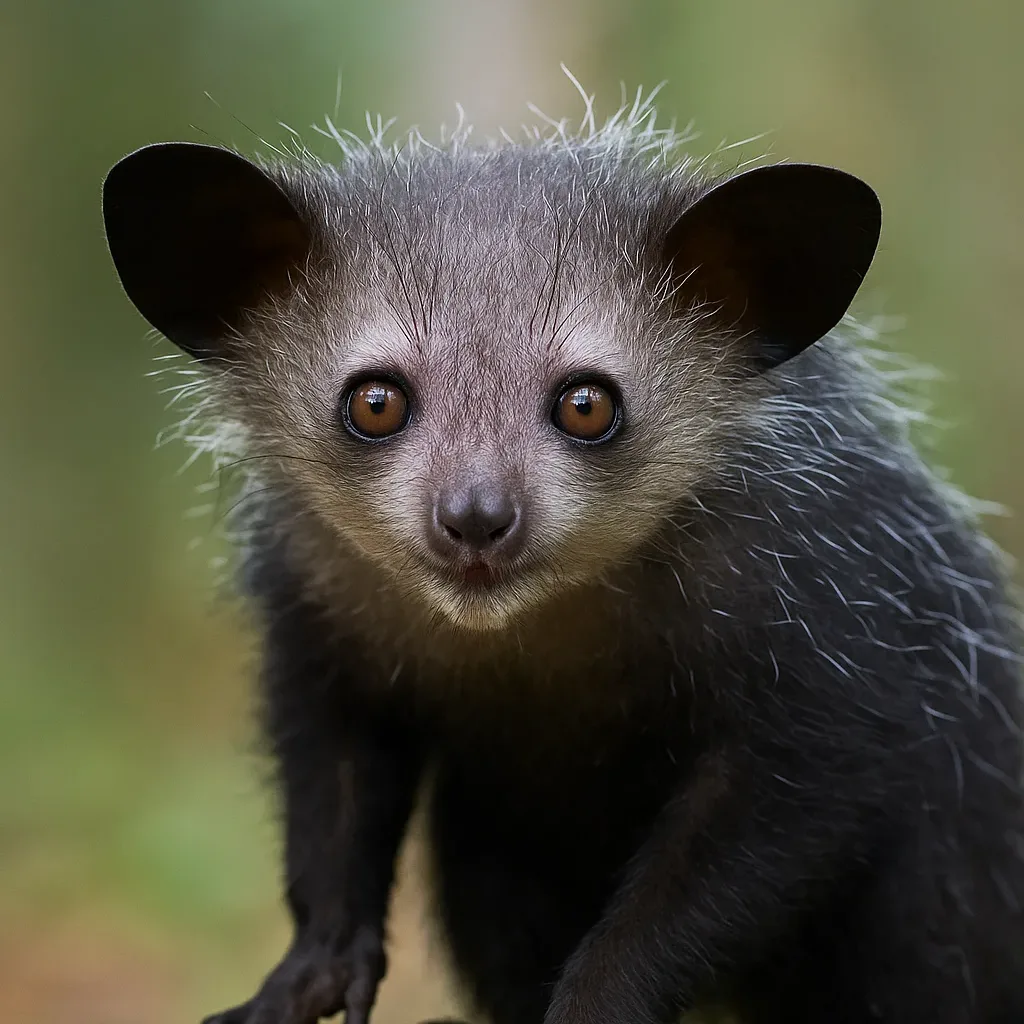
The aye-aye is a unique primate found only on the island of Madagascar. This nocturnal lemur is the sole representative of its genus, Daubentonia, and is easily distinguished by its distinctive long middle finger used for foraging food. The aye-aye's presence is exclusive to Madagascar due to its highly specialized adaptations and dietary requirements.
🔎 Key Takeaways
- The aye-aye is found exclusively in Madagascar.
- It uses its elongated middle finger to extract insects from trees.
- Adult aye-ayes weigh roughly 2 to 2.5 kg, similar to a domestic cat.
- The aye-aye's incisors grow continuously, which is unique among primates.
🧬 Why It Happens
The aye-aye's unique adaptations, such as its constantly growing incisors and elongated third finger, are specially suited to its environment in Madagascar. These traits allow it to thrive by tapping on wood to locate hollow cavities and extract larvae, a food source sparsely available elsewhere.
Its solitary and nocturnal lifestyle helps reduce competition for resources on the dense forest floors of Madagascar. With its diverse range of vocalizations, the aye-aye communicates and delineates territory, another adaptation favoring its survival in this specific locale.
Evolution has equipped the aye-aye to occupy a niche that other animals do not, effectively minimizing predation risks and maximizing foraging efficiency. Their presence in only one geographic location emphasizes biodiversity's vital role in evolutionary specialization.
🌍 Where You Might See It
The aye-aye inhabits the tropical rainforests of Madagascar, favoring primary and secondary forest habitats. These environments offer ample cover and resources for its foraging behaviors, mostly at night when the forest is quieter and competition is limited.
⚠️ Practical Caution
- Avoid approaching aye-ayes in their natural habitat to prevent disturbance.
- In general, maintain a respectful distance to observe their behaviors without interference.
- Support conservation efforts aimed at protecting Madagascar's forests.
- Participate in eco-tourism activities that promote sustainable practices.
- Follow local guidance when visiting Madagascar's wildlife areas.
- Refrain from feeding aye-ayes or any wild animals to prevent dependency.
By maintaining distance and calm behavior, you contribute to their conservation. Always respect local regulations and guidance when observing these fascinating creatures in the wild.
Discover more unique animals and their habitats at our homepage: AnimalsGuidebook.com