🐾 Nature’s real-life monster: Komodo dragon
Primary subject: Komodo dragon — Varanus komodoensis
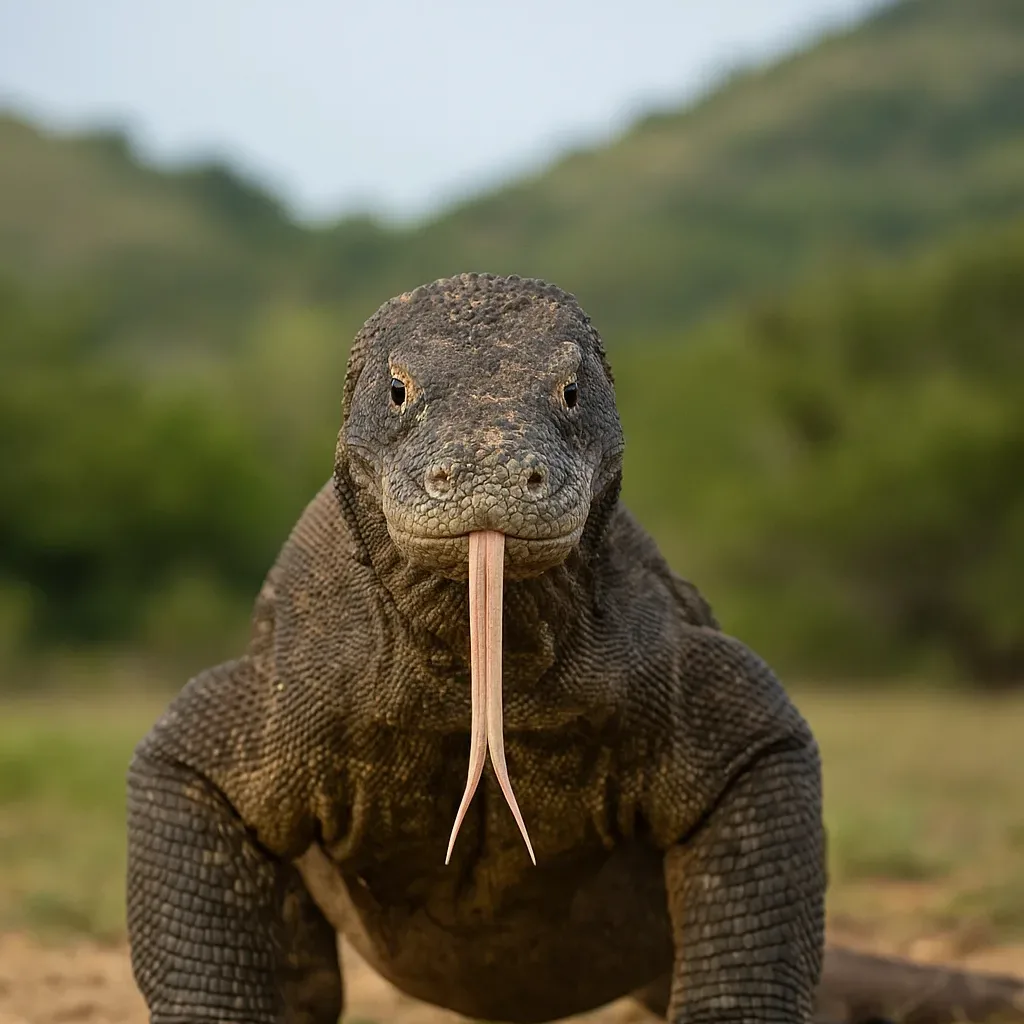
The Komodo dragon, Varanus komodoensis, is considered nature’s real-life monster due to its formidable predation strategies and large size. This giant lizard possesses powerful venom and an impressive bite force, making it a top predator in its environment. Such attributes allow the Komodo dragon to effectively hunt large prey and defend its territory.
🔎 Key Takeaways
- The Komodo dragon is regarded as a real-life monster due to its size, strength, and hunting prowess.
- Its powerful venom and significant bite force enable it to capture and subdue large animals.
- Komodo dragons can weigh up to 150 kilograms (about 330 pounds), making them the largest living lizards.
- Their bite force is roughly 39 newtons, several times stronger than a human bite.
🧬 Why It Happens
Komodo dragons are equipped with a complex venomous bite that can weaken prey by causing blood loss and shock. This venom contains toxins that lower blood pressure and can inhibit clotting, increasing predatory efficiency.
Their muscular build and strong tail aid in swift and powerful movements, contributing to their ability to tackle prey that is often larger than themselves. A Komodo’s long, serrated teeth are adept at tearing flesh, complemented by a keen sense of smell that tracks down the scent of decay over several miles.
Despite their size, Komodos can sprint briefly at speeds up to 20 kilometers per hour (about 12 mph) when chasing prey. This combination of speed and strength bolsters their capability to close in on and capture their targets effectively.
🌍 Where You Might See It
Komodo dragons inhabit the Indonesian islands of Komodo, Rinca, Flores, and a few surrounding islands. They typically prefer dry, open savannas and rainforests where they can hunt both vertebrates and invertebrates. These environments provide ample opportunity for utilizing both camouflage and ambush tactics in pursuing their prey.
⚠️ Practical Caution
- Maintain a safe distance when observing in the wild, often recommended as at least several meters away.
- Stay calm and avoid sudden movements that may startle the dragon.
- Do not feed or provoke Komodo dragons, as they can become aggressive if threatened.
- Follow local safety guidelines and advisories when visiting habitats where they are present.
- Stay in groups, as a collective presence often deters curious or opportunistic behaviors from wild animals.
In general, respecting Komodo dragons’ space and exhibiting calm behavior can significantly reduce risks. Always adhere to local guidance for safe interactions with wildlife.
For more fascinating insights into the natural world, visit our homepage: AnimalsGuidebook.com