🐾 The mythical animal that actually exists: Okapi
Primary subject: Okapi — Okapia johnstoni
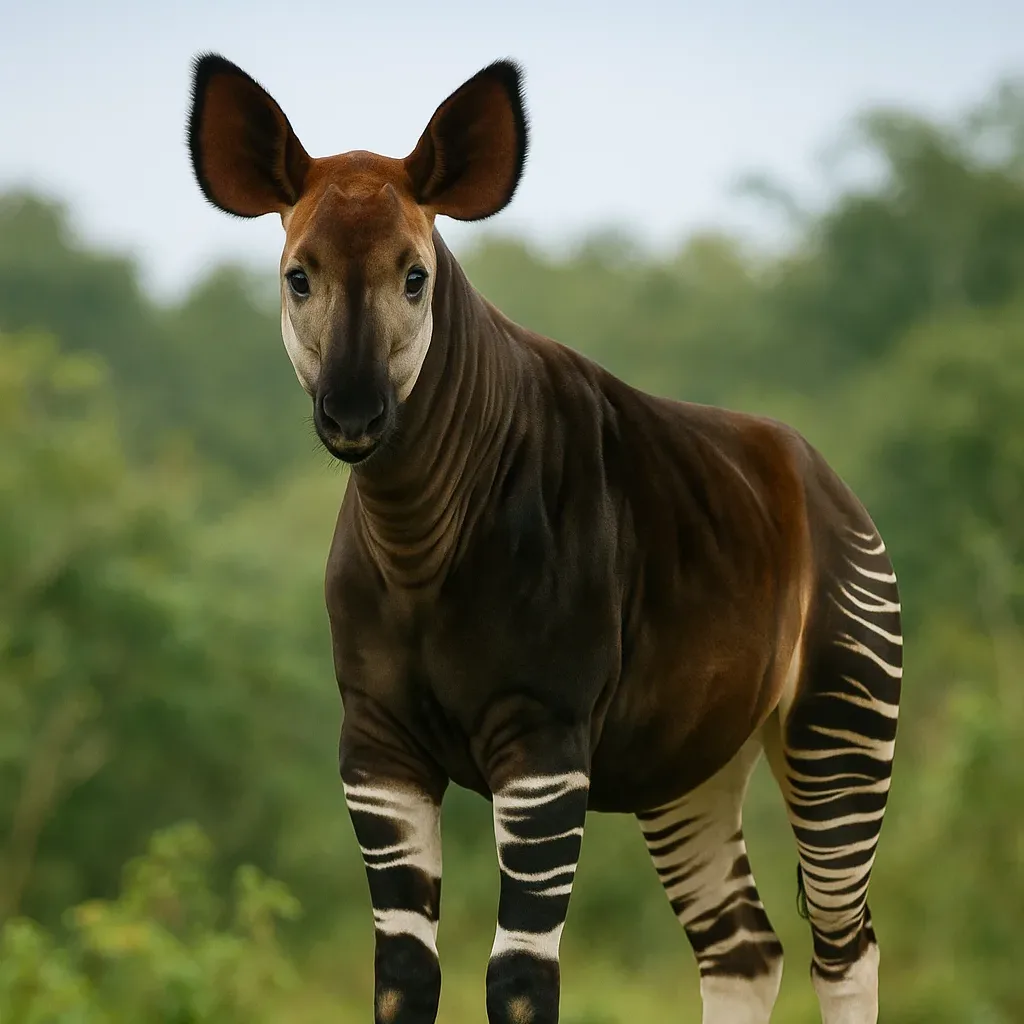
Meet the Okapi, a wondrous creature often dubbed the "African unicorn" due to its elusive nature and striking appearance. Known as the closest living relative of the giraffe, the Okapi inhabits the dense rainforests of Central Africa. Unlike other mythical beasts, the Okapi is real and has captivated scientists and explorers with its unique evolutionary traits.
🔎 Key Takeaways
- The Okapi, long thought to be mythical, is a real animal living in Central Africa.
- Its appearance, resembling both zebras and giraffes, contributes to its mythical aura.
- The Okapi's stride measures an impressive 12–15 mph when escaping predators.
- Standing about 5 feet tall at the shoulder, the Okapi is similar in height to a large human.
🧬 Why It Happens
The Okapi's camouflaged striped legs resemble those of a zebra, providing concealment in dense forest shade, while its long neck and tongue, similar to a giraffe’s, allow for efficient browsing of tall vegetation. This combination of traits aids its survival in the challenging forest environment.
Possessing large, sensitive ears, the Okapi can detect the faintest rustles, alerting it to potential dangers. When threatened, its silent mode of movement, aided by cushioned foot pads, allows it to quickly vanish into the forest depths.
The Okapi's unique scent glands on their feet leave a marking trail, which turns out to be invaluable for communicating territory and presence to other Okapis, all while maintaining a low profile in the bustling forest.
🌍 Where You Might See It
The Okapi is native to the rainforests of the Democratic Republic of the Congo, thriving in the dense, shadowy undergrowth. Preferring solitude, they are most active in the cooler hours of dawn and dusk.
⚠️ Practical Caution
- Maintain a respectful distance and observe quietly.
- Avoid sudden movements to prevent startling the Okapi.
- Refrain from attempting to touch or feed wild Okapis.
- Stay on designated trails or guided paths when visiting their natural habitats.
- Follow local expert guidance for the safest and most respectful wildlife viewing experience.
In general, it's crucial to prioritize calm behavior and listen to experienced guides when observing these magnificent creatures in their natural environment.
For more incredible insights into the animal kingdom, visit us at AnimalsGuidebook.com.