🐾 Looks like a herbivore, but it’s a carnivore: Sloth bear
Primary subject: Sloth bear — Melursus ursinus
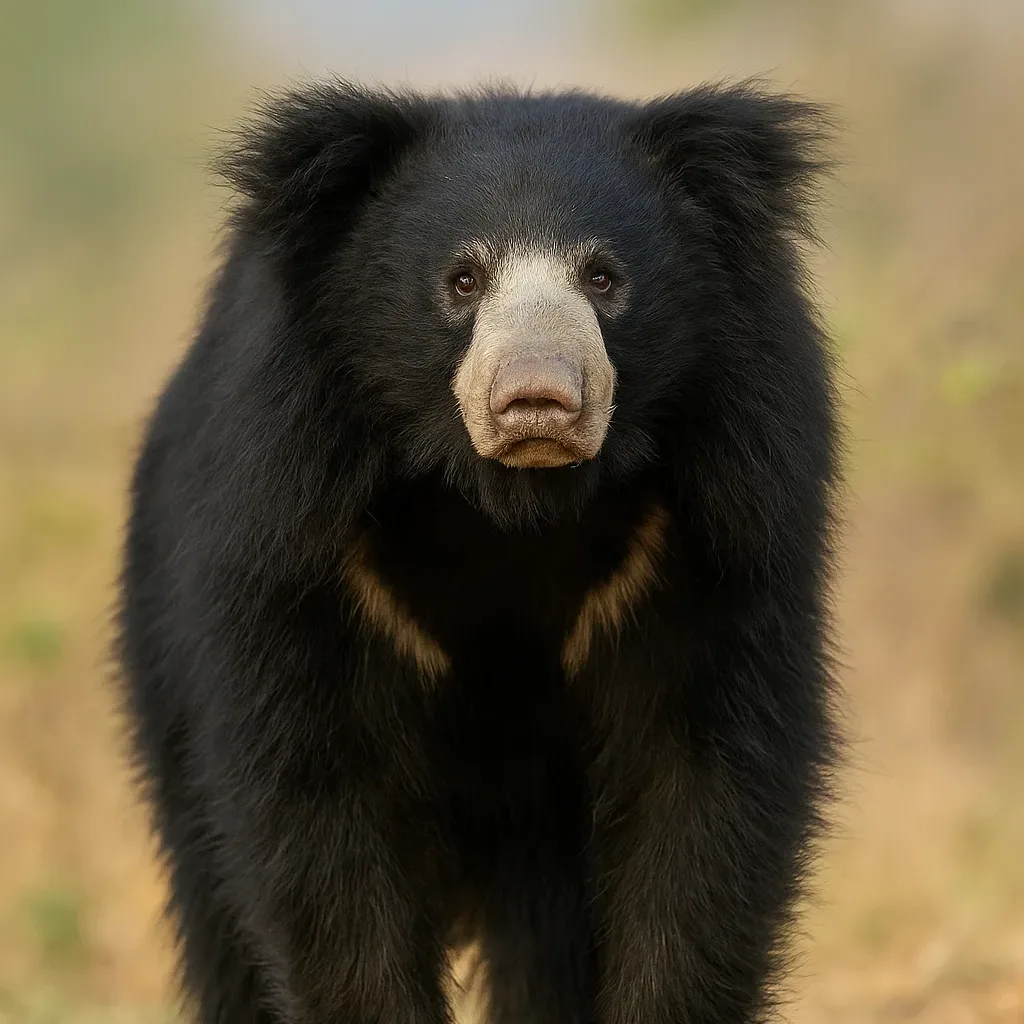
The sloth bear, despite its appearance akin to vegetative-eating species, is a primarily insect-eating carnivore. Known for its shaggy fur and slow-moving demeanor, this bear breaks the herbivorous stereotype by consuming a diet rich in ants and termites. Its specialized feeding adaptations allow it to dominate this niche in its habitat.
🔎 Key Takeaways
- The sloth bear is a carnivore that primarily feeds on insects like termites and ants.
- Its diet is supported by strong, sharp claws and a specially adapted long snout.
- A sloth bear can weigh between 120–310 pounds, making it a sizeable force in its ecosystem.
- Its powerful suction and sense of smell help it find and consume insects several feet underground.
🧬 Why It Happens
The sloth bear thrives on a steady diet of termites and ants, which it accesses using its long snout and lips that can be extended to form a tube. It easily breaks into termite mounds and anthills thanks to its sharp claws and powerful forelimbs.
Their carnivorous diet is complemented by a keen sense of smell that helps them detect insects even when they are hidden underground. This enables sloth bears to efficiently extract insects that other species might overlook, effectively utilizing a niche food resource.
Despite their appearance and bear lineage, around 90% of the sloth bear's diet is comprised of insects, with their canine-based dental structure adapted more for consuming insects rather than tearing flesh, further distinguishing their feeding habits.
🌍 Where You Might See It
The sloth bear is typically found in the forests of the Indian subcontinent, including India, Sri Lanka, and Nepal. They are commonly seen in grasslands, dry and moist forests, and areas with abundant insects for them to feed on.
⚠️ Practical Caution
- Maintain a safe distance if you see a sloth bear, as they can feel threatened by proximity.
- Stay calm and do not make sudden movements to scare the bear.
- In general, avoid surprising a bear with loud noises or unexpected movements.
- If hiking in bear habitats, it is advisable to travel in groups and make noise to alert wildlife of your presence.
- Follow any local guidance and park regulations when visiting bear habitats.
In general, maintaining calm and respecting wildlife by giving them space will reduce the chances of negative encounters. Always follow the advice of local wildlife authorities.
To learn more about fascinating animals like the sloth bear, explore our comprehensive resources at AnimalsGuidebook.com.