🐾 The laziest animal that still survives: Sloth
Primary subject: Sloth — Bradypus sp.
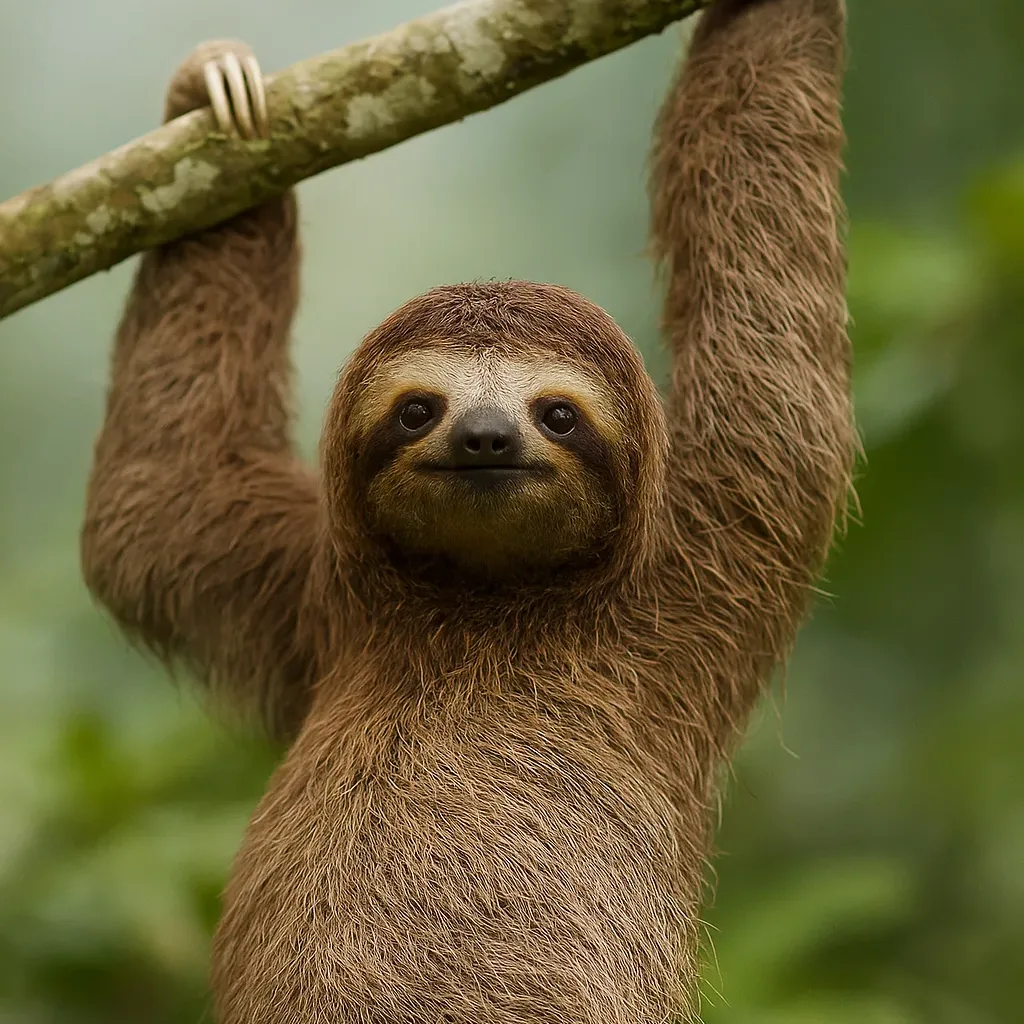
Sloths, the primary subject of this exploration, are captivating examples of survival through seemingly lazy behavior. Their extreme slowness, with movement speeds reaching merely 0.24 km/h, allows them to conserve energy efficiently. This energy-saving lifestyle is mainly due to their exceptionally low metabolic rate.
🔎 Key Takeaways
- Sloths are the epitome of lethargy in the animal kingdom, surviving due to their unique adaptations.
- Their low-energy lifestyle revolves around slow movement and efficient energy conservation.
- Sloths exhibit one of the slowest metabolic rates among mammals, with temperatures hovering around 30-34°C.
- Sloths' slow speed is significantly lower than an average human walking pace of about 5 km/h.
🧬 Why It Happens
Sloths' survival despite their sluggishness is attributed to several key biological traits. Their low metabolic rate allows them to consume less food and depend largely on leaves. Their digestion is slow, sometimes taking up to a month to process food.
The sloth's skeletal and muscular systems are adapted for hanging from trees, conserving energy by minimizing the need for constant movement. Their hooked claws provide a secure grip, reducing the energy required to cling to branches.
Moreover, the reddish-brown algae that grow on sloths' fur provide excellent camouflage, protecting them from predators by blending with the tree canopy. This symbiotic relationship further aids in their survival strategy.
🌍 Where You Might See It
Sloths are commonly found in the tropical rainforests of Central and South America. Their arboreal habitat involves spending most of their time hanging from tree branches, particularly those of the cecropia tree, which is abundant in their range.
⚠️ Practical Caution
- Maintain a respectful distance if you encounter a sloth in the wild to protect its natural behavior.
- Avoid making loud noises that might stress the animal.
- Refrain from feeding or attempting to relocate sloths, as it can disrupt their natural diet and habitat.
- Ensure you follow local wildlife guidance when observing these animals.
- Be aware of your surroundings to avoid disturbing other wildlife.
In general, viewing sloths should be done calmly and from a distance, allowing these unique creatures to continue their tranquil existence in their natural habitat.
Explore more fascinating insights on wildlife by visiting our homepage at AnimalsGuidebook.com.